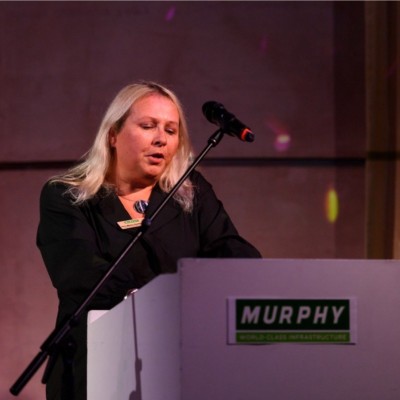
We are delighted that Ann Marie will be joining our Leadership Panel – “Driving Performance in a Changing World: From Wellbeing to Workforce Advantage” as part of our Manchester Summit on 17th September. We caught up with her to see how she’s feeling in the run up to the summit:
Hi Ann Marie, we are thrilled that you are joining us at the Wellbeing at Work Summit Manchester in September. Our first and most important question is, how are you doing today?
I’m really good, the sun is shining, and I’m sitting in a nice air-conditioned office. I’m not long returned from holiday and coming back to sunshine always makes the return to work better. Over the next week, I’m out and about on some of our projects, so looking forward to seeing lots of people during these visits.
As a leader based in the region, what are the main challenges you are facing when it comes to employee wellbeing and mental health?
Some of the health and wellbeing elements can often been seen as a tick box exercise and often health and wellbeing is seen more reactive especially when dealing with sickness absence. Managers and leaders are busy and often juggling lots of variables so sometimes health and wellbeing drops down the priority list.
What strategies have you seen developing over the past 6 months, both internally and externally, that are moving the dial on wellbeing in the workplace?
A great step forward is the release of the new CLC JCOP on Mental Health, this will hopefully support the need for consistent support across the whole of the construction industry.
Why is employee wellbeing so important to you personally?
I’ve spent the majority of my working career within the construction industry, so have experienced first hand the effects of fatigue and stress. Although technology and AI are supporting some of the roles within construction, for me people still remain our biggest asset so ensuring that they know how to manage areas such as stress, fatigue, loneliness, finance is imperative.
What impact is AI having in your organization and how are you managing that?
Being able to use AI to drill down into health and wellbeing data more effectively has added value into the business so we can better understand trends, areas for improvement and also where we need to introduce additional surveillance.
Other than AI, are there any challenges that you are seeing for the first time and how are you addressing them?
There seems to be an increasing complexity of workforce health and wellbeing needs especially as lots of employees appear to be dealing with a combination of mental health, physical health, undiagnosed conditions, financial concerns and neurodiversity. It’s important that we keep up to date with the increasing regulatory and compliance expectation.
What areas do you think employers should be focused on over the next 12 months?
We should all be looking at how health & wellbeing can be more proactive and how we can consistently support our employees more before some hit crisis point.
Employers should also have a good understanding of the Keep Britain Working report and looking at how they can support this, both from being able to keep people in work and also getting more people into work.
Do you feel that investment in employee wellbeing in the region is increasing or decreasing and is that a direct reflection on HR leaders’ increasing ability to demonstrate effective returns of their strategies to leadership?
That’s a difficult question to answer as I think everyone is trying their best to have great wellbeing strategies and to support their employees, but there can also be lots of budgetary constraints. There is so much reliance on data now that there seems to be more of an emphasis on proving the ROI on the investment into health and wellbeing
How has your organisation been leading the way?
Over the past 18 months, we’ve introduced PSA Testing for our male employees and so far we’ve completed over 600 and there are 6 people who have been diagnosed with Prostate Cancer following this testing, all of them had no other symptoms. We’ve also commissioned some research with Warwick University to look at producing a decision tool to support people who may have suicidal ideation or displaying suicidal behaviours, the research papers for this should be available in October 2026.
Ann Marie is speaking in Manchester as part of our Wellbeing at Work Summit UK 2026 which takes place in London and Manchester this September. Click the links below to find out more and book your tickets:
London Summit 15th September: Find out more and Book Your London Tickets Here
Manchester Summit 17th September: Find out more and Book Your Manchester Tickets Here