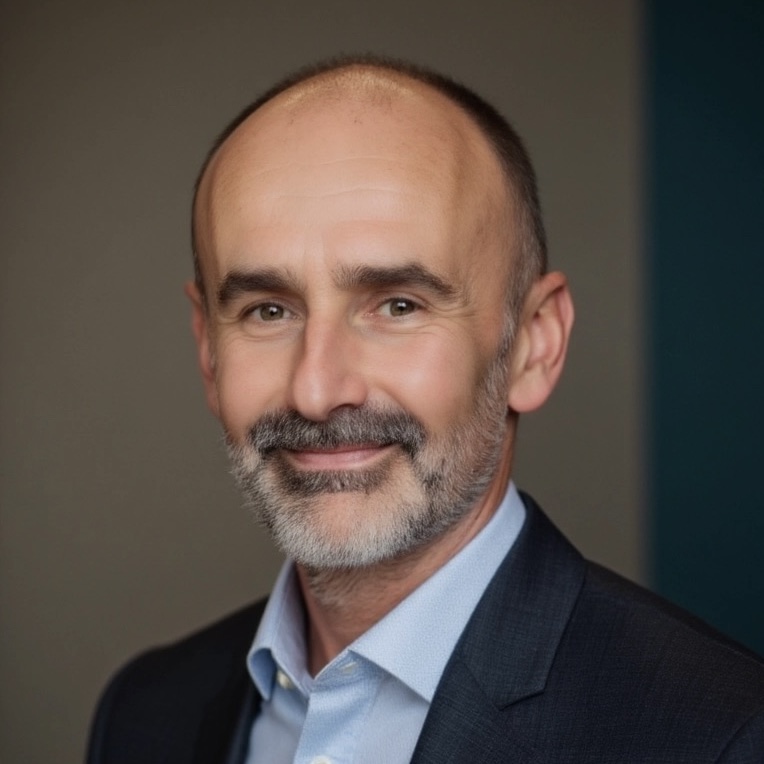
Emmanuel Paty is a Workplace Wellbeing Consultant with the City of Calgary, combining 20 years of experience across Europe and North America. He loves to build better conditions for people and better outcomes for organizations. Holding a PhD, an MBA, and an ICF ACC coaching credential, Emmanuel draws on his background as a university lecturer, consulting director, and entrepreneur in Paris, as well as his time on the court as a semi-professional basketball player. He applies a human-centered, systems-thinking lens to psychosocial risk management and workplace wellbeing—leveraging positive psychology, organizational development, and a strategic mindset.
We are delighted that Emmanuel and his colleague Sumana Jeddy will be presenting our afternoon masterclass at tomorrow’s Calgary Summit: “Shifting From “Work Life Balance” to Human Capacity for Workforce Sustainability”. They will explore:
- How are research and trends shifting from “work life balance” towards a focus on human capacity?
- What does this shift mean for Canadian employers in terms of long-term workforce outcomes and performance?
- How can HR leaders and Workplace Wellbeing SMEs shape conditions for sustainable work and healthy, engaged employees?
- What is the path forward for strengthening work design and culture in ways that address systemic barriers and embed practices for sustained engagement and contribution?
We caught up with Emmanuel to find out how he’s feeling in the run up to the summit:
Hi Emmanuel, we are thrilled that you are joining us at the Wellbeing at Work Summit in Calgary this October. Our first and most important question is, how are you doing today?
I’m doing well, a little reflective, and really energized to be part of this conversation.
As a leader based in the region, what are the main challenges you are facing when it comes to employee wellbeing and mental health?
For me, the challenge is not only how we support people when they are struggling, but how we design work, teams, and change in ways that protect (build?) wellbeing and make healthy performance possible.
What strategies have you seen developing over the past 6 months, both internally and externally, that are moving the dial on wellbeing in the workplace?
What I see moving the dial is the shift from wellbeing as a set of programs or services to wellbeing as part of how work is designed and led. In my experience — both through 15+ years as a workplace wellbeing practitioner in Europe and my work at The City as a Senior OD Consultant — the strongest approaches connect wellbeing with organizational justice, trust, leadership practises, team effectiveness, and the everyday experience of work. The more practical and embedded the approach is, the more likely it is to make a real difference.
Why is employee wellbeing so important to you personally?
Wellbeing matters to me because I am convinced it is one of the most powerful engines for human growth, motivation, connection, and performance. I see it both as an aspiration — something people deserve to experience — and as a condition that makes other things possible: learning, creativity, relationships, efficiency, and resilience.
What impact is AI having in your organization and how are you managing that?
In my own work, AI has become a useful partner, especially in consulting work where I need to think, challenge ideas, review large documents, or make sense of complex information. At the same time, I think we need to be thoughtful about AI because it is not only a technical change — it affects confidence, learning, trust, identity, and how people experience their work.
Other than AI, are there any challenges that you are seeing for the first time and how are you addressing them?
There is still a tendency to focus on programs, training, or individual resilience, while some of the biggest drivers sit in work design, workload, team dynamics, trust, and change impact. I think psychological health and safety frameworks can help because they give us a more structured way to look at both risks and protective conditions.
What areas do you think employers should be focused on over the next 12 months?
I would like to see organizations use psychological health and safety frameworks not only as compliance tools, but as practical roadmaps for improving the everyday experience of employees and teams. Including small businesses.
Do you feel that investment in employee wellbeing in the region is increasing or decreasing and is that a direct reflection on HR leaders’ increasing ability to demonstrate effective returns of their strategies to leadership?
I do think investment is increasing, but I am not sure that “more” automatically means “better.” For me, workplace wellbeing needs a stronger shared philosophy behind it. We need to be clearer about what wellbeing means for us, what outcomes we are trying to influence, and how we will know if our efforts are making a real difference. The goal should not only be to do more, but to make work healthier, more human, and more sustainable.
How has your organization been leading the way?
*answer provided by Lori Disler (Leader, Workplace Wellbeing)
Our organization has shifted towards a strategic approach to wellbeing where it is embedded into our Corporate Strategy and People Plan for The City. Wellbeing as the foundation of these strategies builds the foundation of leadership commitment and accountability to create safe, health and supportive workplaces. We are looking at the outside, in to ultimately provide better service to Calgarians through healthy employees, healthy teams and a healthy organization.
Our organization is a leader in how we have advanced psychological health and safety. We have adopted the National Standards and the 14 factors of psychological health and safety to guide the direction for The City. We have created a Psychological Safety Strategy and Framework that has been implemented corporate wide. In addition to the psychological safety experience for employees, we are focusing on protective conditions of work, preventing psychosocial risks and mitigation approaches to both change the work design and support the employee.
Emmanuel will be speaking in Calgary this October as part of our Wellbeing at Work Summit Canada which take place in both Toronto and Calgary. Click the links below to find out more and book your tickets:
Toronto Summit October 20: Find out more and Book Your Toronto Tickets Here
Calgary Summit October 22: Find out more and Book Your Calgary Tickets Here