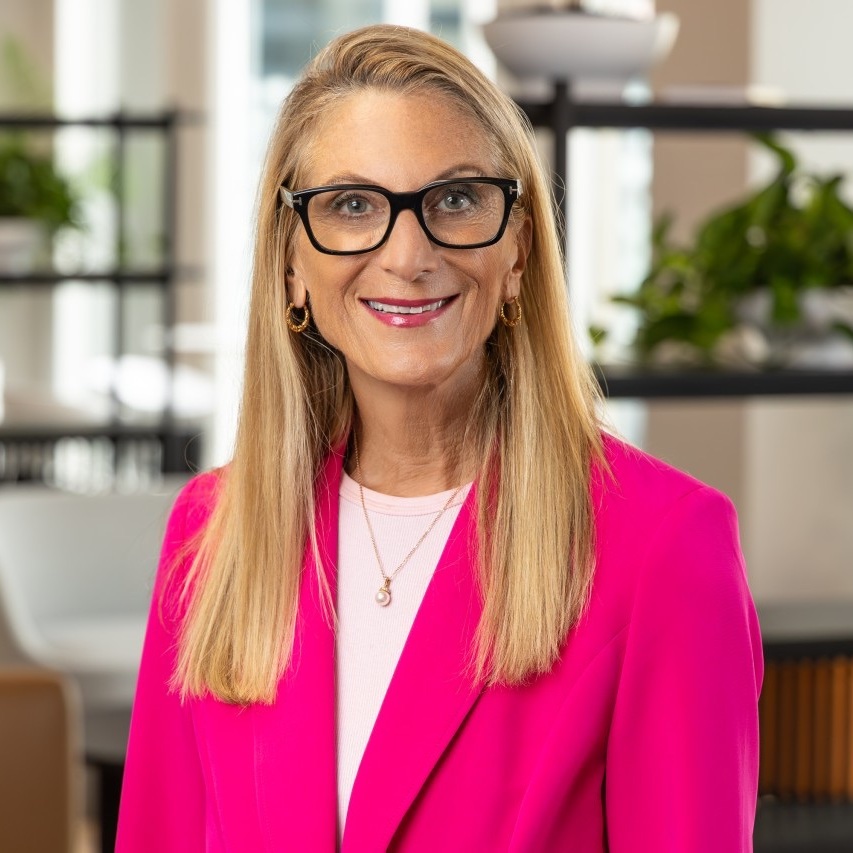
Dr Maureen Migliazzo is Chief Operating Officer of Dentons Australia, one of the world’s largest law firms, where she leads strategy, transformation and enterprise performance across a complex global professional services environment.
With a career spanning executive leadership roles across legal, consulting and professional services organisations, Maureen is passionate about building high-performing workplaces that deliver both commercial success and positive people outcomes. Her work focuses on helping organisations navigate change, leverage technology and AI, and create cultures where individuals and teams can thrive.
We are delighted that Maureen will be joining our morning Leadership panel in Sydney: “Driving Performance in a Changing World: From Wellbeing to Workforce Advantage”. The panel will expore:
What leadership behaviours and cultural signals sustain wellbeing and performance in hybrid, AI-enabled workplaces?
How can wellbeing be embedded as a seamless, data-informed experience across the entire employee lifecycle?
How do organisations shift from wellbeing provision to building workforce capability, adaptability, and growth?
How can wellbeing be leveraged as a strategic driver of resilience, retention, and innovation in times of rapid change?
We caught up with Maureen to find out how she’s feeling in the runup to the summit:
Hi Maureen, we are thrilled that you are joining us at the Wellbeing at Work Summit Australia in Sydney this November. Our first and most important question is, how are you doing today?
Fabulous – Like most leaders, there are always competing priorities and plenty happening, but I genuinely enjoy what I do. I feel fortunate to work with great people, keep learning, and contribute to meaningful change. That sense of purpose is a big part of wellbeing for me.
As a leader based in the region, what are the main challenges you are facing when it comes to employee wellbeing and mental health?
One of the biggest challenges is helping people manage increasing complexity and constant change. Employees are navigating economic uncertainty, technology disruption, rising client expectations and, for many, significant responsibilities outside work.
Another challenge is that wellbeing looks different for different people. While some employees value flexibility and autonomy, others are seeking connection, development opportunities and a sense of belonging. There is no one-size-fits-all solution.
The most effective organisations are recognising that wellbeing is not a standalone program. It is shaped by leadership behaviours, workload, culture, psychological safety and the everyday experience of work.
What strategies have you seen developing over the past 6 months, both internally and externally, that are moving the dial on wellbeing in the workplace?
The most positive shift I am seeing is organisations moving beyond wellbeing as a collection of initiatives and embedding it into how work gets done. We are seeing more focus on manager capability, helping leaders have better conversations, identify signs of burnout early and create psychologically safe environments. There is also much greater use of data to understand workload pressures, engagement trends and workplace experience.
Importantly, I am seeing organisations recognise that wellbeing and performance are not competing priorities. Sustainable high performance only exists when people have the support, flexibility and resources to do their best work.
Why is employee wellbeing so important to you personally?
Because organisations are powered by people. I’ve spent my career leading transformation and change, and I’ve learned that no strategy succeeds without engaged, healthy and motivated employees.
On a personal level, I’ve seen the impact that supportive leaders and positive workplace cultures can have on confidence, resilience and career growth. Equally, I’ve seen the cost when wellbeing is overlooked.
For me, wellbeing is fundamentally about creating an environment where people can thrive professionally while maintaining healthy and fulfilling lives outside work.
What impact is AI having in your organization and how are you managing that?
AI is already changing the way we work. It is helping automate repetitive tasks, improve productivity, enhance decision making and allow people to focus on higher-value work.
At the same time, it is creating understandable questions and concerns for employees. People want to know how their roles may change and what skills they will need in the future.
Our focus has been on education, transparency and responsible adoption. We talk openly about opportunities and risks, invest in capability building and ensure appropriate governance is in place. I see AI as a tool that should augment people rather than replace them. The organisations that succeed will be those that combine technology with human judgment, creativity and empathy.
Other than AI, are there any challenges that you are seeing for the first time and how are you addressing them?
AI is already changing the way we work. It is helping automate repetitive tasks, improve productivity, enhance decision making and allow people to focus on higher-value work.
At the same time, it is creating understandable questions and concerns for employees. People want to know how their roles may change and what skills they will need in the future.
Our focus has been on education, transparency and responsible adoption. We talk openly about opportunities and risks, invest in capability building and ensure appropriate governance is in place. I see AI as a tool that should augment people rather than replace them. The organisations that succeed will be those that combine technology with human judgment, creativity and empathy.
What areas do you think employers should be focused on over the next 12 months?
I believe there are four priorities:
- Building resilient and adaptable leadership capability.
- Supporting employees through AI and technology transformation.
- Creating cultures of psychological safety and inclusion.
- Using data and employee insights to design better work experiences.
Most importantly, organisations should focus on creating sustainable performance. The goal is not simply to avoid burnout; it is to create environments where people can consistently perform, grow and thrive over the long term.
Do you feel that investment in employee wellbeing in the region is increasing or decreasing and is that a direct reflection on HR leaders’ increasing ability to demonstrate effective returns of their strategies to leadership?
Overall, I believe investment is increasing, although organisations are becoming more rigorous about measuring outcomes. Boards and executive teams increasingly recognise that wellbeing is linked to performance, retention, productivity, engagement and risk management. HR leaders have also become much stronger at using data to demonstrate that connection. The conversation has evolved. Instead of asking whether organisations should invest in wellbeing, leaders are asking how to invest effectively and where resources will have the greatest impact.
How has your organisation been leading the way?
One area I am particularly proud of is our focus on creating a people-centred culture while continuing to evolve how we work.
We have embraced flexible working, invested in leadership capability, prioritised inclusion and diversity, supported employee wellbeing initiatives and actively explored how emerging technologies such as AI can enhance both productivity and employee experience.
Importantly, we recognise that wellbeing is not owned by HR alone. It is a leadership responsibility. Our goal is to create an environment where people feel supported, trusted, challenged and able to do their best work, because that ultimately drives better outcomes for our people, our clients and our organisation.
Maureen will be speaking in Syndey as part of our Wellbeing at Work Summit Australia which take place this November in Sydney, Melbourne and Brisbane. Click the links below to find out more and book your tickets:
To find out more about our Sydney summit and book your tickets click here.
To find out more about our Melbourne summit and book your tickets click here.
To find out more about our Brisbane summit and book your tickets click here.