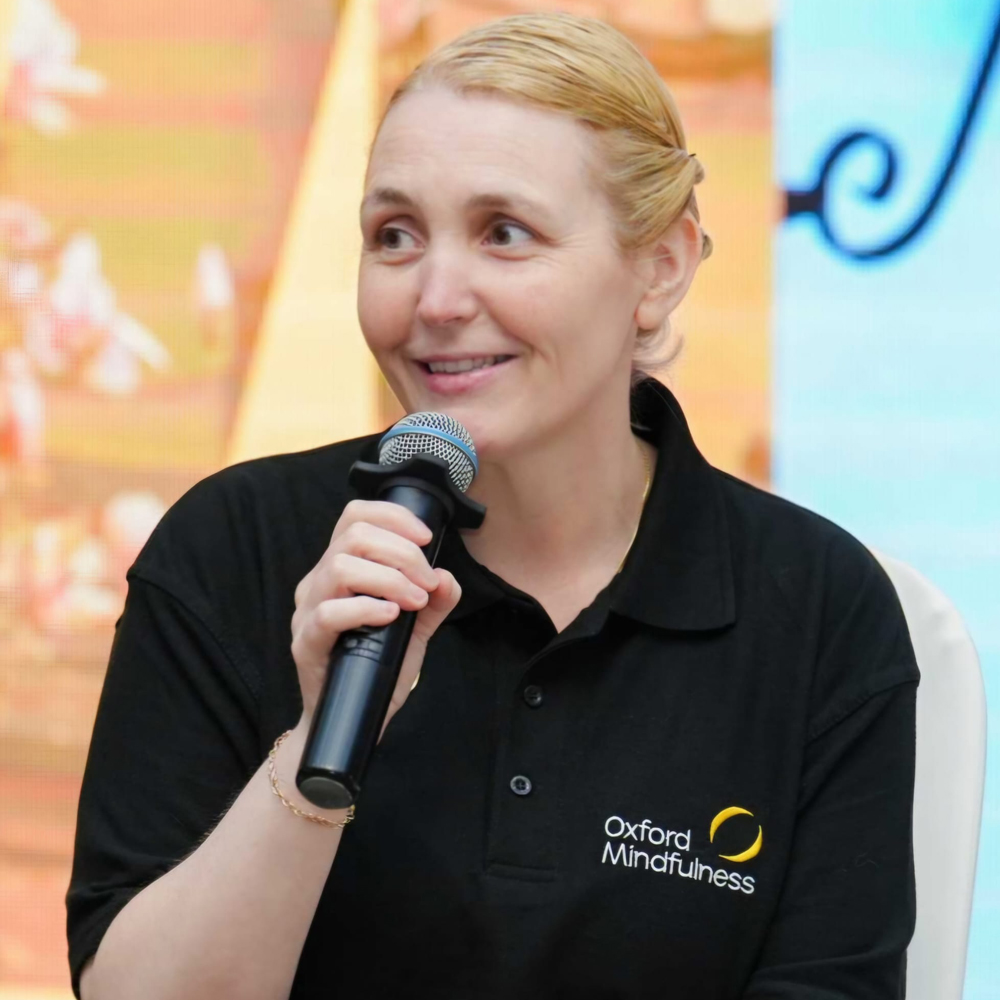
Dr Sharon Hadley is Chief Executive of the Oxford Mindfulness Foundation, an international charity dedicated to improving wellbeing through research-based mindfulness. With more than 25 years’ experience working across construction, criminal justice, higher education, government, healthcare and the charity sector, Sharon has built a career helping organisations create healthy cultures where people feel valued, respected and supported. Holding a PhD in Health Economics, an Executive MBA and currently completing a CIPD Level 7 qualification, Sharon combines research, organisational leadership and practical experience to help employers navigate the evolving wellbeing landscape. The Oxford Mindfulness Foundation works with organisations across sectors and countries, enabling Sharon to bring a broad perspective on what supports employee wellbeing in different contexts while contributing to the wider evidence base and sharing learning across the field.
We are delighted to be partnering with the Oxford Mindfulness Foundation for our UK Summit and that Sharon will be present at both our London and Manchester summits.
We caught up with Sharon to see how she’s feeling in the run up to the summit:
Hi Sharon, we are thrilled that you are joining us at the UK Wellbeing at Work Summit in September. Our first and most important question is, how are you doing today?
I’m doing well, thank you. It’s been a busy period, but an exciting one. We’re expanding our work internationally and developing new collaborations around workplace wellbeing, there’s lots of positive momentum.
As a leader based in the region, what are the main challenges you are facing when it comes to employee wellbeing and mental health?
One of the biggest challenges we face is helping organisations understand what mindfulness is – and perhaps more importantly, what it isn’t.
There is still a perception in some places that mindfulness is simply about relaxation or stress reduction. Those can be valuable outcomes, but the evidence tells us it’s much broader than that. Mindfulness develops the capacity to pay attention, respond rather than react, and make wiser decisions under pressure. Those are capabilities that support leadership, communication, teamwork and resilience, not just individual wellbeing.
I also think we’re becoming better at recognising that wellbeing is much broader than mental health alone. Sleep, physical activity, nutrition, social connection, habits and organisational culture all influence how people experience work and perform. The challenge is helping organisations see mindfulness as one evidence-based component within that wider wellbeing agenda, rather than as a standalone intervention.
What strategies have you seen developing over the past 6 months, both internally and externally, that are moving the dial on wellbeing in the workplace?
I’m seeing a growing recognition that the old idea of separating “work life” and “personal life” doesn’t reflect how people actually experience life. Employees bring their whole selves to work, and the pressures, responsibilities and experiences outside work inevitably influence how they perform at work. Equally, what happens at work has a significant impact on life beyond it.
The organisations making the greatest progress are embracing that reality. They’re recognising that employee wellbeing isn’t separate from organisational performance, it underpins it. Supporting people’s wellbeing isn’t just the right thing to do; it helps create healthier organisations with better decision-making, stronger collaboration and more sustainable performance.
Our own strategy has reflected that change. We’re spending time broadening the conversation, helping organisations understand wellbeing as something influenced by multiple factors, including sleep, physical activity, nutrition, social connection and healthy habits. We see mindfulness as one evidence-based contributor within that wider picture because it helps people develop the awareness needed to make healthier choices and respond more effectively to the pressures of modern work.
I think that’s an important shift. Rather than asking, “What wellbeing programme should we offer?”, we’re asking, “How do we create the conditions in which people can thrive and perform sustainably?”.
Why is employee wellbeing so important to you personally?
Throughout my career, whether I’ve been working in construction, criminal justice, universities, government, healthcare or the charity sector, there’s been one consistent thread. My work has always been about helping organisations create environments where people are treated well.
We spend such a large part of our lives at work and I think employers have a real opportunity to influence people’s lives for the better. That doesn’t mean wrapping people in cotton wool or removing challenge. It means creating cultures where people feel valued and respected, where wellbeing is recognised as important, and where people can contribute positively throughout their careers.
That’s why employee wellbeing matters to me. It’s about recognising that organisations succeed because of their people, and people are more likely to give their best when they know they’re valued and supported.
What impact is AI having in your organisation and how are you managing that?
AI is certainly changing how we work, particularly by reducing the time spent on routine administrative tasks, planning, research and drafting communications. That allows our team to spend more time on the work that really benefits from human judgement, collaboration and relationships.
It’s important to say that our evidence-based teaching programmes are developed by our faculty and subject experts. For us, AI supports the way we work; it doesn’t replace the expertise, research or clinical integrity that underpin our programmes.
The bigger question for me isn’t whether we use AI, but how we use it well. My interest is in preserving human judgement. AI can generate ideas incredibly quickly, but reflection, ethics, empathy and decision-making remain fundamentally human capabilities. We’re encouraging our teams to use AI as an intelligent assistant rather than a replacement for thinking.
Other than AI, are there any challenges that you are seeing for the first time and how are you addressing them?
One of the newer challenges I’m seeing is the sheer volume of wellbeing information now available online. It’s never been easier to access advice, courses and tools, many of them free, but it’s becoming increasingly difficult for employers and individuals to distinguish between approaches that are grounded in robust evidence and those that are simply well marketed.
That’s creating a new responsibility for organisations like ours. Rather than simply providing more wellbeing resources, we need to help employers make informed decisions about what is most likely to benefit their workforce. We start with the wider research evidence, but we also recognise that every organisation is different. That’s why we work with employers to tailor programmes from the evidence-base, evaluate what they’re doing, gather their own data and understand what works for their people, their culture and their particular challenges.
What areas do you think employers should be focused on over the next 12 months?
I hope we’ll continue to see employers take an increasingly broader view of employee wellbeing. We’ve made progress in recognising the importance of mental health, but there is still work to do to remove the stigma that can prevent people from talking openly or seeking support. I’d like to see mental health viewed with the same acceptance and importance as physical health, because both have a significant impact on people’s lives and their experience at work.
I also think there is a real opportunity to focus more on prevention. Rather than waiting until people reach crisis point, organisations can create healthy cultures where wellbeing is considered part of everyday working life, managers feel confident having supportive conversations, and people feel valued and respected.
At the same time, I don’t think there is a single wellbeing intervention that works for everyone. People have different needs, preferences and circumstances, so employers should be thinking about offering a range of evidence-informed approaches rather than searching for one solution. Giving people choice is important, because what helps one person may not be what helps another.
Do you feel that investment in employee wellbeing in the region is increasing or decreasing and is that a direct reflection on HR leaders’ increasing ability to demonstrate effective returns of their strategies to leadership?
I think organisations remain committed to wellbeing and there seems to be an increasing interest in this area, but employers are asking tougher questions about impact. Budgets are under pressure, so wellbeing programmes increasingly need to demonstrate how they contribute to engagement, retention, productivity and organisational performance.
That’s not necessarily a bad thing. It encourages us to build evidence, measure outcomes and integrate wellbeing into business strategy rather than treating it as a standalone initiative.
How has your organisation been leading the way?
We’ve always tried to lead by listening as much as leading. Over the years we’ve worked with organisations across healthcare, higher education, government, charities, commercial organisations and international institutions. Every sector we have worked with has its own culture, pressures and challenges, but they all have one thing in common, they’re trying to support the wellbeing of their people.
That breadth of experience has allowed us to build a growing knowledge base of what works in different organisational contexts. Rather than taking a one-size-fits-all approach, we look for the common principles that underpin healthy workplaces while recognising that every organisation needs solutions that reflect its own people, culture and priorities.
We’re also committed to contributing back to the field. Through our partnerships with employers, universities and researchers, and by evaluating the work we do, we’re continually learning alongside the organisations we support. I think that’s one of the reasons we’ve been able to remain at the forefront of workplace mindfulness for nearly two decades.
Sharon will be joining us in both our London and Manchester summits in September. Click the links below to find out more and book your tickets:
London Summit 15th September: Find out more and Book Your London Tickets Here
Manchester Summit 17th September: Find out more and Book Your Manchester Tickets Here