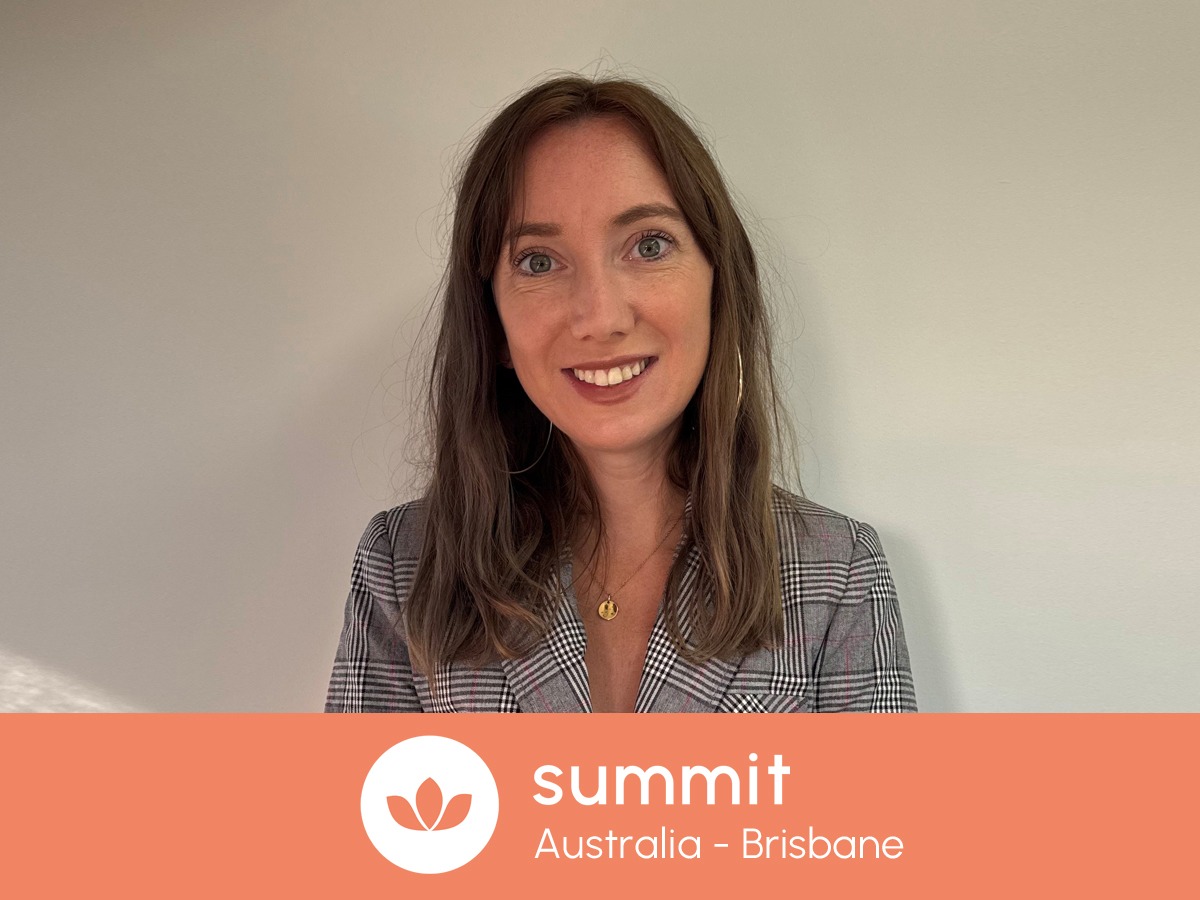
We are delighted that Belen will be joining us in Madrid next week where she will be on our Legal Panel: “The Pressure We Don’t Talk About: Rethinking Wellbeing in the Legal Profession”. We caught up with her to see how she’s feeling in the run up to the summit:
Hi Belen, we are thrilled that you are joining us at the Wellbeing at Work Summit in Madrid next week. Our first and most important question is, how are you doing today?
Well, thank you. With the energy of someone who works in a demanding yet stimulating environment. The legal department of a company like Urbaser, with a presence in more than 15 geographies and different time zones, never stops. That has a very positive side for me we are constantly learning, constantly at the center of decision-making but it also requires a conscious effort to take care of oneself in order to perform at a consistently high level. Today, I find myself in a moment of active reflection on how we make this pace sustainable for the whole team. Nowadays, we are handling many more matters than in the past, and the level of rigor and attention required means that concerns about sustainability for the team are always present.
As a leader based in the region, what are the main challenges you are facing when it comes to employee wellbeing and mental health?
In in-house legal departments, we deal with pressures that are often invisible to the rest of the organization: fixed deadlines, or timelines set with clients without considering our availability, overlapping tasks, high personal responsibility, confidentiality that prevents sharing emotional burdens, and a constant expectation of availability. On top of this, there is a cultural challenge: in the legal world, there is still a narrative that equates personal sacrifice with professional excellence. Breaking this mindset is probably the biggest challenge.
Additionally, at Urbaser we operate across multiple jurisdictions with evolving regulatory frameworks environmental regulations, public procurement, compliance which creates peaks of pressure that are difficult to anticipate. The challenge is twofold: managing the objective workload while also creating a space where people feel safe to say “I need help” without it being perceived as professional weakness.
What strategies have you seen developing over the past 6 months, both internally and externally, that are moving the dial on wellbeing in the workplace?
Internally, we have made progress in normalizing conversations about workload in team meetings, not just as an operational issue but as a wellbeing indicator. We have also introduced greater flexibility in how work is organized, recognizing that legal productivity should be measured not by hours of presence, but by quality of judgment.
Externally, I see a very positive shift in approach: moving away from reactive wellbeing initiatives meditation apps, fruit in the office towards structural interventions, such as workload reviews by managers, training managers in early burnout detection, and metrics linking wellbeing to talent retention.
In the legal sector specifically, I increasingly see firms and in-house teams openly discussing mental health, something that would have been unthinkable five years ago.
Why is employee wellbeing so important to you personally?
Because I have experienced first-hand the consequences of neglecting it. The legal profession has concerning levels of anxiety, burnout, and in extreme cases, depression. I have seen extremely talented colleagues leave promising careers because the environment was not sustainable. I have learned that leadership is not just about delivering results; it is about doing so in a way that allows people to keep growing professionally without burning out, maintaining motivation and a sense of fulfilment.
Moreover, as Deputy General Counsel, I have direct responsibility for a team. If I do not model the behavior I want to see setting boundaries, acknowledging vulnerabilities, genuinely prioritizing no one else will. Wellbeing is not a corporate perk; it is a prerequisite for high-quality legal thinking.
What impact is AI having in your organization and how are you managing that?
Artificial intelligence is transforming the way we work, particularly in document review, contract analysis, and knowledge management. Its impact is positive insofar as it reduces repetitive tasks and frees up time for higher-value work.
At Urbaser, we are implementing a pilot program with Harvey, and the team members involved are very positive about it. However, it is important not to overlook that, from a wellbeing perspective, AI also introduces new pressures: expectations of faster delivery, uncertainty about the future of professional roles, and the need for continuous training on top of already demanding schedules.
We are managing this through transparency explaining to the business what will and will not change through progressive training, and, above all, by reinforcing that AI is a tool to support the team, not replace it. Legal judgment, empathy with internal clients, and negotiation skills remain deeply human.
Other than AI, are there any challenges that you are seeing for the first time and how are you addressing them?
Yes, I would highlight two. The first is regulatory fatigue: in our sector, there is a particularly notable accumulation of new legal obligations, not only environmental but also in areas such as sustainability, supply chain due diligence, data protection and corporate governance. This creates cumulative pressure on legal teams, which rarely translates into additional headcount, but rather into increased workload for existing teams.
We are addressing this through better prioritization, the use of AI, regulatory tracking tools, and clearer communication with management about what is feasible with the available resources.
The second is the generational shift: younger professionals come with different expectations regarding work-life balance, purpose and development. This is not a problem but an opportunity, although it requires adapting leadership styles and being willing to question practices we previously took for granted.
What areas do you think employers should be focused on over the next 12 months?
Primarily three. First, training middle management in emotional management and the early detection of warning signs, as they are on the front line and often lack the necessary tools. Second, an honest review of workloads: no wellbeing initiative can offset a structurally unsustainable workload. Third, creating psychologically safe environments where asking for help does not carry reputational costs. This is especially relevant in legal environments, where the perception of control and competence is deeply ingrained.
Do you feel that investment in employee wellbeing in the region is increasing or decreasing and is that a direct reflection on HR leaders’ increasing ability to demonstrate effective returns of their strategies to leadership?
It seems clear that both investment and awareness are increasing in Spanish companies, at least in large organizations that are allocating more resources. However, these are often still focused on visible and easily measurable initiatives digital platforms, climate surveys rather than deeper structural changes. The challenge is likely even greater for SMEs.
As for the connection with HR’s ability to demonstrate return on investment, I believe this is a relevant factor, but not the only one. What is really driving change is the convergence of three forces: the growing difficulty in attracting and retaining qualified talent, regulatory pressure (particularly in sustainability), and increased generational awareness. Those HR teams that have managed to link wellbeing to business indicators are securing more investment, but real change will come when it is fully understood as a strategic imperative.
How has your organisation been leading the way?
Urbaser has taken significant steps, while acknowledging that this is an ongoing journey. We have employee support programs, have moved away from private offices towards more open workspaces, promote an open-door policy, and encourage flexibility and work-life balance measures. We also invest in healthy leadership training, preparing managers to provide continuous feedback and better support their teams.
Within the legal department, we have specifically worked on making the pressures of our function more visible something that historically remained hidden— and on building a team culture where technical excellence and personal wellbeing are not at odds.
What I am most proud of is not any particular program, but the fact that we can now have this conversation openly within the organization. That cultural shift, although difficult to measure, is probably the most important indicator of progress.
Belen is speaking in Madrid as part of our Wellbeing at Work Summit Europe 2026 which takes place in Zurich, Amsterdam and Madrid this month. Click the links below to find out more and book your tickets: