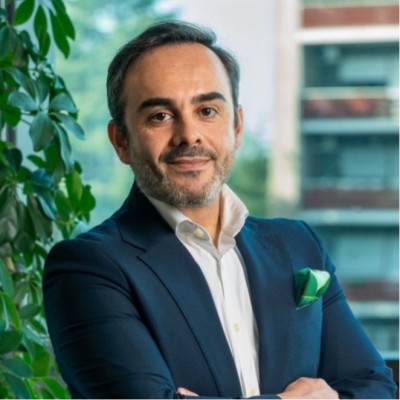
We are delighted that Luis will be joining us in Madrid next week where he will be on our Legal Panel: “The Pressure We Don’t Talk About: Rethinking Wellbeing in the Legal Profession”. We caught up with him to see how he’s feeling in the run up to the summit:
Hi Luis, we are thrilled that you are joining us at the Wellbeing at Work Summit in Madrid next week. Our first and most important question is, how are you doing today?
I am doing well, thank you. Like many leaders, I navigate periods of high intensity and constant change, but I have become much more intentional about balance, recovery and perspective. Over the years, I have learned that wellbeing is not something separate from performance — it is what sustains performance over time. That mindset has changed the way I lead both myself and my teams.
As a leader based in the region, what are the main challenges you are facing when it comes to employee wellbeing and mental health?
One of the biggest challenges is the growing complexity and pace of work across international teams. In regions spanning Europe, Africa and Asia, people are managing different time zones, cultures, regulatory environments and economic realities, often while remaining permanently connected digitally.
Another challenge is that many professionals — especially in legal and corporate environments — still feel pressure to project resilience at all times. High performers are often the least likely to openly discuss stress, fatigue or mental overload. Creating a culture where wellbeing conversations are normal, credible and leadership-driven remains essential.
What strategies have you seen developing over the past 6 months, both internally and externally, that are moving the dial on wellbeing in the workplace?
I have seen a clear shift from wellbeing being treated as a standalone HR initiative to becoming a broader leadership and business conversation. The organisations making real progress are embedding wellbeing into management practices, workload discussions, flexibility policies and leadership accountability.
There is also increasing recognition that psychological safety matters as much as formal wellbeing programmes. Employees want environments where they can speak openly, disconnect when needed and feel trusted.
Externally, I also see more emphasis on sustainable performance rather than “always-on” cultures. That is an encouraging evolution, particularly in high-pressure sectors.
Why is employee wellbeing so important to you personally?
Because behind every strategy, negotiation or business objective there are people. I have worked across demanding international environments for many years and I know that sustained pressure without the right support eventually impacts judgment, creativity, engagement and health. I also believe leadership carries responsibility beyond results. The way we lead influences how people experience work, balance ambition with personal life and ultimately how they grow professionally and personally. For me, wellbeing is fundamentally about respect, dignity and long-term sustainability.
What impact is AI having in your organization and how are you managing that?
AI is already transforming the way organisations operate, including in legal, compliance and corporate functions. It is creating opportunities for greater efficiency, faster decision-making and better access to information. At the same time, it is also generating understandable uncertainty for employees regarding skills, roles and expectations.
The key is to approach AI as an enabler rather than simply a replacement tool. That means investing in upskilling, maintaining transparency around its use and ensuring that human judgment, ethics and critical thinking remain central. In legal functions particularly, trust, accountability and context remain irreplaceable.
Other than AI, are there any challenges that you are seeing for the first time and how are you addressing them?
One challenge I see increasingly is workforce fatigue linked not only to workload, but to continuous uncertainty. Geopolitical instability, economic pressure, rapid transformation and constant connectivity create a sense that many professionals never fully switch off. Another emerging challenge is maintaining cohesion and culture across hybrid and international teams. Organisations must work harder to preserve collaboration, inclusion and human connection. Addressing this requires more intentional leadership communication, clearer prioritisation and creating spaces where people genuinely feel heard.
What areas do you think employers should be focused on over the next 12 months?
Employers should focus on sustainable leadership, psychological safety and organisational trust. Employees increasingly value clarity, transparency and authenticity from leadership teams.
There also needs to be greater attention on manager capability. Many wellbeing experiences are shaped by direct managers, so organisations should equip leaders to recognise burnout risks, manage workloads effectively and lead with empathy without compromising performance.
Finally, companies should focus on creating healthier relationships with technology and availability, particularly in global environments where the boundaries between work and personal life can easily disappear.
Do you feel that investment in employee wellbeing in the region is increasing or decreasing and is that a direct reflection on HR leaders’ increasing ability to demonstrate effective returns of their strategies to leadership?
I believe investment is generally increasing, although expectations around measurable impact are also becoming stronger. Organisations increasingly understand that wellbeing is connected to engagement, retention, productivity, risk management and employer reputation. HR leaders today are much better positioned to demonstrate the business value of wellbeing strategies through data, employee feedback and organisational outcomes. The conversation has evolved significantly — wellbeing is no longer viewed only as a “nice to have,” but increasingly as part of resilient and sustainable business performance.
How has your organisation been leading the way?
At Indra Group, we operate in highly dynamic and international environments, which makes people and culture particularly important. We have continued evolving towards more flexible, collaborative and people-centred ways of working while maintaining a strong focus on performance and innovation. What I value most is the growing recognition that wellbeing, inclusion, professional development and business success are interconnected. In complex organisations, leadership culture matters enormously, and I believe there is increasing commitment to building environments where people can perform at a high level while also feeling supported, respected and trusted.
Luis is speaking in Madrid as part of our Wellbeing at Work Summit Europe 2026 which takes place in Zurich, Amsterdam and Madrid this month. Click the links below to find out more and book your tickets: