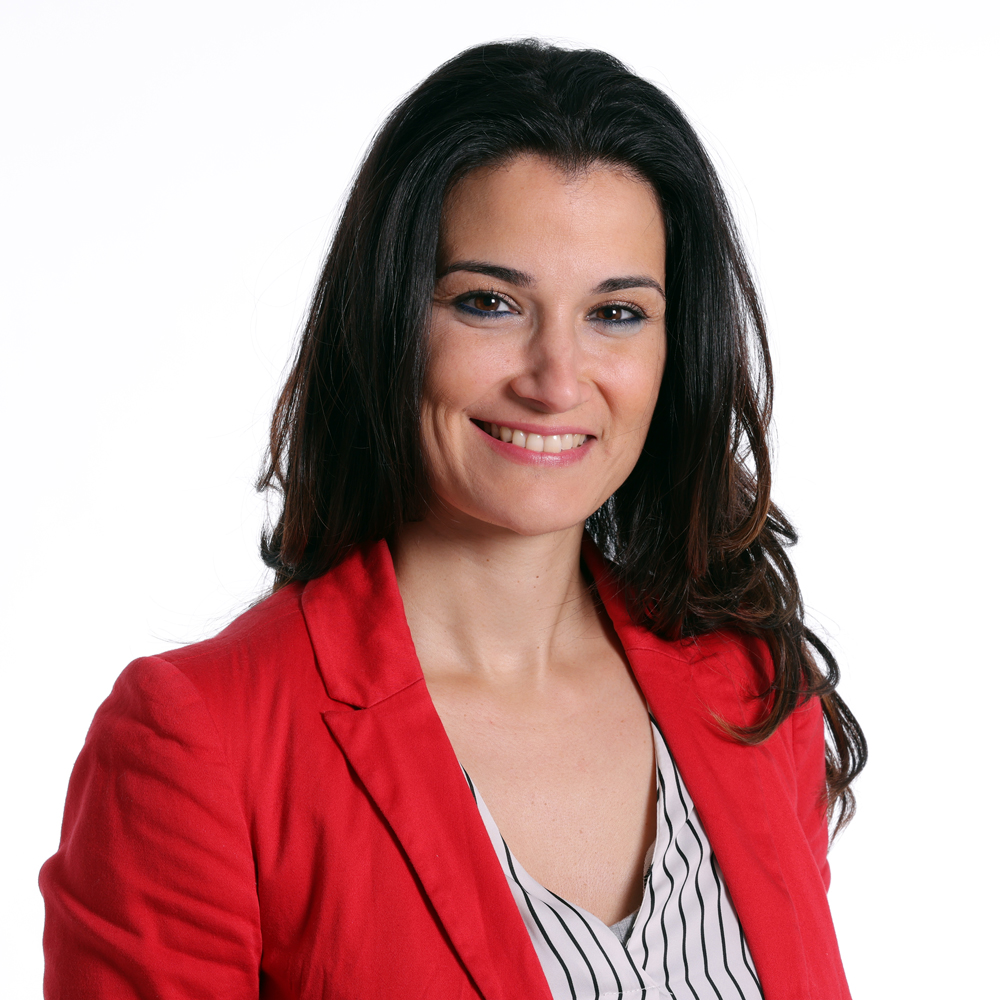
Raquel works at AXA Global Health, where she is developing AXA’s comprehensive health offering for corporations: Health360. She is at the forefront of designing and implementing cancer programs, a core component of this initiative. With a Bachelor’s Degree in Business Administration and a Master’s in Business Economics & Digital Business, Raquel brings over 15 years of healthcare experience spanning both the pharmaceutical and insurance industries, with a strong focus on digital health solutions and innovation. She is deeply passionate about preventative health and firmly believes that employers play a vital role in fostering a healthier, more thriving workforce.
We are delighted to be partnering with AXA Health Global at our Zurich summit this week. Raquel and her colleague Carolina Rebecchi will be joining us at the summit and running a workshop designed to help you design a 360 health strategy to strengthen workforce stability, adaptability and predictability.
We caught up with Raquel to see how she’s feeling in the run up to the summit:
Hi Raquel we are thrilled that you are joining us at the Wellbeing at Work Summit in Zurich this week. Our first and most important question is, how are you doing today?
Thank you so much! I genuinely appreciate the warm welcome. I’m feeling great and really excited to be part of this summit. It’s such a fantastic opportunity to connect with caring leaders from across the region and to share ideas on how we can support employees’ overall health. Honestly, I believe that building a culture of health is a journey- one of continuous learning and adaptation- especially now, with the rapid evolution of technology and data shaping our strategies. I’m eager to exchange insights and learn from others in this community.
As a leader based in the region, what are the main challenges you and your clients are facing when it comes to employee wellbeing and mental health?
It’s clear that employee health is becoming more and more critical for organizations today. In fact, around half of employees are currently struggling with some aspect of their health—be it mental, physical, or social—and that inevitably impacts how organizations perform.
The biggest challenge I see is the frustration HR professionals feel because, despite all their efforts and investments, they don’t always see the impact they hoped for. A lot of this comes down to the market being quite fragmented -companies often subscribe to multiple vendors, which creates a complex situation that’s hard to manage and assess. This fragmentation makes it harder to get a clear picture of employee risks or to measure the true value of health initiatives.
And then there’s the ongoing struggle to boost engagement -many programs are underused simply because employees may not see them as relevant or might not even know what’s available. So, the challenge is creating more targeted, personalized, and accessible solutions that truly resonate with employees’ lives.
What strategies have you seen developing over the past 6 months, both internally and externally, that are moving the dial on wellbeing in the workplace?
I’ve noticed a big shift towards adopting holistic and proactive health approaches. Organizations are starting to see that physical, mental, and social health are interconnected, and they’re creating ecosystems that address all these aspects together. There’s a strong push towards early risk detection -using innovative tools to identify issues before they become major problems- so that interventions are more effective and less costly. Another exciting development is the focus on personalization: companies want solutions that adapt to each employee’s unique needs, with an emphasis on fairness and health equity. Technology and data analytics are making this possible at scale. They help us understand individual health risks and deliver support that’s truly tailored, which in turn boosts engagement and creates real impact.
Why is employee wellbeing so important to you personally?
For me, supporting employee wellbeing isn’t just a professional goal—it’s a deeply personal conviction. I truly believe that when people feel supported physically, mentally, and socially, they are happier, more engaged, and more productive. Investing in health is, in a way, investing in people’s potential. It’s about creating workplaces where employees can thrive—not just survive—and where they feel valued and cared for. At the end of the day, I see it as a moral responsibility and a strategic necessity. When organizations prioritize wellbeing, everyone wins: individuals, teams, and the organization as a whole.
What role is AI playing in your approach to preventive health and how are you incorporating it into your offer?
AI is truly a game-changer for us. It allows us to deliver highly personalized health interventions at scale, which was difficult to achieve before.
For example, we use AI to build detailed profiles of employees based on their health risks and barriers. These profiles enable our recommendation engines to suggest tailored actions for each individual or group, making programs more relevant and engaging. We’ve seen some clients experience a 10% increase in participation, and in some cases, participation rates have gone up to 60%.
We also use AI to analyze and forecast the ROI of our strategies, showing organizations the tangible value of their investments—not just in health outcomes but also in organizational and societal impact.
Thanks to AXA’s extensive databases and the expertise of global health, data, and workplace specialists, we’re able to develop precise models that support smarter, more effective prevention strategies.
Beyond the incorporation of AI in health strategies, which other key challenges are you supporting your clients to address?
One big challenge for our multinational clients is scaling health programs across multiple countries: getting consistent, coherent experiences for their employees worldwide, but managing that at scale is tough. We address this by partnering with a curated portfolio of healthcare providers, combining the best global technology solutions with local healthcare experts, and rigorously validating everything for clinical effectiveness, security, data privacy and compliance.
Another major challenge is engagement. We know that even the best programs won’t work if employees don’t participate. That’s why we’ve developed our Engage4Health suite, including speaker series, peer support activities, social challenges, and leadership bootcamps designed to inspire, mobilize, and activate employees at all levels. These initiatives help us create a real culture of health, where employees feel motivated and supported to take action.
What areas do you think employers should be focused on over the next 12 months?
Looking ahead, I believe there are three key areas for employers to focus on.
First, expanding early risk detection—using digital and physical assessments to identify health challenges before they become costly or severe.
Second, personalizing interventions—recognizing that a one-size-fits-all approach doesn’t work anymore. Tailoring support to individual needs makes a real difference. And third, cultivating a culture of health—where leaders actively champion health, inspire employees, and create environments that encourage healthy habits.
When health becomes part of the company culture, change becomes sustainable.
Do you feel that investment in employee wellbeing in the region is increasing or decreasing and is that a direct reflection on HR leaders’ increasing ability to demonstrate effective returns of their strategies to leadership?
Overall, investment is increasing, which is encouraging. Organizations are recognizing that health and wellbeing isn’t just a cost—it’s a strategic investment. But, at the same time, there’s still some skepticism about whether these programs deliver measurable results.
That’s why HR leaders are looking to leverage data to make their use case, using impact measurement tools, ROI calculators, and engagement metrics. They’re eager to show the value of health initiatives, not just in terms of costs saved, but also in improved workforce stability and adaptability.
How has your organisation been leading the way?
At AXA, we’re advancing health at work, focusing on preventive health, through our Health360 offering. This comprehensive service is designed to be holistic, intelligent, and truly personalized, focused on supporting employers committed to caring for their people. We combine digital tools with in-person support, leveraging behavioral science and AI to deliver tailored recommendations and impact assessments.
Our global team of experts and extensive data resources enable us to develop innovative, scalable solutions that make a real difference. We’re setting new standards for how organizations can create healthier, happier workplaces—and I’m excited to see how our approach continues to evolve and inspire others.
Raquel and Carolina will be speaking in Zurich this week as part of our Wellbeing at Work Summit Europe 2026 which takes place in Zurich, Amsterdam and Madrid this month. Click the links below to find out more and book your tickets: