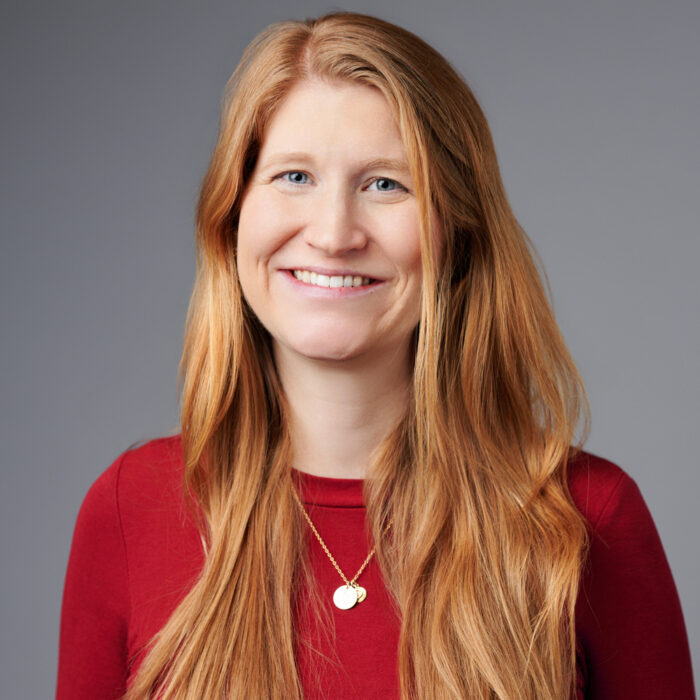
Julie is the former Global Wellbeing Lead at UBS and Credit Suisse, where she focused on driving cultural and behavioral change at the organizational level while delivering effective wellbeing resources for individuals. With a background as a McKinsey strategy consultant, she brings extensive experience supporting organizations through large-scale transformation and disruption. Julie specializes in advancing sustainable high performance through strategic, integrated approaches to wellbeing with measurable impact, alongside executive and team coaching. A Swiss national with a global perspective, she has lived in eight countries and holds degrees from INSEAD, Yale, and Columbia University.
We are delighted to welcome Julie back to our Wellbeing at Work Summit and are looking forward to seeing her in Zurich this week where she will be joining our “Wellbeing Culture as a Performance Engine” Panel.
We caught up with her to see how she’s feeling in the run up to the summit:
Hi Julie we are thrilled that you are joining us at the Wellbeing at Work Summit in Zurich this week. Our first and most important question is, how are you doing today?
I’m feeling really happy and grateful, and definitely a bit tired too! We’ve just jumped into the “two under two” adventure.
As a leader based in the region, what are the main challenges you are facing when it comes to employee wellbeing and mental health?
There are strong economic and geopolitical pressures creating a lot of uncertainty and disruption for employees. Many companies are going through layoffs and restructuring, and the job market is tough—especially at entry-level and senior levels.
As a result, people are holding on to roles they no longer want. Engagement is low (around 12% in Europe), and workloads feel higher than ever.
This adds pressure to an already strained system. We’ve seen a significant rise in mental health challenges, such as a ~25% increase in anxiety and depression, as well as long-term sickness rates. In Switzerland, for example, these have increased by more than 50% since 2012, with a new burnout case emerging every 90 seconds.
On top of that, wellbeing is still often seen as a “nice-to-have,” rather than a core driver of sustainable performance. Many organisations lack a clear business case, and wellbeing is not fully embedded in strategy, leadership, culture, or core processes. That makes it an easy target for deprioritization when budgets and leadership bandwidth are tight.
What strategies have you seen developing over the past 6 months, both internally and externally, that are moving the dial on wellbeing in the workplace?
There’s been a clear shift away from standalone wellbeing initiatives toward improving the work environment itself, which we know drives around 70% of employee health.
At the same time, newer, more modern mental health providers are enabling companies to achieve significantly higher ROI compared to traditional solutions. Combined with more data-driven approaches to identifying root causes and detecting hotspots within organisations, this allows for more targeted, effective, and preventative interventions.
Why is employee wellbeing so important to you personally?
I notice it in myself: how much better I feel and perform when I’m working with a supportive team that encourages healthy behaviors.
I’ve worked in many intense, high-pressure environments with long hours, and whether I felt “good” or “bad” often depended on the people I was working with.
I’ve also seen too many cases where highly motivated, high-performing individuals end up getting sick. It disrupts their lives—often setting them back years—while the company they are working so hard to impress can replace them relatively quickly. That’s difficult to hear, but I believe it’s true. Individuals need to prioritize their health, because no employer will ever care for us as much as we should care about ourselves.
At the same time, employers have a responsibility to create healthy workplaces—to reduce psychosocial risks and equip employees with the tools to detect and prevent mental health challenges in themselves and others. They need to help people define their boundaries, and then respect them.
What impact is AI having in your organization and how are you managing that?
I won’t comment specifically on my former organisation. More broadly, I see AI as both a challenge and an opportunity for employee wellbeing.
On the one hand, it reduces some of those mundane tasks that can drain our energy, opening more headspace for creative, complex tasks and increasing our productivity. It’s a great sparring partner, which can help propagate our impact. We can also use AI to make better, data-driven decisions to manage employee health, and many providers are using it to help detect and manage mental health challenges more effectively, e.g., modern EAP providers using AI triage to match patients to the best-suited therapists and therapists using AI to help them treat patients more effectively.
On the other hand, AI is contributing to job market disruption and increasing pressure on employees. One risk we don’t talk about enough is cognitive overload: AI can accelerate the pace and volume of work to a point where people are constantly “on.” It can also lead to over-reliance, where we neglect critical thinking and other skills that are essential for long-term mental fitness.
Ultimately, this is a work design challenge. Organisations need to be intentional about how AI is implemented – setting clear guardrails, ensuring tools are safe and evidence-based, and protecting the human skills that keep people healthy and effective.
Other than AI, are there any challenges that you are seeing for the first time and how are you addressing them?
This may not be entirely new, but I’m seeing increasing intergenerational challenges, particularly when it comes to Gen Z. They have different expectations around work and wellbeing, which are often met with a lack of understanding.
At the same time, many are entering the workforce with higher baseline levels of mental health challenges, and they are facing a particularly difficult job market, as entry-level opportunities continue to decline. This creates a long-term challenge for organisations, as talent pipelines are affected—and of course, it has broader societal implications as well.
I can’t comment on the actions of my former organisation.
What areas do you think employers should be focused on over the next 12 months?
- Re-evaluating their wellbeing strategy to ensure it addresses the root drivers of employee wellbeing—prioritizing high-impact, high-ROI initiatives. I’ll be expanding on this at the summit.
- Carefully weighing the trade-offs between rapid cost-cutting measures, such as downsizing, and the long-term impact on the remaining workforce.
- Taking a more strategic approach to AI adoption, particularly in terms of its impact on employees and organisational health.
Do you feel that investment in employee wellbeing in the region is increasing or decreasing and is that a direct reflection on HR leaders’ increasing ability to demonstrate effective returns of their strategies to leadership?
According to Harvard Business Review, corporate wellbeing spend is expected to reach $94.6 billion in 2026. However, that’s not what I’m observing in practice, at least in Europe. In many cases, wellbeing budgets and roles are being reduced.
This is largely part of broader cost-cutting efforts, as well as a shift away from investment in DE&I and more human-centric people strategies.
At the same time, the fact that many teams struggle to measure and clearly communicate ROI doesn’t help. When wellbeing is not linked to tangible business outcomes, it becomes easy to deprioritize. While there is strong external research supporting the business case, what’s often missing is internal evidence. Demonstrating real impact within an organisation is far more powerful, but still relatively rare, as it’s perceived to be complex and difficult to do with enough scientific rigor.
How has your organisation been leading the way?
While I can’t comment on my former organisation directly, many of the approaches we implemented are reflected in the recommendations I’ve shared here and that I’ll expand on at the summit.
Julie is speaking in Zurich as part of our Wellbeing at Work Summit Europe 2026 which takes place in Zurich, Amsterdam and Madrid this month. Click the links below to find out more and book your tickets: