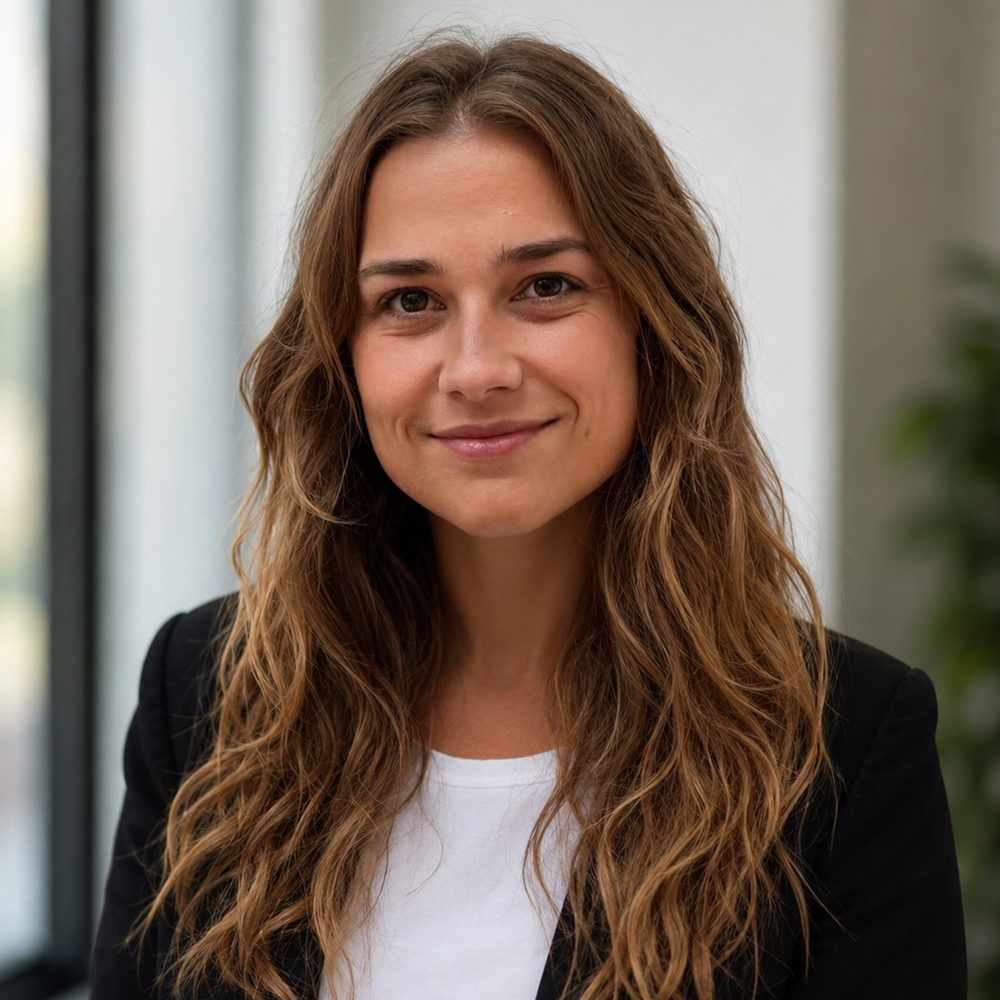
Dr. Macarena Staudenmaier is Head of Clinical Product & Operations at Simplyhealth, where she leads clinical strategy across prevention, partner services, and product. She trained as a doctor in Argentina before moving to the UK to study Global Health at UCL and has spent her career since working out how to close the gap between what healthcare can offer and what actually reaches people in time. She works across clinical governance, product, and strategy, bringing a doctor’s judgement to how digital health services are designed, delivered, and proven to work.
We are delighted to be partnering with Simplyhealth for our UK Summit and that Dr. Macarena Staudenmaier, their Head of Clinical Product & Operations, will be running a virtual workshop on day two of our summit. We caught up with her to see how she’s feeling in the run up to the summit:
Hi Macarena, we are thrilled that you are joining us at the UK Wellbeing at Work Summit in September. Our first and most important question is, how are you doing today?
I’m good, thanks!
As a leader based in the region, what are the main challenges you are facing when it comes to employee wellbeing and mental health?
The biggest one is that most wellbeing support still sits outside the moments where people actually need it. We’ve built more benefits, more apps, more helplines than ever, but a lot of it only gets used once someone is already struggling. The challenge isn’t awareness anymore, it’s reach: getting the right support to the right person before things escalate, not after.
The second is proving it works. Leaders are more willing than ever to invest in wellbeing, but they’re also being asked harder questions about return. That’s a good thing, but it means HR and clinical teams need to get much better at showing outcomes, not just usage numbers.
What strategies have you seen developing over the past 6 months, both internally and externally, that are moving the dial on wellbeing in the workplace?
The shift I’ve noticed most is awareness of the need. Organisations realise they have a very big role to play in employee mental health and wellbeing and are putting serious thought and effort behind these services being used.
Internally, we’ve been building our clinical services roadmap moving away from generic, one-size-fits-all benefits toward something closer to a coordinated pathway. Instead of offering ten disconnected services, we think about prevention, early access, and specialist care as one journey, so someone who’s struggling doesn’t have to work out which door to knock on first. Lowering the barriers to getting help, and making prevention as much a part of the offer as treatment. It’s early, but it’s the direction I think the whole sector is heading in.
Why is employee wellbeing so important to you personally?
I trained as a doctor because I wanted to help people. Workplace wellbeing turned out to be one of the most effective ways to actually do that at scale.
Employers have a level of access to people’s lives that health systems often don’t. You see someone regularly, you have their trust to some degree, and you’re in a position to reach them long before they’d ever walk into a clinic. That’s a real opportunity to close the gap between what prevention can do and what people actually act on. Most of my career has been about using that access well: getting people to engage with the services and the preventative action that actually changes outcomes
What impact is AI having in your organization and how are you managing that?
We’re using it in fairly practical ways: speeding up how we analyse clinical and operational data, supporting content and strategy work, that kind of thing. It’s a genuine productivity gain.
We’ve also used it to help members get quicker responses and troubleshooting through our services and claims teams. And we’re now exploring different ways we could bring it into the product itself.
Other than AI, are there any challenges that you are seeing for the first time and how are you addressing them?
Navigation is the one I keep coming back to. As the number of health benefits and services on offer grows, so does the confusion about which one to use and when. People end up with access to ten different things and no clear sense of where to start, so a lot of it goes unused or gets used at the wrong moment.
We’re addressing it by thinking about our offer as a pathway rather than a list: designing so that someone’s first point of contact naturally guides them to the right next step, instead of expecting them to work it out themselves.
What areas do you think employers should be focused on over the next 12 months?
Two things. First, prevention that’s specific rather than symbolic, actual screening and early intervention in the conditions driving the most absence and cost, not just general wellness messaging. Second, proving impact. The employers who get ahead here will be the ones who can show, in plain terms, that what they’re funding is changing outcomes, not just being used.
Do you feel that investment in employee wellbeing in the region is increasing or decreasing and is that a direct reflection on HR leaders’ increasing ability to demonstrate effective returns of their strategies to leadership?
I think it’s increasing, but I’d be careful about calling it a direct reflection of better ROI evidence. That evidence is improving, but it’s still patchy across the sector. Some of the increase is genuinely being earned by better data. Some of it is still leadership responding to sickness absence and retention pressure, with the ROI conversation trying to catch up afterwards.
How has your organisation been leading the way?
Navigation has been a big focus, building a pathway rather than a list of disconnected benefits, so people are guided to the right support instead of having to work it out themselves.
We’ve also been deliberate about using real world data and evidence to decide where we can add the most value, rather than expanding into new health areas because they’re trending. And we’ve put real investment behind tracking health outcomes, not just usage, because that’s the only way to know whether any of this is actually working.
Macarena is running a virtual workshop on day two of our Wellbeing at Work Summit UK 2026 which takes place in London, Manchester and virtually this September. Click the links below to find out more and book your tickets:
London Summit 15th September: Find out more and Book Your London Tickets Here
Virtual Summit 16th September: Sessions to be announced shortly – see our London and Manchester pages for updates
Manchester Summit 17th September: Find out more and Book Your Manchester Tickets Here