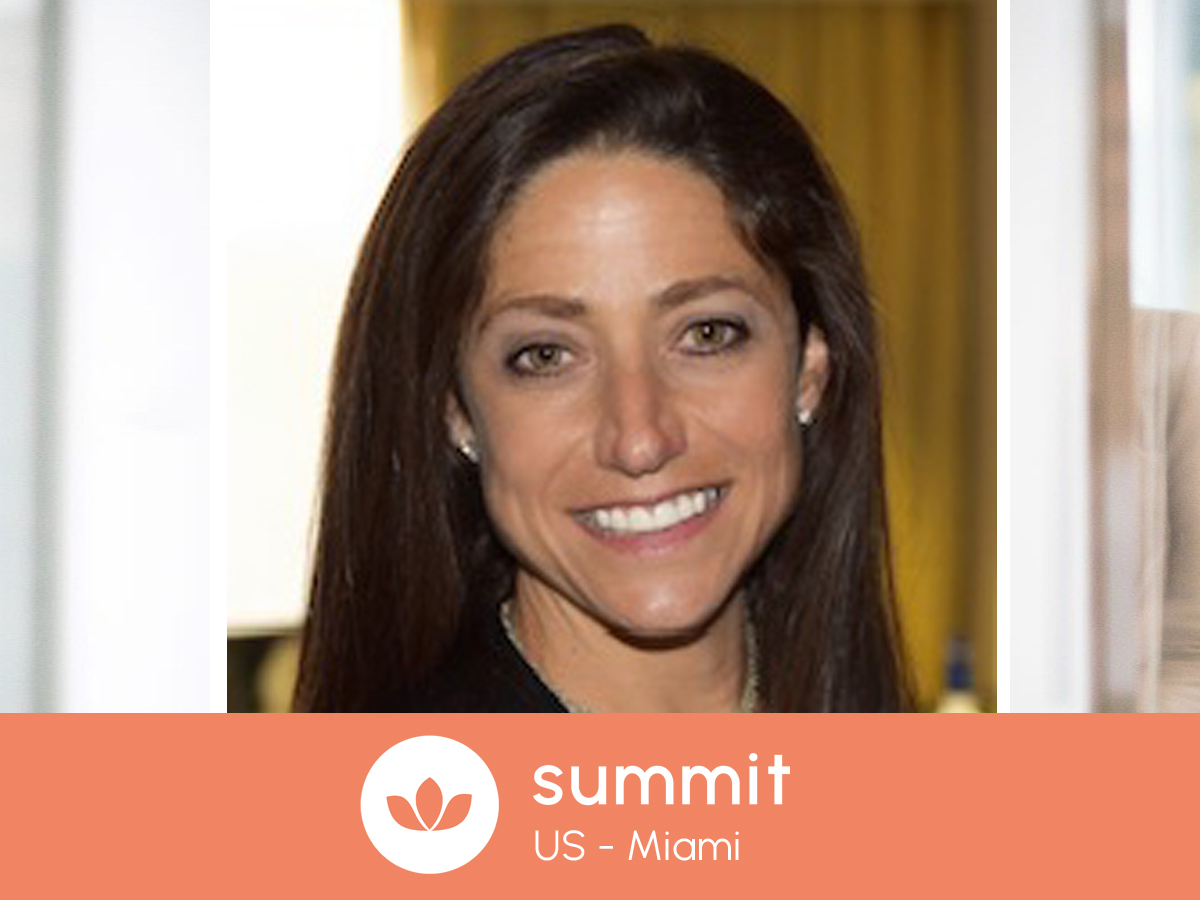
Clarisse Pamies-Bleicher has built her career at the intersection of innovative health services and data. She is Global Head of Health Prevention at AXA, a role she took on in November 2025. Before joining AXA, she spent five years as CEO of Omind, a neurotechnology startup developing VR and biofeedback solutions for workplace mental health. Prior to that, she held digital & data leadership roles at Johnson & Johnson and began her career at Boston Consulting Group. She holds degrees in economics from Columbia University and École Normale Supérieure, and a data science degree from ENSAE.
We are delighted to be partnering with Axa for our UK Summit and that Clarisse Pamies, their Global Head of Health Prevention, will be running a workshop at our London summit: “Data-driven health strategies focused on personalised preventative health“.
We caught up with Clarisse to see how she’s feeling in the run up to the summit:
Hi Clarisse, we are thrilled that you are joining us at the UK Wellbeing at Work Summit in September. Our first and most important question is, how are you doing today?
I’m doing very well, thank you. I’m excited because employers are at a turning point. We’re moving beyond talking about wellbeing. Employers increasingly recognise that preventive health is not a “nice to have”, but a strategic lever to improve resilience, productivity and long-term sustainability. That’s a very inspiring shift.
From your perspective as a global preventive health expert, what are the biggest health challenges employers are facing today??
Since 2020, health challenges have become tougher, and therefore more visible. Employers are facing rising chronic diseases, increasing mental health consequences, medical inflation and an ageing workforce.
Yet, few employers have the recipe to impact their employees’ health concerns. They are acting blind, with few data to measure where to target and on ROI. And when they provide health services to their employees, they remain underused because they struggle to engage their employees on it.
The main challenge – and opportunity- is therefore to move from offering the same programmes to everyone towards identifying who is at risk and providing the right intervention at the right time.
What strategies have you seen developing over the past 6 months, both internally and externally, that are moving the dial on wellbeing in the workplace?
The biggest shift is towards precision prevention.
Rather than offering generic wellbeing programmes, employers are increasingly combining clinical data, AI and behavioural science to personalise prevention.
For example, at AXA we start with personalised assessments through Health Scan to identify health risks early, then connect employees with targeted programmes such as CanRisk for cancer prevention, Hybrid Health Check-ups or Mind Health Odyssey depending on their needs. We also provide HR teams with population-level insights so they can understand emerging risks and measure impact over time.
Why is employee wellbeing so important to you personally?
I’ve been working in healthcare innovation for 20 years now. And I’ve always believed healthcare should start long before someone becomes a patient.
Throughout my career, I’ve seen how much difference early action can make, whether it’s detecting cancer earlier, identifying cardiovascular risks before complications occur, or recognising the first signs of burnout. Helping people understand their health and act before serious disease develops is incredibly rewarding because it creates better outcomes for individuals, employers and society.
AI is transforming every industry. How do you see it changing preventive health?
AI is making prevention far more precise.
It helps us identify health risks earlier, personalise recommendations at scale and generate meaningful workforce insights while protecting employee privacy.
Rather than replacing clinicians, AI allows us to combine medical expertise with data to deliver the right preventive intervention to the right person at the right moment.
Other than AI, are there any challenges that you are seeing for the first time and how are you addressing them?
The biggest challenge for is engaging their employees on the health programs and preventive solutions they propose. HR indeed struggle to engage the employees who would benefit the most.
That’s why at AXA Health, we’ve invested heavily in behavioural science, personalised communication and digital journeys. We provide solutions, such as self-checks or mind health elearning. Yet, providing an app or a service is never enough. To our clients, we also provide dedicated services with our engagement specialists, to support on communication, management training, global roll-out with local champions. In a way, it is a holistic change management dynamic that needs to happen, not just a self-service of solutions.
What areas do you think employers should be focused on over the next 12 months?
First, identify health risks earlier rather than waiting for claims or long-term absence. Second, personalise prevention instead of offering one-size-fits-all wellbeing programmes. And finally, measure success through health outcomes and business impact – not only participation rates. HR leaders increasingly need evidence that prevention improves employee health while supporting productivity and managing healthcare costs.
Do you feel that investment in employee wellbeing in the region is increasing or decreasing and is that a direct reflection on HR leaders’ increasing ability to demonstrate effective returns of their strategies to leadership?
I don’t think the challenge boils down to spending more. I think it is also about spending in smarter way.
We’re seeing growing demand for solutions that demonstrate measurable impact. Employers increasingly want to measure which health risks exist within their workforce, which interventions work and what value they generate.
That’s why solutions combining clinical insights, engagement data and HR analytics are becoming increasingly important for demonstrating long-term return on investment.
How has your organisation been leading the way?
At AXA, we’re helping organisations move from reactive healthcare to proactive health management through Health360.
We begin by identifying individual health risks through personalised assessments such as Health Scan. We then connect employees with targeted preventive programmes, from cancer prevention and health check-ups and return to work, based on their individual needs.
Finally, our Health360 HR Dashboard provides employers with anonymised population-level insights, allowing them to understand workforce health risks, monitor engagement and evaluate the impact of their health strategy over time. At AXA Health, we have developed differentiative ROI calculator, so our clients can select their investment on stronger grounds.
Our ambition is simple: empower people to stay healthier for longer while helping employers build healthier, more resilient organisations.
Clarisse is running a workshop in London as part of our Wellbeing at Work Summit UK 2026 which takes place in London and Manchester this September. Click the links below to find out more and book your tickets:
London Summit 15th September: Find out more and Book Your London Tickets Here
Manchester Summit 17th September: Find out more and Book Your Manchester Tickets Here