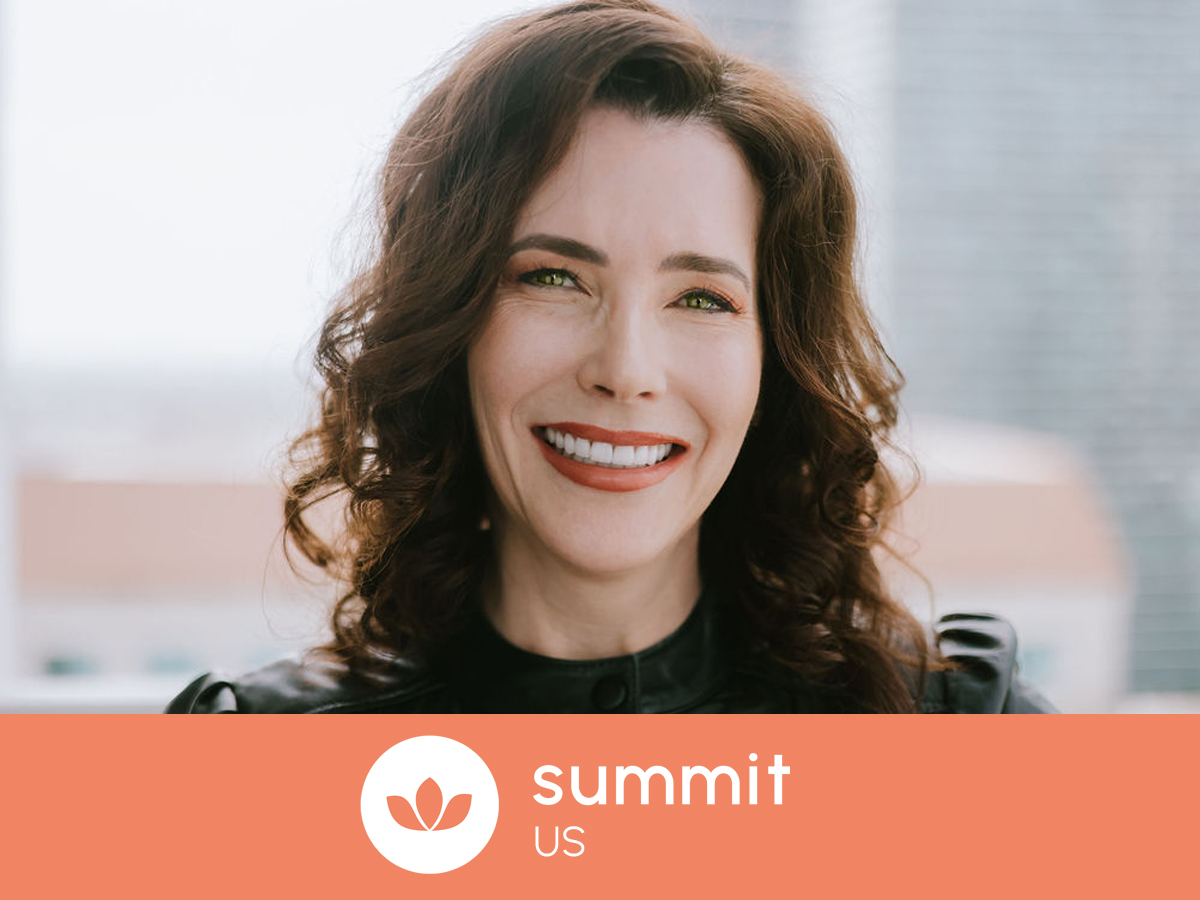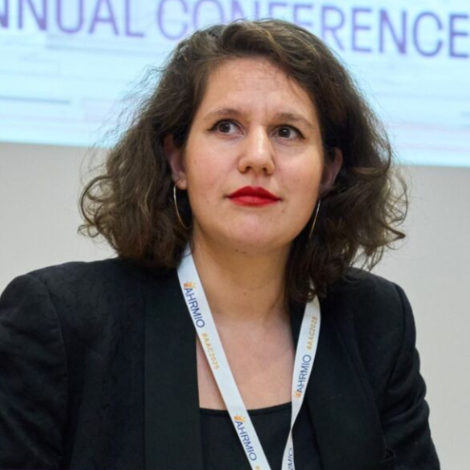
Astrid is the Mind Health Expert Manager at AXA HEALTH SOLUTIONS. She focuses on developing and deploying innovative solutions for companies everywhere wishing to better their employees’ mind health for the future. She has extensive experience in prevention and the B2B2E territory, having previously worked in AXA Assistance, in employee benefits and in consulting for large organisations.
We are delighted to be partnering with AXA for our Wellbeing at Work Summit London on 15th September. The AXA team will be running a workshop at the summit: “Data-driven health strategies focused on personalised preventative health” where you will discover how to craft a comprehensive 360° health strategy that enhances workforce stability, resilience, and performance
We caught up with Astrid to see how she’s feeling in the run up to the summit:
Hi Astrid , we are thrilled that you are joining us at the Wellbeing at Work Summit London in September. Our first and most important question is, how are you doing today?
I’m doing very well. I’m very happy to be here.
From your perspective as a global preventive health expert, what are the biggest health challenges employers are facing today?
Even though we are collectively more aware of the importance of acting on prevention, there are still many elements preventing employers and employees to do so effectively. Awareness is the first one, with many employees not being well informed or understanding the importance of taking action on their prevention, and employers lacking data and information to propose adequate programs and solutions for their employees.
What strategies have you seen developing over the past 6 months, both internally and externally, that are moving the dial on wellbeing in the workplace?
We are using data and AI to shift from global prevention to precision prevention, in order to offer what is actually needed to both employees and employers.
Why is employee wellbeing so important to you personally?
As a mother to young children, I’ve experienced firsthand the difference employee program can make in one’s personal health journey.
As an employee, who has worked in the B2B2E realm her entire career I’m also well aware of the importance of proposing services to employees which will target their actual needs.
Employee wellbeing is not an option, it is a necessity.
AI is transforming every industry. How do you see it changing preventive health??
AI is an opportunity to identify with even more precision health risks at an individual levels, analyze larger amounts of data at a corporate level, and propose specific recommendations at scale, for the individual and for the employers.
AI tools built by clinicians with medical use designed at its core is an extremely powerful tool.
Other than AI, are there any challenges that you are seeing for the first time and how are you addressing them?
The biggest challenge for is engaging their employees on the health programs and preventive solutions they propose and have the ability to propose global programs fitting the local needs and specificities.
That’s why at AXA Health, we’ve invested heavily in behavioural science, personalised communication and digital journeys. We provide solutions, such as self-checks or mind health elearning.
What areas do you think employers should be focused on over the next 12 months?
Precision prevention, through detailed data and adaptative action planning, localised engagement plans to make sure the wellbeing programs are well known, understood and used; and focus on awareness to empower employees to take care of their health.
Do you feel that investment in employee wellbeing in the region is increasing or decreasing and is that a direct reflection on HR leaders’ increasing ability to demonstrate effective returns of their strategies to leadership?
I think a change of mindset is needed. Employers don’t need to necessarily spend more, but to spend more efficiently. I would also add that it’s important to see the return on investment of these wellbeing programs down the line and the saving they can entails in claims costs, absenteeism costs, productivity costs etc. Especially when budget is targeting what is causing most harm to employees and hence employers.
How has your organisation been leading the way?
At AXA, we’ve been leading the shift from reactive to preventative healthcare for years now. More specifically at AXA Health, we are actively supporting organisations through that shift via our Health360 offer.
We begin by identifying individual health risks through personalised assessments such as Health Scan. We then connect employees with targeted preventive programmes, from cancer prevention and health check-ups and return to work, based on their individual needs.
Finally, our Health360 HR Dashboard provides employers with anonymised population-level insights, allowing them to understand workforce health risks, monitor engagement and evaluate the impact of their health strategy over time. At AXA Health, we have developed differentiative ROI calculator, so our clients can select their investment on stronger grounds.
Our ambition is simple: empower people to stay healthier for longer while helping employers build healthier, more resilient organisations.
Astrid is speaking in London as part of our Wellbeing at Work Summit UK 2026 which takes place in London and Manchester this September. Click the links below to find out more and book your tickets:
London Summit 15th September: Find out more and Book Your London Tickets Here
Manchester Summit 17th September: Find out more and Book Your Manchester Tickets Here