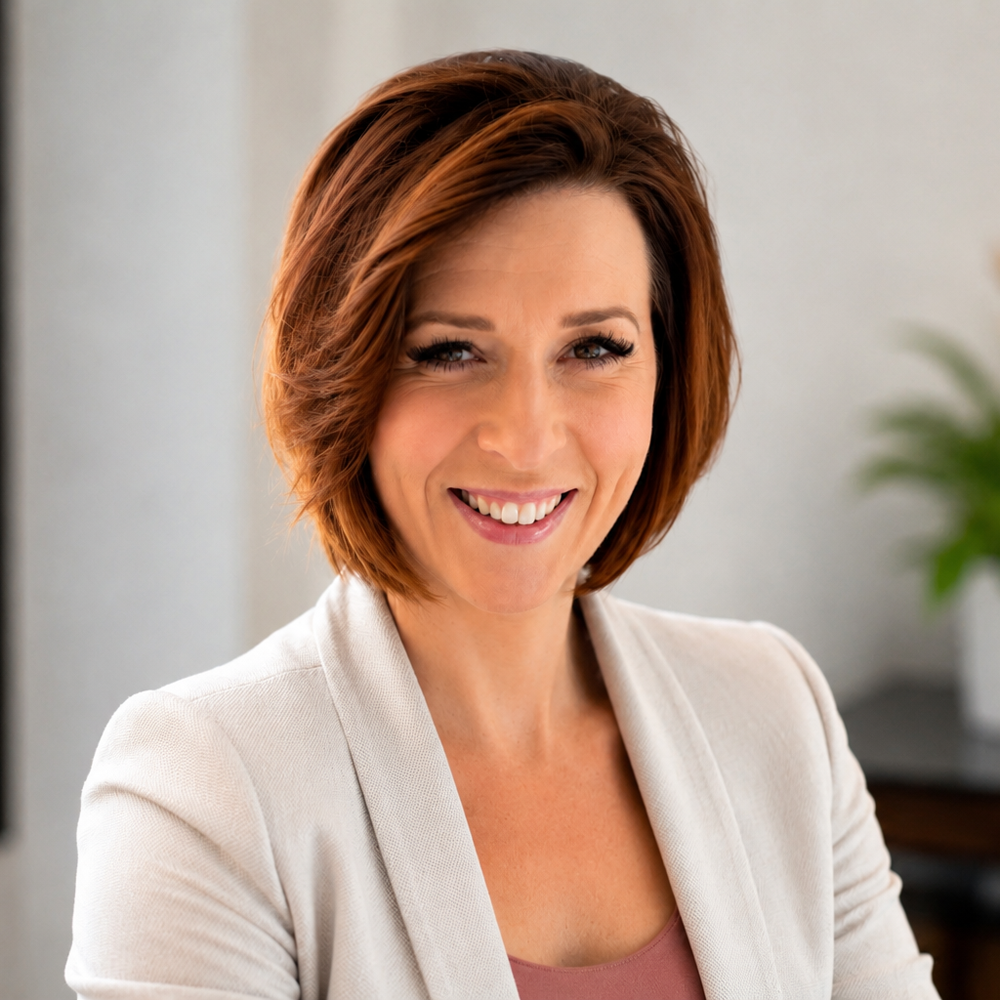
Carrie Bruno is Head of Wellbeing at Thales UK, leading the organisation’s strategic approach to workplace wellbeing, psychological safety and organisational health across a workforce of more than 7,000 employees.
Working at the intersection of wellbeing, psychological safety and organisational performance, Carrie partners with senior leaders to embed evidence-based approaches into leadership, culture and organisational design, helping create environments where people can adapt, innovate and perform at their best.
We are delighted that Carrie will be speaking on our London Leadership Panel – “Wellbeing at Work: Fostering a Healthy and Productive Workforce” on 15th September. We caught up with her to see how she’s feeling in the run up to the summit:
Hi Carrie, we are thrilled that you are joining us at the Wellbeing at Work Summit London in September. Our first and most important question is, how are you doing today?
I’m doing really well thanks. I’ve had a great year so far, life feels full at the moment with lots happening professionally with some exciting opportunities ahead and plenty of personal projects that keep me learning and reflecting. I’m also trying to make sure that I practice what I preach and make sure there is enough space for the people and things that keep me well! I’ve been coming to the Wellbeing summits for some time now and always found them so insightful and inspiring, and so I’m really excited to be joining as a panellist this year.
As a leader based in the region, what are the main challenges you are facing when it comes to employee wellbeing and mental health?
For me, one of the biggest challenges is the pace and complexity of change. I see that people are being asked to adapt continuously in the workplace while still delivering and I think this can create a lot of cognitive and emotional demands which ultimately impacts on wellbeing.
I think the challenge for a lot of organisations is to stop seeing workplace wellbeing as something we provide to support people around their work and really start looking at it as the conditions in which people work within.
What strategies have you seen developing over the past 6 months, both internally and externally, that are moving the dial on wellbeing in the workplace?
I’ve been really encouraged by the shift from wellbeing initiatives towards more systemic approaches that make up part of an ecosystem of cultural conditions. I believe this is a fundamental change that will be inherent in enabling organisations to really mature their wellbeing strategies because it helps to focus on macro level enablers like psychosocial risk, psychological safety, leadership behaviours whilst harnessing data to understand where the real pressures and priorities sit. I genuinely believe this is where the opportunity exists, it moves us from asking ‘what wellbeing provisions do we offer’ to -where the value really sits-by asking ‘what conditions are we creating for our people to thrive and perform?’.
Why is employee wellbeing so important to you personally?
Quite simply put – its my ‘why’.
It has become both professionally and deeply personal. My own experiences of profound loss and significant life traumas led me to engaged in long-term therapy which has been transformational for me. It’s taught me a great deal about resilience, post-traumatic growth and recognising that, with the right support, how we can connect with a greater sense of self through those lived experiences. Along the way, I recognised my passion for psychology and human behaviour and this led me build my career in wellbeing.
As a result, I’ve been able to combine this lived experience, the learning around behavioural science/psychology and organisational strategy/practice.
I’ve seen just how transformational it can be to people when they are able to connect with a greater sense of purpose and realise their full potential – working in the Wellbeing space we have such a privileged opportunity to support employees with this.
What impact is AI having in your organization and how are you managing that?
As a technology-based organisation, AI really presents huge opportunity not just for our products and services but also for how we work.
From a wellbeing perspective, I’m really interested in seeing how that can impact the human element this opportunity presents. Used in the right way, AI can really support by removing some of the workload friction which could have great benefits to the cognitive load I mentioned earlier. We do need to pay some attention to the uncertainty and anxiety this change can bring to people though and perhaps spending more time having the conversations about what AI can enable alongside what do people need to adapt to it, so that it supports and not threatens their skills.
I’ve been encouraged by the great learning initiatives Thales has mobilised for employees to both provide some important guardrails around the use and limitations of AI and to understand the advantages of such technologies – particularly around digital DNA and understanding how generative AI can enable and enhance ways of working.
Other than AI, are there any challenges that you are seeing for the first time and how are you addressing them?
I’m not sure these induvial challenges are necessarily new, but what feels different is their how they all simultaneously play their part in creating uncertainty of the world we see today. And that’s the economic uncertainty, geopolitical change, organisational change, evolution of hybrid working and changes in workplace expectations. I think this makes organisational resilience even more important. In Thales, we’re focusing much more on psychological safety. Leadership capability and understanding psychosocial risks so it helps us understand what our people might need to navigate all of this rather than simply expecting them to just be ‘more resilient’ to change.
What areas do you think employers should be focused on over the next 12 months?
I think this does depend on where organisations are with their maturity around their wellbeing strategies, but I don’t think any business can go wrong if they prioritise psychological safety. For me and particularly in Thales, a large part of our wellbeing strategy has been to build consistency around this. I see it as a ‘modern day’ Maslow and it is the very foundation that enables inclusion, workplace wellbeing and ultimately higher performing teams. Another priority has to be around supporting manager capability. They have such a fundamental influence over employee wellbeing, as an organisation we need to support them in leveraging this influence rather than feeling all the pressure to get it right. Lastly, I think organisations could benefit from building better measurement of wellbeing.
Ultimately, I believe wellbeing needs to become part of how we design work rather than something that is an ‘add on’ afterwards.
Do you feel that investment in employee wellbeing in the region is increasing or decreasing and is that a direct reflection on HR leaders’ increasing ability to demonstrate effective returns of their strategies to leadership?
Great question! I do think investment in this space is becoming increasingly more intentional and evidence led. I think organisational leaders want to better understand what wellbeing investment is actually changing within the business, which is why I stated measurement as a priority earlier. I actually don’t think this is a bad thing because it challenges us as wellbeing professionals to provide clearer evidence of impact. In doing so, we can strengthen our position in senior discussions and have greater influence on organisation priorities. It’s creating opportunity to move the conversation beyond wellbeing as a collection of initiatives and towards wellbeing as a driver of organisational performance. I believe this not only helps demonstrate its value but also positions wellbeing as a strategic imperative that warrants greater focus from boards and c-suite leaders.
How has your organisation been leading the way?
We’ve been increasingly connecting wellbeing with psychological safety, inclusion, leadership and organisational performance as interconnected agendas, not separate ones. We’ve been using data to better understand the relationship between employee wellbeing, psych safety and cultural insights in relation to performance conditions. Our focus is to move beyond supporting people just when things go wrong and consistently design the conditions that help people to stay well, adapt to change and be at their best.
Carrie is speaking in London as part of our Wellbeing at Work Summit UK 2026 which takes place in London and Manchester this September. Click the links below to find out more and book your tickets:
London Summit 15th September: Find out more and Book Your London Tickets Here
Manchester Summit 17th September: Find out more and Book Your Manchester Tickets Here