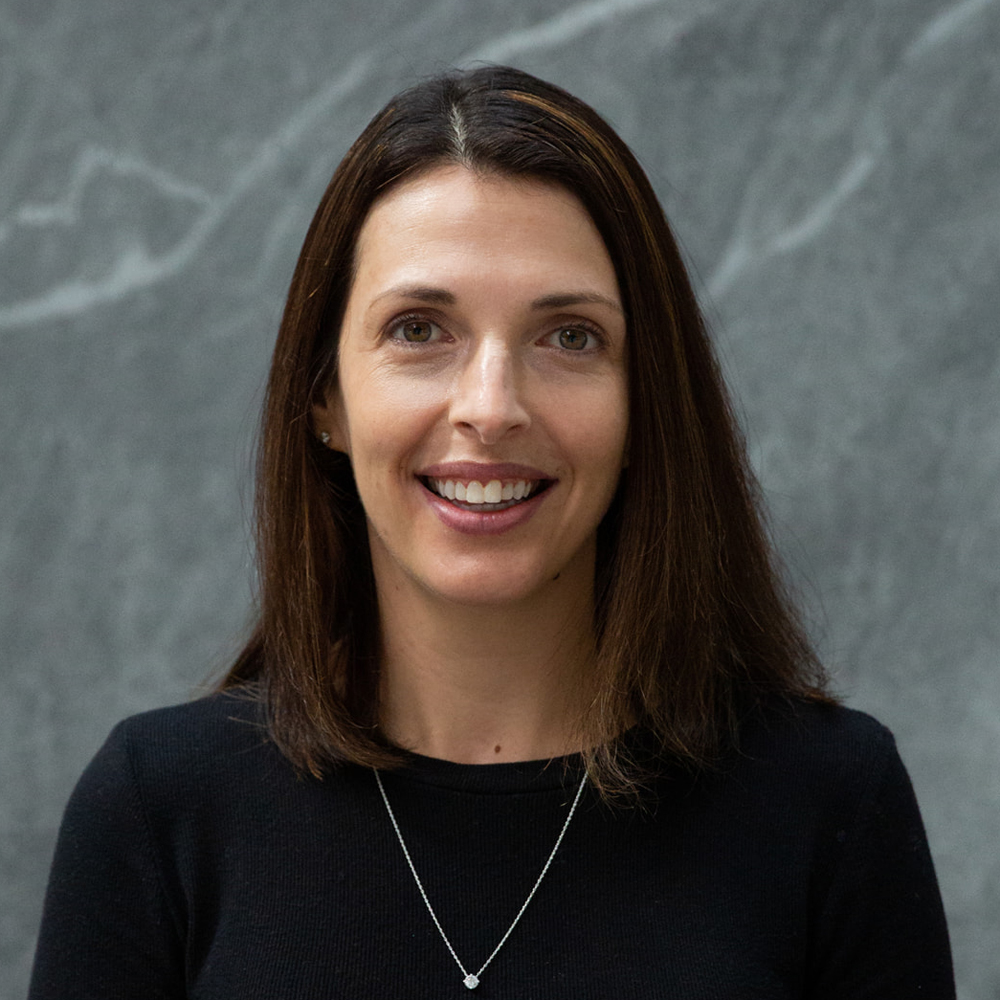
Camilla Frumar is a Senior Consultant at Gallup, based in the Sydney office for over 10 years. A recognised expert in learning and development, she leads programs in management and leadership development, employee engagement, wellbeing, and strengths-based coaching. Camilla partners with leaders, managers, and coaches across the Asia-Pacific region, helping them unlock individual, executive, team, and organisational potential.
A Gallup-Certified Strengths Coach, Camilla leverages positive psychology principles to empower executives to become exceptional managers and leaders by maximizing their unique talents.
We are delighted that Camilla will be speaking at our Wellbeing at Work Summit Australia in Brisbane this November where she will be presenting a masterclass entitled “From surviving to thriving – how leaders can create legendary culture while navigating change”. As organisations navigate ongoing change, rising expectations and new ways of working, creating workplaces where people can truly thrive has never been more important. While AI becomes more embedded in the workplace, leaders also face a new challenge of managing humans and robots’ side by side, while ensuring the human needs that drive wellbeing, trust and performance are not lost.Drawing on Gallup’s latest State of the Global Workplace research, this keynote will explore the state of employee wellbeing and what the data tells us about how people are experiencing work today. It will examine the connection between thriving, engagement, leadership and performance, and why the role of managers is increasingly critical to creating healthier, more resilient workplaces.Camilla’s session will challenge organisations to think beyond traditional wellbeing initiatives and consider the everyday workplace experiences that shape how people feel, perform and thrive. Attendees will leave with practical insights into what leaders can do to create the conditions for better wellbeing, stronger engagement and sustainable performance.
We caught up with Camilla to find out how she’s feeling in the runup to the summit:
Hi Camilla, we are thrilled that you are joining us at the Wellbeing at Work Summit Australia in Brisbane this November. Our first and most important question is, how are you doing today?
I’m very well, thank you. The sun is shining here in Sydney today, and I’m juggling work at a slightly slower pace over the next couple of weeks while also enjoying some special time with my children, who are on school holidays.
I try not to treat “How are you?” as a rhetorical question. I’m on a mission to normalise talking openly about mental health and being honest about the fact that life can hold both good and difficult things at the same time. I have had some tough days in recent weeks, supporting family members through crises and grieving the loss of a loved one not too long ago.
So, while there is plenty to be grateful for, I’m also consciously making space to move a little more gently at the moment.
As a leader based in the region, what are the main challenges you are facing when it comes to employee wellbeing and mental health?
The main challenge I see is how normalised it has become for people to run on empty, often operating in a perpetual pre-burnout state. Wellbeing continues to be treated as an afterthought or a response to a problem, rather than something we proactively and consistently sustain.
We also have not yet optimised how we work with AI. Many people are not fully capitalising on the efficiencies and time savings it can bring, while I continue to see colleagues and clients working longer hours than is healthy or sustainable.
Despite increased awareness, mental health is still not as normalised as I would hope. Too many interventions feel like the flavour of the month or a Band-Aid rather than addressing the root causes of poor wellbeing.
There is growing attention on psychosocial risk, particularly with increased regulatory requirements in Australia, but awareness alone is not enough. I would like to see more enduring action to address the conditions that contribute to burnout, create healthier ways of working and move away from accepting a continued state of overload and flux as simply part of working life.
What strategies have you seen developing over the past 6 months, both internally and externally, that are moving the dial on wellbeing in the workplace?
We are seeing more clients embrace a strengths-based approach, empowering employees to work in ways that align with their intrinsic motivations and what they naturally do best. This can enhance engagement and provide an important buffer in how people experience and respond to stress.
We are also seeing organisations simplify ways of working so that wellbeing actions feel achievable and can be integrated into everyday goals and routines, rather than becoming another thing to do.
Continued workplace flexibility post-COVID has also been an important wellbeing enabler. Alongside this, organisations are equipping managers to have more coach-like conversations that consider the whole person. This means moving beyond task-focused and transactional conversations towards a more supportive approach that considers how someone is doing, what they need and how they can work at their best.
Why is employee wellbeing so important to you personally?
It is important to me for so many reasons. As a mother, daughter, wife, friend and coach, I want to be at my best so I can support others to be at their best.
I also come from a family deeply touched by mental illness and the devastating consequences of wellbeing going unsupported. I lost both my father and my cousin to suicide, experiences that profoundly shaped me and ultimately led me to study Positive Psychology and explore post-traumatic growth.
For me, wellbeing is deeply personal as well as professional. I want to help create environments where people can thrive, while also making sure the right support is there when life gets hard.
What impact is AI having in your organization and how are you managing that?
AI is helping my organisation tremendously, particularly in uncovering deeper, data-led insights so we can spend more time moving from insight to action. It is also supporting our research and content creation, and we have started integrating it more into how we deliver our learning experiences.
While AI is a great thinking partner, we need to be careful not to become overly reliant on it. There is still enormous value in trusting our own judgement and instincts. Sometimes the ideas that come naturally and instinctively are the ones that land best and have the greatest impact.
Other than AI, are there any challenges that you are seeing for the first time and how are you addressing them?
I think the current global instability is fuelling a lot of uncertainty, both within organisations and for people personally as they continue to navigate cost-of-living pressures.
Constant restructuring and organisational change also seem to be a reality for many of our clients. When a lack of stability becomes the new normal, it can be difficult to create the conditions needed for change and to sustainably support engagement and wellbeing.
At Gallup, we try to strip things back and keep change interventions simple, focusing on meaningful conversations centred around clarity and care. In times of uncertainty, helping people understand what is expected of them while knowing that someone genuinely cares about them can make an important difference.
What areas do you think employers should be focused on over the next 12 months?
Organisations need to focus on the everyday conditions that allow people to do great work and sustain their wellbeing. That means creating clarity around expectations, giving people the opportunity to use their strengths, ensuring workloads are manageable and equipping managers to have regular conversations that demonstrate genuine care for the whole person.
Leaders also need to role model wellbeing and redefine ways of working so that operating in a constant state of pre-burnout is no longer accepted as normal. Managers are key to this. They need the tools, skills and mindset to genuinely check in with their people and create the conditions that support both wellbeing and engagement.
We also need to make sure AI does not simply enable us to do more work. The opportunity is to use the efficiencies it creates to give people time back, including space for rest and recovery, deeper thinking and the creative moments that can flourish when we are not constantly running at capacity.
Do you feel that investment in employee wellbeing in the region is increasing or decreasing and is that a direct reflection on HR leaders’ increasing ability to demonstrate effective returns of their strategies to leadership?
I think investment in employee wellbeing is still quite cyclical and often more reactive than proactive. It can depend heavily on the CEO and leadership team. Some prioritise wellbeing because it is the right thing to do, while others need to see a clear business case.
At Gallup, we see wellbeing and engagement as deeply interconnected. When people are thriving and engaged, organisations see stronger outcomes across performance, retention, absenteeism and resilience. This gives HR leaders a stronger evidence base to position wellbeing not as a standalone initiative, but as part of creating the conditions for sustainable performance.
The opportunity is to make wellbeing part of how work gets done, rather than something we invest in only when people are already struggling.
How has your organisation been leading the way?
At Gallup, we try to make wellbeing practical and part of how people work every day. We know that strengths, engagement and wellbeing are deeply interconnected, so we work with organisations across all three rather than treating wellbeing as a standalone initiative.
That can include one-to-one coaching, helping individuals understand what enables them to thrive and perform at their best, as well as team-based interventions that create space for more meaningful conversations. We also focus heavily on managers, giving them the tools to have regular, coach-like conversations that consider the whole person.
On a personal level, I try to normalise conversations about mental health as much as possible, whether that is with clients, colleagues, friends or family. In my coaching, I want to help people be at their best, but never at the expense of their wellbeing.
Camilla will be speaking in Brisbane as part of our Wellbeing at Work Summit Australia which take place this November in Sydney, Melbourne and Brisbane. Click the links below to find out more and book your tickets:
To find out more about our Sydney summit and book your tickets click here.
To find out more about our Melbourne summit and book your tickets click here.
To find out more about our Brisbane summit and book your tickets click here.