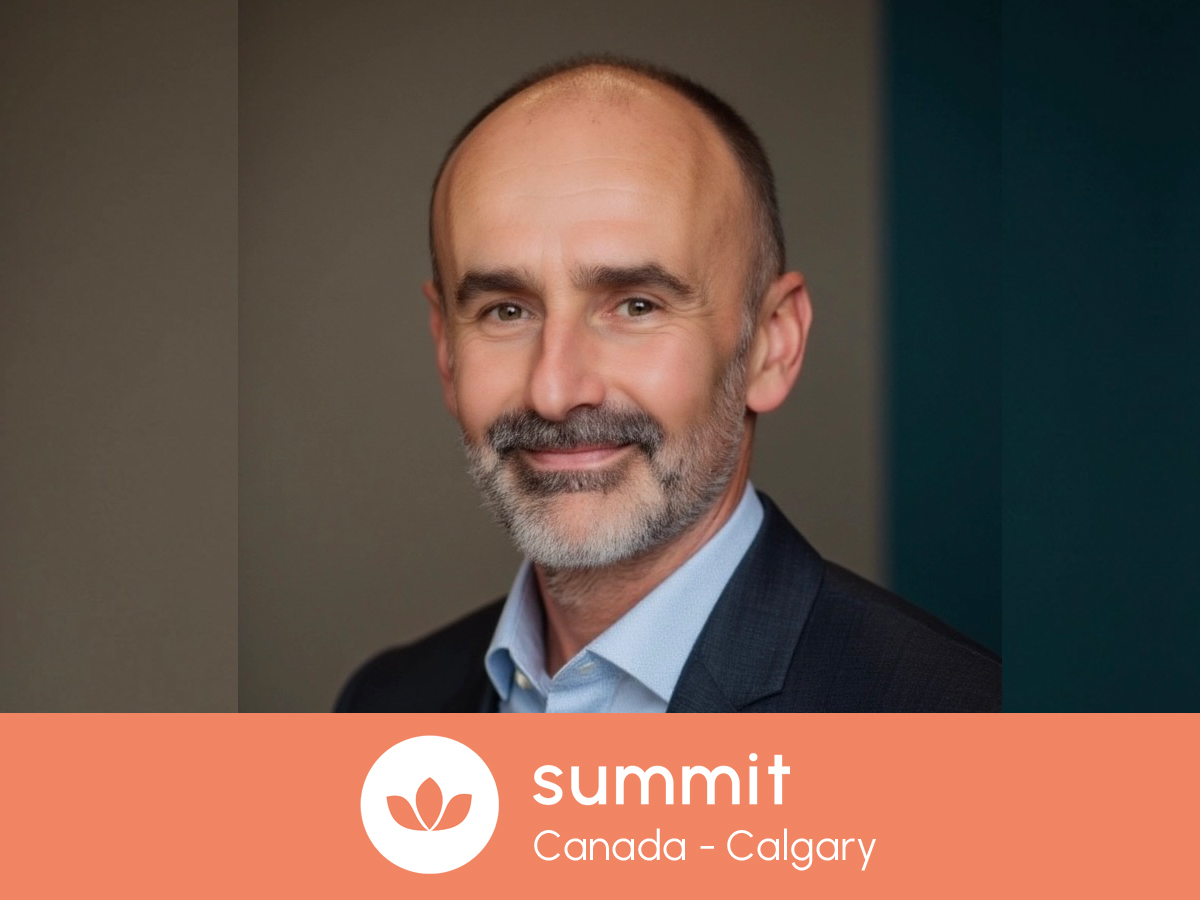
Lorne Sobczyk is the Program Manager for Tailgate Toolkit with the Calgary Construction Association, where he leads the delivery of short, on-site sessions focused on mental health, substance use, and recovery. Using the familiar tailgate talk format, he brings practical information and support directly to construction crews. Lorne brings more than 20 years of experience supporting individuals and communities, with a strong focus on the construction industry. He previously played a key role in expanding Tailgate Toolkit across Northern British Columbia, following its development by the Vancouver Island Construction Association.
We are delighted that Lorne will be speaking at our Wellbeing at Work Summit Canada in Calgary this October where he will be presenting a session “Strengthening Mental Health and Addiction Education in Construction: Raising Awareness of Pain, Suicide Prevention, and Where to Get Help” as well as joining our afternoon panel who will be discussing Supporting the Construction, Trades, Transport Industries.
We caught up with Lorne to see how he’s feeling in the run up to the summit:
Hi Lorne, we are thrilled that you are joining us at the Wellbeing at Work Summit in Calgary this October. Our first and most important question is, how are you doing today?
I am doing well. The sun is shining and life is great for me.
As a leader based in the region, what are the main challenges you are facing when it comes to employee wellbeing and mental health?
Stigma is one of the biggest challenges I encounter almost every day. In our society, we’ve made progress in recognizing that women need support when they’re struggling, but women still face stigma in many different ways. Their experiences are real and important, and we shouldn’t overlook them.
At the same time, I’ve seen how stigma can affect men differently. Men are often still told to “man up,” “tough it out,” or push their problems aside and get back to work. That message can make it very difficult for men to admit when they’re struggling or to feel comfortable asking for help.
I come across many people on the worksite who share their stories with me about the struggles they’re facing. When I ask if they’ve reached out to HR or used the benefits and support available to them, the majority say no.
It’s not that the help isn’t there. Often, they simply don’t feel comfortable asking for it. There are many reasons for that, but I believe stigma is a significant part of it.
Whether someone is a man or a woman, stigma can create barriers to getting help. It may look different, it may be experienced differently, but the result can be the same: people suffering in silence when support is available.
What strategies have you seen developing over the past 6 months, both internally and externally, that are moving the dial on wellbeing in the workplace?
Companies generally do a good job prioritizing the physical safety of their employees in the workplace, but there is still an opportunity to strengthen how we support psychological safety and wellbeing.
The Tailgate Toolkit is not intended to be a one-time session. In fact, several companies I have presented to have invited me back the following year. They recognize the importance of providing employees with regular opportunities to refresh their knowledge, have conversations about mental health, and reinforce the message that their employer genuinely cares about their psychological wellbeing.
The Calgary Construction Association has also partnered with Headversity, an online mental health platform that provides employees with education, resources, and practical tools to better understand and support their mental health. Anyone who attends one of my Tailgate Toolkit presentations receives complimentary access to Headversity following the session, with the cost covered by the Calgary Construction Association.
Together, these initiatives help create an ongoing culture of awareness, education, and support—rather than treating mental health as a one-time conversation.
Why is employee wellbeing so important to you personally?
I personally struggled with my mental well-being throughout my 20s and 30s, but I didn’t seek help because of the stigma that often tells men they are supposed to be strong, tough, and “be men” rather than acknowledge when they are struggling or seek mental health support. My father, who served in the military before spending decades working in construction, taught me from a young age that society didn’t care about men’s mental health. He encouraged me not to speak up when I was struggling because, in his experience, no one cared—and that included employers.
That belief was reinforced by an experience I had at work following a traumatic event. When I spoke up about what I was experiencing and requested a mental health day, my supervisor told me to “man up” and come back to work. Rather than feeling supported, I felt that I had confirmed what my father had taught me—that men were expected to tough it out, keep their struggles to themselves, and get back to work.
Thankfully, times are changing, and I believe we have an opportunity to create a different experience for the people we work alongside. I want to help our colleagues understand that it is okay to speak up when they are struggling. Asking for help is not a sign of weakness, it is a sign of strength and self-awareness.
It is also important that people know they can use the resources available to them, including workplace benefits, to access a mental health professional. Creating a workplace where people feel safe to speak up, ask for help, and access the support they need is something we can all contribute to.
What impact is AI having in your organization and how are you managing that?
From my role within the Calgary Construction Association, AI hasn’t been used extensively. However, I have heard from people in our community that many are turning to AI when they are struggling. They share their problems with AI, and I think that can be both helpful and harmful.
On the positive side, AI can give someone something to talk to, which may provide a sense of psychological relief in the moment. It can also offer suggestions about where someone can find professional or community support. But from my experience working with people, what they are often missing most is human connection—and that is something AI cannot provide.
I have been on many worksites where, after giving my presentation, I make a point of staying for a few extra minutes to talk with staff. At one presentation, I noticed a man standing across the room with his head down, but I could see that he had one eye on me. I had a feeling that he needed someone to talk to.
I walked over and asked him what he thought of the presentation. He told me, “This is exactly what the construction industry needs right now.” He then began sharing his story with me about the friends he had lost in the construction industry.
What struck me was that this may have been the first time he had ever shared that story with another person.
That experience reinforced something I see repeatedly in my work: technology can provide information, resources, and even a place to begin talking, but there is still a tremendous need for people to connect with other people. Sometimes, what someone needs most isn’t another resource or another answer. They simply need someone to notice them, walk over, and ask, “How are you doing?”
Other than AI, are there any challenges that you are seeing for the first time and how are you addressing them?
For my practice, another challenge is time. Construction companies are extremely busy, and it can be difficult for them to find time in the workday for me to come in and speak with their staff.
We address this challenge by being as flexible as possible. Although my regular working hours are Monday to Friday, 8:00 a.m. to 4:00 p.m., if a company needs me on a worksite at 5:00 a.m. or on a Saturday, I will be there. We understand that construction doesn’t always operate on a traditional 9-to-5 schedule.
We also designed our Tailgate Toolkit talks to be short and practical. My presentation generally takes 10 to 15 minutes, and then I stay for another 15 minutes or longer in case anyone wants to talk with me privately or ask questions.
What we have found is that companies are generally able to find 15 minutes in their workday to have their staff step away from the tools or leave their workstations and come together to hear a Tailgate Toolkit presentation from the Calgary Construction Association. By keeping the presentations short, accessible, and flexible, we can make it easier for companies to bring mental health education into the workplace without significantly disrupting their day.
What areas do you think employers should be focused on over the next 12 months?
Many companies offer excellent benefits and resources to support their employees, but unfortunately, many employees do not take advantage of them. We need to normalize help-seeking behaviours and encourage people to reach out when they are struggling. The sooner someone seeks help, the sooner they can begin the recovery process, access the support they need, and take steps toward improving their overall wellbeing.
Do you feel that investment in employee wellbeing in the region is increasing or decreasing and is that a direct reflection on HR leaders’ increasing ability to demonstrate effective returns of their strategies to leadership?
Yes, it’s improving from what I have seen. After I give a Tailgate Toolkit talk at a worksite, we send out follow-up surveys to see what impact the presentation has had. What we have heard has been incredibly inspiring. HR staff from different companies have shared that more employees are accessing the benefits and supports available to them. Some companies have even expanded their benefits packages to better support the wellbeing of their employees.
One worksite went a step further and purchased 70 Narcan kits to have available at their sites in case someone experiences a toxic drug poisoning. To me, that is a powerful example of how education and awareness can lead to meaningful action.
In many cases, it is an HR staff member who takes the lead. They reach out to me directly, or they encourage their site supervisor to contact the Calgary Construction Association to book a Tailgate Toolkit talk. It is encouraging to see companies not only listening to the message but taking concrete steps to support the health and wellbeing of their workers.
How has your organisation been leading the way?
The Tailgate Toolkit was developed by the Vancouver Island Construction Association. The Calgary Construction Association adopted the program because we recognize that many of the issues happening in British Columbia are also happening right here in Alberta.
You do not have to be a member of the Calgary Construction Association to receive a Tailgate Toolkit talk. In fact, I have had companies reach out to me and say they are willing to become members if it means they can have a Tailgate Toolkit talk at their worksite.
The Calgary Construction Association wants to make our industry better for everyone. That is why we offer the Tailgate Toolkit to both our members and non-members. Our goal is to reach as many people in the construction industry as possible and make sure they have access to information and support when they need it.
Lorne will be speaking in Calgary this October as part of our Wellbeing at Work Summit Canada which take place in both Toronto and Calgary. Click the links below to find out more and book your tickets:
Toronto Summit October 20: Find out more and Book Your Toronto Tickets Here
Calgary Summit October 22: Find out more and Book Your Calgary Tickets Here