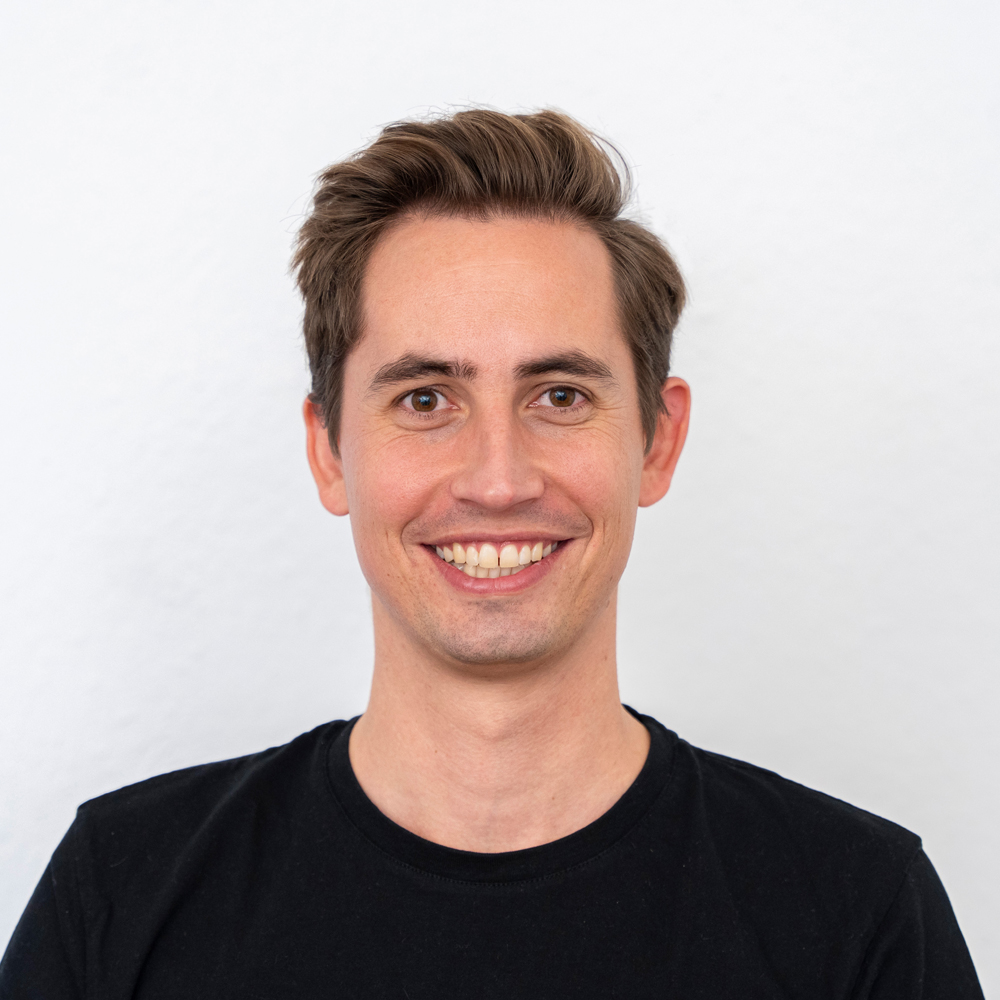
After completing his commercial training, Simon Fiechtner worked for three years in the HR department at Bosch. He then earned a degree in industrial engineering, followed by another six years at Bosch in the field of robotics. In 2020, he co-founded the innovative HealthTech startup Deep Care GmbH, where he focuses on customer relations and partnerships.
We are delighted that Simon will be speaking in New York as part of our Wellbeing at Work Summit US this March. We caught up with him to see how he’s feeling in the runup to the event.
Hi Simon, we are thrilled that you will be joining us at the Wellbeing at Work Summit US in March. Our first and most important question is, how are you doing today?
Grateful and focused. We are at a moment where workplace health is finally being taken seriously as a structural topic. That feels important and long overdue.
As a leader based in the region, what are the main challenges you are facing when it comes to employee wellbeing and mental health?
The biggest challenge is framing. Too often wellbeing is treated as engagement or culture. The real issue sits inside the workday itself.
Prolonged sitting drives:
- Musculoskeletal treatment costs
- Disability claims
- Chronic pain recurrence
- Mental fatigue
The most vulnerable groups are employees with early MSK symptoms and those who already had treatment. If daily behavior does not change, problems return. That is not about perks. It is about preventing avoidable risk.
What strategies have you seen developing over the past 6 months, both internally and externally, that are moving the dial on wellbeing in the workplace?
Three encouraging shifts:
From awareness to infrastructure: Movement must be embedded in workflow, not added after hours.
From engagement metrics to cost metrics: Leaders are looking at MSK claims and disability trends.
From treatment to recurrence prevention: Clinical care needs behavioral reinforcement at the desk.
That connects strongly to the broader themes of resilience and AI discussed throughout the summit. The next step is redesigning the workday itself.
Why is employee wellbeing so important to you personally?
Because we as Co-Founders have lived the problem and experienced it the hard way and would have desperately wished to have a solution like ours today. That was the trigger for us to start Deep Care. You cannot out-train eight hours of sitting. Studies consistently show that exercise alone does not offset prolonged sedentary work. Structured movement during the day makes the difference. We should design work in a way that supports humans, not slowly wears them down.
What impact is AI having in your organization and how are you managing that?
AI allows us to see what used to be invisible. We can detect posture patterns and movement gaps in real time and translate them into subtle, structured micro-interventions. AI should support healthier behavior, not replace human judgment.
Other than AI, are there any challenges that you are seeing for the first time and how are you addressing them?
Hybrid variability. People move between office and home setups that often lack ergonomic consistency. That increases strain and recurrence risk. Prevention must follow the employee wherever work happens.
What areas do you think employers should be focused on over the next 12 months?
Three priorities:
- Identifying early MSK risk
- Preventing recurrence after treatment
- Reducing MSK-related claims and disability exposure
Wellbeing needs to connect clearly to measurable outcomes.
Do you feel that investment in employee wellbeing in the region is increasing or decreasing and is that a direct reflection on HR leaders’ increasing ability to demonstrate effective returns of their strategies to leadership?
Investment is becoming more thoughtful. Programs framed as nice-to-have are under pressure. Solutions tied to measurable risk reduction are gaining traction. That is a healthy evolution.
How has your organization been leading the way?
We focus on one major cost driver: musculoskeletal disorders. We:
- Embed structured movement into daily workflow
- Target at-risk and post-treatment employees
- Provide anonymized behavioral insights
- Align with self-insured employer economics
This is not general wellbeing. It is about reducing preventable MSK treatment costs and disability risk by redesigning how we work. Because we are not built for static desk work. But we can design work that fits humans better.
Simon is speaking in New York as part of our Wellbeing at Work Summit US 2026 which takes place in New York and Austin this March, followed by Chicago and Los Angeles in May. Click the links below to find out more and book your tickets:
March 3 – New York – Click here to find out more and book
March 5 – Austin, TX – Click here to find out more and book
May 5 – Chicago – Click here to find out more and book
May 7 – Los Angeles – Click here to find out more and book