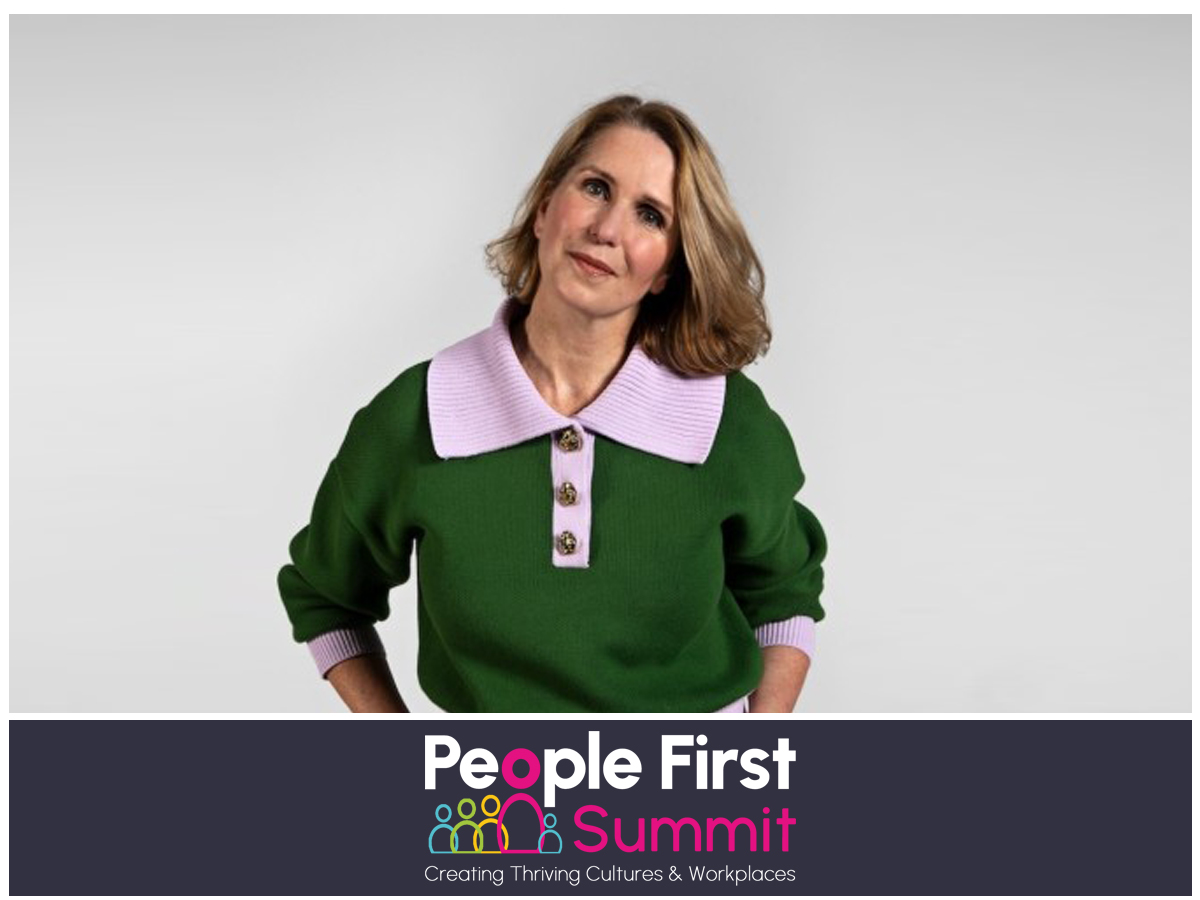
We are delighted that Georgina will be participating in the morning Leadership Panel at our People First Summit later this month. Georgina and her panel will be discussing: Wellbeing at Work: Fostering a Healthy and Productive Workforce. They will be explore:
- What leadership behaviours and cultural signals sustain wellbeing and performance in hybrid, AI-enabled workplaces?
- How can wellbeing be embedded as a seamless, data-informed experience across the entire employee lifecycle?
- How do organisations shift from wellbeing provision to building workforce capability, adaptability, and growth?
- How can wellbeing be leveraged as a strategic driver of resilience, retention, and innovation in times of rapid change?
We caught up with Georgina to see how she’s feeling in the run up to the summit:
Hi Georgina, we are thrilled that you are joining us at the People First Summit in November. Our first and most important question is, how are you doing today?
I’m doing really well, thank you. It’s been a really busy period for us at SSEN Transmission, but also an exciting one.
As a leader based in the region, what are the main challenges you are facing when it comes to employee wellbeing and mental health?
For me one of the biggest challenges is change and uncertainty.
We’re operating in an environment where growth and transformation can be exciting and incredibly positive. However, sustaining that pace of change can create pressure, particularly as people adapt to new ways of working. Over time, this can lead to change fatigue and leave people feeling stretched.
When we look at mental wellbeing, we’re seeing a shift from viewing mental health as an individual issue to recognising the organisational factors that influence wellbeing, such as workload, leadership, relationships, psychological safety, clarity and how change is managed.
The challenge for us is making sure wellbeing isn’t just about offering people support to help them cope with the demands of work. We also need to ask ourselves: what can we change about the work itself to prevent harm and create an environment where people can thrive?
At the same time, I believe workplaces have a responsibility to equip people with practical tools and techniques that go beyond the workplace. The skills we develop around managing stress, building resilience, recognising our triggers and looking after our mental wellbeing are just as valuable at home and in our personal lives as they are at work. Life doesn’t stop when we finish work, and the pressures we experience outside work can affect us when we return.
For me, it’s about giving people skills they can use throughout their lives, while also recognising that individual tools and techniques must go hand in hand with creating a healthy working environment. We need to empower people to look after their own wellbeing, but we must also take responsibility for the environment in which they work.
What strategies have you seen developing over the past 6 months, both internally and externally, that are moving the dial on wellbeing in the workplace?
I think we’re seeing a real move towards proactive and preventative wellbeing, rather than waiting for someone to reach crisis point.
For us, that means building capability, particularly in leaders and managers, so they feel confident having conversations about wellbeing, recognising early signs and knowing how and when to access support.
One example is our bespoke MindPower programme, which we’ve developed for leaders, managers and colleagues. It focuses on understanding stress, recognising the factors that influence our wellbeing and developing practical tools and techniques to manage life’s ups and downs. The aim is to give people skills they can apply not just at work, but in their personal lives too. It’s about building confidence, awareness and capability across the organisation, rather than relying solely on specialist support when someone is struggling.
We’re also seeing much more focus on data and insight. Rather than simply asking, “What wellbeing initiatives should we run?”, we’re asking, “What is our data telling us about where the risks are, and what can we do differently?”
And I think there’s a growing recognition that wellbeing has to sit alongside business performance. It’s not an additional programme sitting on the side, it’s part of creating an organisation where people can perform sustainably.
Ultimately, it’s about combining individual capability with organisational responsibility: equipping people with the tools to look after their wellbeing while addressing the workplace factors that influence it.
Why is employee wellbeing so important to you personally?
For me, this is personal as well as professional. Through my own family’s experiences, I’ve seen first-hand the impact that work-related wellbeing issues can have, not just on the individual, but on the family and support network around them.
I’ve spent a large part of my career working across the NHS, aviation and safety, health and wellbeing. Throughout that time, what has always motivated me is making sure people can go home from work safe, healthy and well, both physically and psychologically.
My own family experiences have reinforced just how important that is. They’ve made me realise that the impact of what happens at work doesn’t necessarily stay at work. When someone is struggling, it can affect their confidence, their relationships and their life outside work, as well as the people who care about them.
That’s one of the reasons I’m so passionate about prevention. I want us to create workplaces where people feel able to speak up, where leaders recognise when something isn’t right, and where we take action before things reach crisis point.
Because ultimately, we’re not just talking about employees. We’re talking about people, families and lives beyond the workplace. For me, the real measure of success is not just what we achieve as a business, but whether people can thrive at work without it coming at the expense of their health, their wellbeing or their life outside work.
What impact is AI having in your organisation and how are you managing that?
AI is creating huge opportunities for us in terms of efficiency, productivity and how we work, but I think we also need to recognise that any significant change in the way we work can have an impact on people.
There can be excitement around AI, but also uncertainty, “What does this mean for my role?”, “What skills will I need?”, or even “Will my job look the same in a few years?”
So I think my wellbeing response to AI is very much about how we lead the change.
We need to make sure people understand why we’re introducing it, involve people in the change, invest in skills and create space for people to ask questions.
And importantly, AI shouldn’t replace the human connection. We need to use technology to make work easier, while making sure we don’t lose the relationships, conversations and sense of belonging that are so important to wellbeing.
Other than AI, are there any challenges that you are seeing for the first time and how are you addressing them?
I think the pace and scale of organisational change is probably one of the biggest challenges.
Growth can be a fantastic thing, but it can also put pressure on culture, leadership, relationships and resources. When an organisation grows quickly, you can’t always rely on the ways of working that served you well previously. There’s a real risk that, as an organisation expands, the culture that made it successful in the first place can become diluted.
We therefore need to think much more deliberately about culture. What do we want to preserve? What needs to evolve? And how do we make sure our people experience consistency in our values, leadership behaviours and expectations, even when the organisation around them is changing?
We need to grow the organisation without losing sight of the people and behaviours that make it successful.
What areas do you think employers should be focused on over the next 12 months?
Firstly, leadership. We need leaders who understand that their behaviours have a direct impact on people’s wellbeing and performance.
Secondly, prevention. We need to get better at identifying organisational risks early whether that’s workload, stress, fatigue, burnout, change or relationships, rather than waiting for absence or crisis to tell us there’s a problem.
And thirdly, connection. As technology, hybrid working and AI continue to change how we work, maintaining human connection, belonging and purpose becomes even more important.
Ultimately, I think employers should be asking: “Are we creating the conditions for people to perform well and stay well?”
Do you feel that investment in employee wellbeing in the region is increasing or decreasing and is that a direct reflection on HR leaders’ increasing ability to demonstrate effective returns of their strategies to leadership?
I think investment is becoming more scrutinised, rather than simply increasing or decreasing and I think it’s because its difficult to measure success.
The conversation has moved on from, “We provide this wellbeing initiative because it’s a nice thing to do,” to, “What difference is this actually making?”
And I think that’s a really positive change.
We’re increasingly looking at participation, employee feedback, absence trends, organisational risk and what we’re hearing directly from our people. But I also think we need to be careful about trying to put a pound sign against everything.
The return on wellbeing isn’t always immediate or easy to measure. Sometimes the return is preventing a problem, retaining someone, helping a manager have a difficult conversation earlier, or creating a culture where people feel safe to speak up.
How has your organisation been leading the way?
I think one of the things we’re particularly proud of at SSEN Transmission is that we’ve tried to make wellbeing part of how we operate, rather than something that sits alongside the business.
We were the first energy company in the UK to achieve ISO 45003, and we’ve continued to build on that through our wellbeing strategy, leadership capability and the way we identify and manage psychosocial risks.
We’ve also invested heavily in building capability within our people. We now have a strong network of Wellbeing Champions and Mental Health First Aiders, alongside our bespoke MindPower programme, which helps people and managers understand stress, recognise early warning signs and have better conversations.
But for me, the most important part is that we’re increasingly moving from reactive to proactive.
We’re using data, employee insight and conversations with our teams to understand where the risks are and where we can intervene earlier.
And we’re also taking that thinking beyond our own organisation. Through our P2030 Gold Wellbeing Standard, we’re working with our supply chain to raise the bar for wellbeing across the projects we’re delivering.
Ultimately, our ambition is simple: to create a healthy, happy and safe workplace where wellbeing is considered in the decisions we make every day, not just when we’re talking about wellbeing.
Georgina will be speaking at our People First Summit in Edinburgh on November 23. Click Here to visit our website, find out more and book your place to join us.