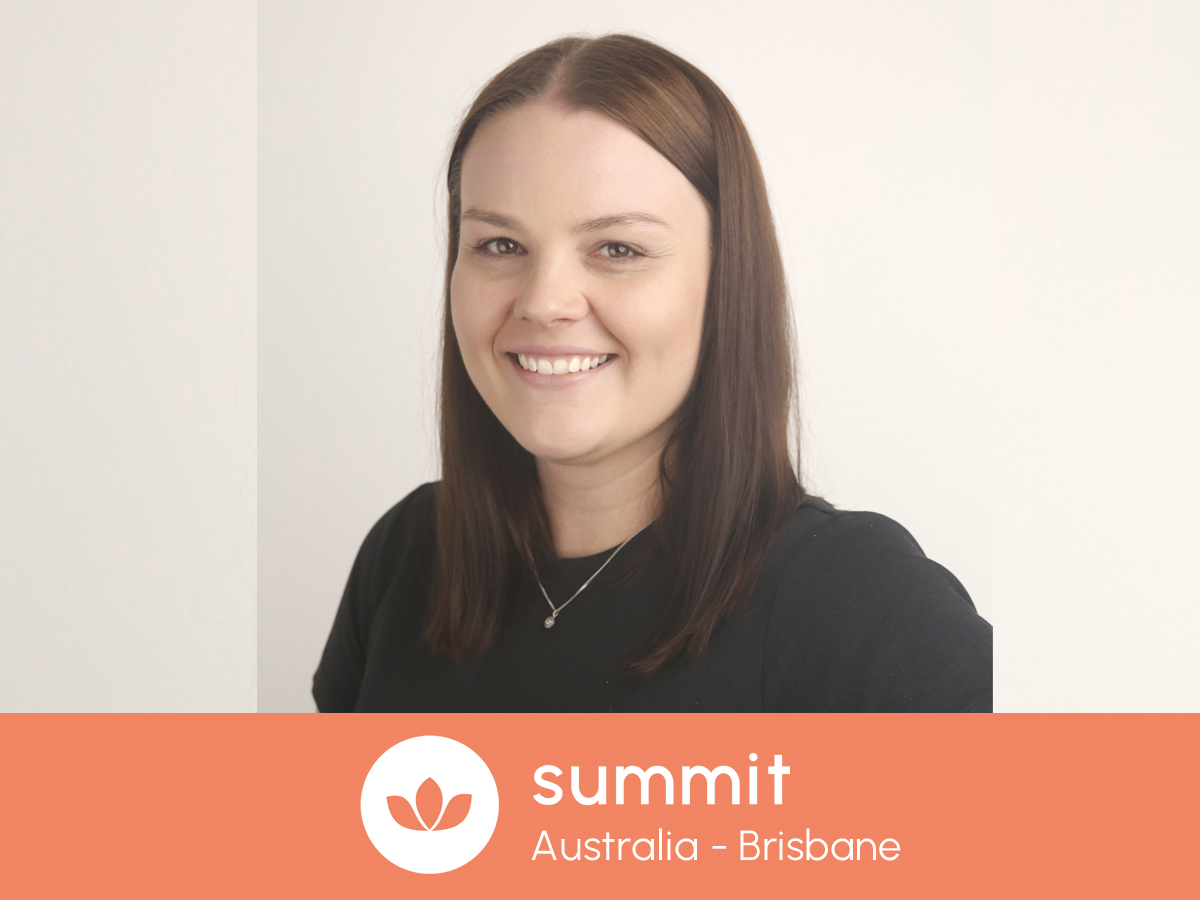
Katherine is a passionate advocate for creating workplace cultures where people feel connected, engaged, and empowered to thrive. Since joining Queensland Country Bank in 2007, she has led a range of initiatives focused on strengthening organisational culture and fostering environments where employees can reach their full potential. A registered Psychologist with a background in organisational psychology, Katherine brings deep expertise in human behaviour, employee engagement, and leadership development. She began her career as a consultant working across diverse industries before transitioning into an in-house leadership role.
We are delighted that Katherine will be a part of our morning Leadership Panel in Brisbane later this month – “Driving Performance in a Changing World: From Wellbeing to Workforce Advantage”. The will be exploring:
- What leadership behaviours and cultural signals sustain wellbeing and performance in hybrid, AI-enabled workplaces?
- How can wellbeing be embedded as a seamless, data-informed experience across the entire employee lifecycle?
- How can organisations help their people not just stay well, but grow and adapt?
- How do we move from supporting wellbeing to helping people build skills and resilience?
- How can wellbeing be leveraged as a strategic driver of resilience, retention, and innovation in times of rapid change?
We caught up with Katherine to find out how she’s feeling in the runup to the summit:
Hi Katherine, we are thrilled that you are joining us at the Wellbeing at Work Summit Australia in Brisbane later this month. As a leader based in the region, what are the main challenges you are facing when it comes to employee wellbeing and mental health?
For us, one of the biggest challenges is that wellbeing is no longer just about supporting individuals who are struggling. It’s increasingly about managing the broader psychosocial factors that impact people every day.
As a regional organisation, we have employees across branches, contact centres, administration and remote locations, all experiencing different pressures. In recent years we’ve seen increasing demands associated with workload, remote teams, change fatigue, customer aggression, regulatory complexity and balancing flexibility with operational needs.
Particularly in banking, our frontline teams can experience difficult and emotionally challenging interactions with members. Ensuring people feel supported, equipped and psychologically safe in those environments is a significant focus.
The challenge is not simply providing support when something goes wrong. It’s designing work, leadership practices and systems that help prevent issues from occurring in the first place.
What strategies have you seen developing over the past 6 months, both internally and externally, that are moving the dial on wellbeing in the workplace?
One of the most positive shifts has been the move from reactive or ad hoc wellbeing initiatives to proactive psychosocial risk management and strategic wellbeing frameworks.
Organisations are becoming much more sophisticated in considering role design, leadership capability, change impacts and workplace behaviours rather than relying solely on a wellbeing initiatives.
At Queensland Country Bank we’ve undertaken significant work to assess psychosocial risks through employee consultation, data analysis and targeted action planning. We’ve also strengthened support services through our partnership with our EAP provider Sonder, which provides employees with 24/7 access to wellbeing, safety, health and mental health support, not just confidential counselling. We have integrated our Mental Health into our 1:1 and performance appraisals. We have four areas of discussion and have been purposeful in including Wellbeing in the centre of the model which also includes, Performance, Behaviour and Contribution.
It’s now a holistic approach rather than just talking about physical and Mental Health.
Why is employee wellbeing so important to you personally?
I’ve always believed that organisations perform best when people feel supported and valued.
We spend a significant portion of our lives at work, and leaders have a responsibility to create environments that positively contribute to people and help them become the best version of themselves.
For me, I have always had an interest in people, I am a registered Psychologist and have been working in the People and Culture space for coming up to 30 years. Wellbeing is fundamentally about people. If a person comes to work feeling safe, connected and supported, the flow-on effect touches every part of the organisation, from engagement and retention through to member service and organisational performance. There is so much literature that demonstrates that people perform better when they are in a positive state.
It’s also about doing the right thing. Looking after people should never be viewed as a business trade-off. In my experience, organisations that genuinely care for their people achieve stronger outcomes across the board.
What impact is AI having in your organization and how are you managing that?
AI is creating significant opportunities, particularly around efficiency, administrative reduction, learning and decision support.
However, one of the most important conversations we’re having is not about the technology itself but about the human impact of that technology.
Whenever new technology is introduced, people naturally have questions about change, capability requirements and the future of work. Our approach is to focus on transparency, education and helping employees understand how AI can support them rather than replace them.
We see AI as a tool that can remove low-value administrative effort and allow our people to spend more time on meaningful work, relationships, problem-solving and supporting our members.
At the same time, we’re conscious of ensuring appropriate governance, maintaining critical thinking and helping employees build confidence in using these tools responsibly.
We have co-pilot across our organisation with premium versions for staff who require the higher level of functionality. We have introduced our first AI bot “Quinn” and will continue to explore and develop this resource which will give data capabilities for information to help make better data driven decisions. We are exploring AI Coaching in our L&D function and carefully integrating technology where it fits the purpose of our business.
It is certainly exciting times but it is about slowing down and being purposeful with what we bring in and invest in and ensure our people are confident and well equipped to use these new systems.
Other than AI, are there any challenges that you are seeing for the first time and how are you addressing them?
One emerging challenge is the increasing complexity of employee expectations.
People want flexibility, meaningful work, career development, wellbeing support and purpose, and they want these things delivered in a highly personalised way.
We’re also seeing greater awareness and expectations around psychosocial safety. Employees are much more informed about psychological health and rightly expect organisations to actively manage workplace risks.
We’re addressing this through stronger consultation, leadership education, better workforce planning and a greater focus on understanding how work is experienced by employees rather than simply how work is designed on paper. This continues to be a work in progress for us.
What areas do you think employers should be focused on over the next 12 months?
I think there are four areas.
Firstly, psychosocial risk management. It needs to become part of everyday leadership and operational decision-making. It is a big piece of work for businesses and engaging in this area now should be a priority.
Secondly, leadership capability. Leaders have an enormous influence on employee experience and wellbeing. The age-old saying is that people leave leaders not organisations.
Thirdly, change resilience. Organisations are navigating constant change, and employees need support to adapt without becoming overwhelmed.
Finally, connection. As workplaces become more flexible and technology-driven, maintaining genuine human connection and a sense of belonging will become increasingly more important.
The organisations that get these four things right will be best placed to attract, retain and support their people. It is important to have a good engagement survey, the one we do through Culture Amp has really provided us with fantastic insights as to what the gaps are that our staff want to perform and feel better. It has led to several initiatives including a Branch Evolution Project that we are working on and Moments that Matter. Within 1 year we have increased our overall engagement by 2% (its sitting at 82% and 98% of staff say that on balance, Queensland Country Bank is a truly great place to work.
Do you feel that investment in employee wellbeing in the region is increasing or decreasing and is that a direct reflection on HR leaders’ increasing ability to demonstrate effective returns of their strategies to leadership?
I believe investment is increasing, but the conversation has changed.
Historically, wellbeing could sometimes be viewed as a discretionary initiative and mostly about Mental Health. Today it’s increasingly recognised as a risk, governance, workforce and performance issue.
HR leaders are becoming much better at connecting wellbeing outcomes with measurable business outcomes such as safety, retention, engagement, productivity, absenteeism, workers compensation costs and organisational culture.
Boards and executives are also paying closer attention to psychosocial risk and psychological safety, which has helped elevate wellbeing from something that’s “nice to have” to something that is strategically important.
How has your organisation been leading the way?
I’m incredibly proud of the work Queensland Country Bank has done in this space.
We’ve built a wellbeing approach that combines prevention, support and leadership accountability.
That includes accredited Mental Health First Aid Officers across the organisation, wellbeing programs, tailored benefits, mental health education, Employee Assistance, wellbeing and health services, psychosocial risk management initiatives and a strong focus on psychological safety.
More recently we’ve undertaken extensive consultation and assessment work to better understand psychosocial risks and develop targeted actions to address them. We’ve also increased support for frontline employees experiencing challenging customer interactions and strengthened our wellbeing resources.
As mentioned earlier, Wellbeing has been incorporated into our performance conversations. We ensure that R U Ok day is acknowledged within the business with our Mental Health First Aiders actively involved in the promotion of activities.
We help our staff in need with 40 extra days of sick leave safety net and have carer’s assistance support which supports staff support their family and can include anything from financial assistance through to additional leave. We have a Domestic and Family Violence Policy which provides for housing and car rental assistance, $5,000 in vouchers, mobile phone, relocation allowances and more. Our people know that when times get tough, we are here to help and support them as best we can.
Importantly, our wellbeing culture belongs to everyone. It isn’t driven solely by HR. It’s led by our people, our leaders and our teams every day. And it isn’t about what happens between 9-5 at work, it is about our people, their whole selves.
The recognition of Queensland Country Bank as the recipient of the 2026 Queensland Mental Health Awards Workplace Award for Employee Wellbeing was a wonderful acknowledgement of that collective effort, but we see it as encouragement to keep improving rather than a sign that we’re finished.
If there’s one thing I’d leave people with, it’s that wellbeing isn’t just a program. It’s how work is designed, how leaders lead, how people treat one another and how organisations respond when someone needs support. When those things come together, wellbeing becomes part of the culture rather than an initiative.
Katherine will be speaking in Brisbane as part of our Wellbeing at Work Summit Australia which take place this November in Sydney, Melbourne and Brisbane. Click the links below to find out more and book your tickets:
To find out more about our Sydney summit and book your tickets click here.
To find out more about our Melbourne summit and book your tickets click here.
To find out more about our Brisbane summit and book your tickets click here.