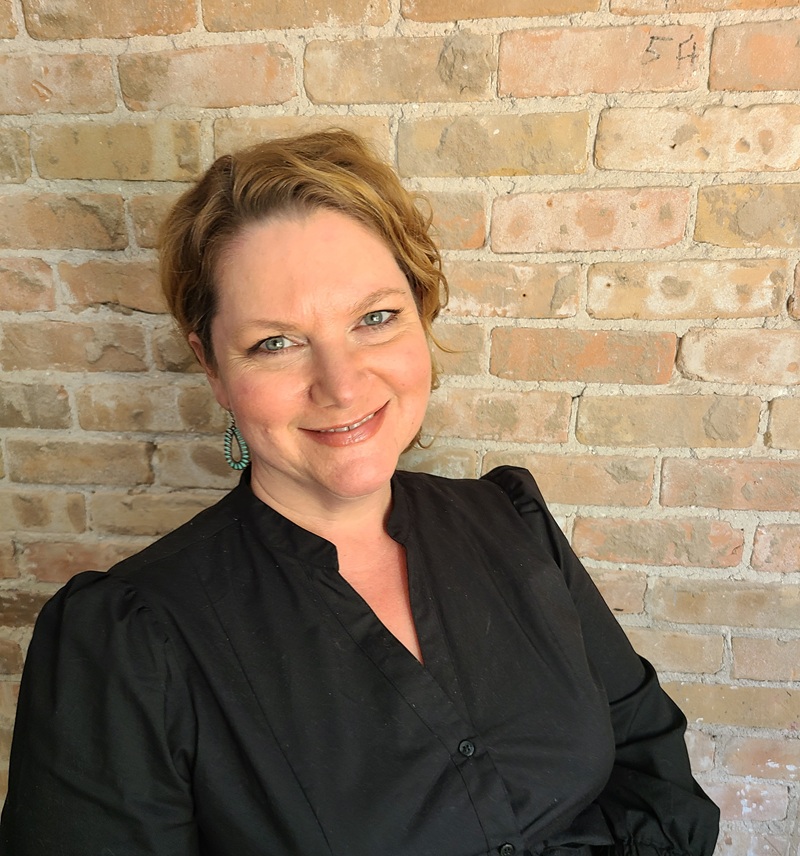
Sarah is Accenture’s Global Workplace Inclusion & Diversity Lead, who advances accessibility, accommodations, and inclusive design across the company’s global workplace portfolio—supporting more than 800,000 people in 52 countries. A Certified Professional in Accessibility Core Competencies (CPACC), she leads initiatives that ensure employees have equitable access to the tools, technologies, and environments they need to thrive. Sarah oversees Accenture’s global accommodations program, accessibility standards for the built environment, and a network of Accessibility Centers—interactive spaces that connect employees and clients to assistive technology and inclusive workplace solutions.
We are delighted that Sarah will be speaking in Austin, TX as part of our Wellbeing at Work Summit US this March. We caught up with her to see how she’s feeling in the runup to the event.
Hi Sarah, we are thrilled that you will be joining us at the Wellbeing at Work Summit US in March. Our first and most important question is, how are you doing today?
I’m doing well — and also very aware that wellbeing is not a fixed state. It shifts with workload, environment, and what’s happening in the world around us. I feel grounded and energized by work that has real purpose, especially when conversations about wellbeing move beyond theory and lead to tangible improvements in how people experience work.
As a leader based in the region, what are the main challenges you are facing when it comes to employee wellbeing and mental health?
One of the biggest challenges is that work has changed faster than many of the systems designed to support people. Hybrid work, constant connectivity, and increased cognitive demands have blurred boundaries and intensified pressure.
Accenture’s Pulse of Change 2026 research highlights this gap clearly: leaders are accelerating change and investment, particularly in technology, while many employees don’t yet feel fully ready or supported through that pace of transformation. From a wellbeing perspective, that gap shows up as burnout, anxiety, and cognitive overload.
Another challenge is access. Many people hesitate to ask for help, especially when needs are non-apparent or related to mental health. From a workplace standpoint, that means environments and processes need to reduce barriers proactively — rather than relying on individuals to navigate complex systems when they’re already under strain.
What strategies have you seen developing over the past 6 months, both internally and externally, that are moving the dial on wellbeing in the workplace?
In my view, the strategies making the biggest difference are those that embed wellbeing into how work happens, rather than treating it as an add-on.
Three shifts stand out:
- Inclusive workplace and experience design
Organizations are paying closer attention to how physical environments, sensory conditions, and predictability affect mental health. Designing spaces that support focus, recovery, and choice — including quieter areas and inclusive rooms — reduces anxiety and cognitive load before someone ever needs to ask for help. - Greater transparency and predictability
Clear information about workplaces, expectations, and accessibility reduces uncertainty, which is a significant driver of stress — particularly for neurodivergent employees and those returning to the office. - Human-centered systems at scale
There’s growing recognition that wellbeing improves when systems are designed to be easy to navigate and grounded in dignity, rather than reactive or overly administrative.
Accenture’s Pulse of Change 2026 research reinforces this direction: transformation succeeds when people are brought along with clarity and care, not just speed. Externally, I’m encouraged to see mental health, accessibility, and inclusion increasingly discussed as interconnected — not separate — priorities.
Why is employee wellbeing so important to you personally?
Because I’ve seen what happens when people are expected to perform at a high level in environments that weren’t designed with humans in mind.
It’s also personal. I navigate the world with a hearing disability, and I’m part of a neurodivergent family. Those lived experiences shape how I lead and why mental health and inclusion are non-negotiable for me. Wellbeing isn’t about perks or comfort — it’s about dignity, belonging, and the ability to participate fully at work without paying a hidden cost.
What impact is AI having in your organization and how are you managing that?
AI is already reshaping how work gets done — increasing speed, access to information, and efficiency. For many people, it has real potential to reduce cognitive load and remove unnecessary friction.
A message that has resonated with me recently is the importance of keeping people at the center of AI adoption — and viewing AI as a driver of reinvention by strengthening the workforce, not replacing it, with humans firmly in the lead. From my role, what matters most is how that framing translates into everyday work experiences. That perspective is critical if AI is going to improve wellbeing rather than undermine it.
At the same time, AI introduces new challenges, including information overload, constant upskilling pressure, and anxiety about change. Managing that well requires a responsible, human-centered approach — one that prioritizes accessibility, transparency, and human judgment so AI supports people rather than overwhelms them
Other than AI, are there any challenges that you are seeing for the first time and how are you addressing them?
One emerging challenge is sensory and cognitive strain in modern workplaces. Open environments, dense technology, constant notifications, and inconsistent hybrid experiences are creating stress in ways many organizations didn’t fully anticipate a few years ago.
We’re also seeing increased openness around non-apparent disabilities and mental health needs. That’s a positive shift, but it requires workplaces and leaders that are prepared to respond thoughtfully. Addressing these challenges means better design, clearer norms around availability, and more predictable, supportive work environments.
What areas do you think employers should be focused on over the next 12 months?
I’d highlight four priorities:
- Inclusive workplace design as a wellbeing strategy
Employers should treat physical and digital environments as part of their mental health infrastructure — including sensory-supportive spaces, inclusive rooms, and predictable workplace experiences. - Sustainable work design
This includes realistic expectations around workload, pace, and availability — especially as technology accelerates how work gets done. - Inclusive, accessible technology and AI literacy
AI and digital tools are now foundational to wellbeing. Employers need to ensure these tools reduce friction and cognitive load, and are usable by everyone. - Manager capability and confidence
Managers play a critical role in day-to-day wellbeing. Supporting them to recognize early signs of strain and respond with empathy and flexibility is essential.
Wellbeing efforts stall when they live only in programs. They succeed when they’re built into environments, systems, and operating models.
Do you feel that investment in employee wellbeing in the region is increasing or decreasing and is that a direct reflection on HR leaders’ increasing ability to demonstrate effective returns of their strategies to leadership?
Investment in wellbeing is increasing, but it’s becoming more targeted. Organizations are moving away from broad, feel-good initiatives toward approaches that demonstrate real impact — engagement, retention, productivity, and trust.
Accenture’s research consistently shows that accessibility and inclusion correlate with stronger innovation and performance. That evidence helps leaders connect wellbeing investments to business resilience, which is increasingly important in a time of rapid change.
How has your organization been leading the way?
Accenture has led by treating wellbeing, accessibility, and inclusion as core enablers of performance — not side initiatives. From a workplace perspective, that means focusing on inclusive design, normalizing flexibility and adjustments, and partnering across functions to reduce barriers before they become problems.
From my perspective in workplace design, that includes investments in inclusive environments — such as Accessibility Centers and purpose-built wellness and quiet spaces — that support focus, recovery, and dignity for a wide range of employees.”
The goal is simple: people shouldn’t have to work around the system to be well. The system itself should support them.
Sarah is speaking in Austin, TX as part of our Wellbeing at Work Summit US 2026 which takes place in New York and Austin this March, followed by Chicago and Los Angeles in May. Click the links below to find out more and book your tickets:
March 3 – New York – Click here to find out more and book
March 5 – Austin, TX – Click here to find out more and book
May 5 – Chicago – Click here to find out more and book
May 7 – Los Angeles – Click here to find out more and book