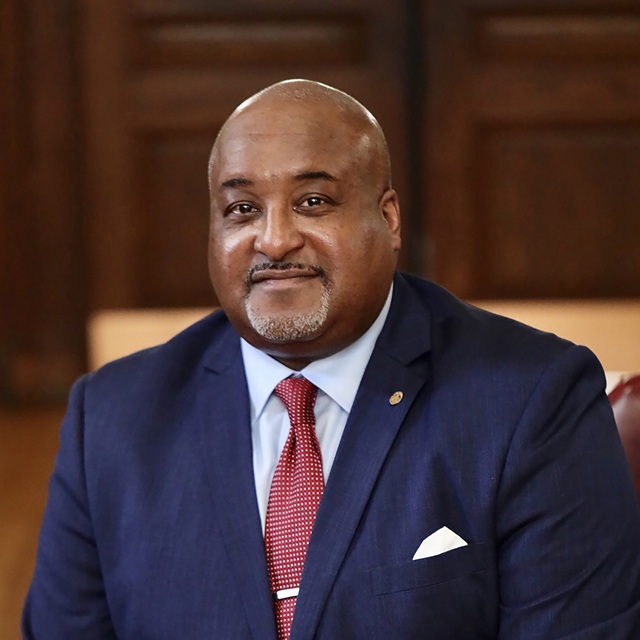
Rawle is the executive director of the American Psychiatric Association Foundation, the philanthropic arm of the American Psychiatric Association (APA). He also is two-term president of the Bar Association of the District of Columbia (BADC). Founded in 1844, the APA is the oldest medical association in the United States and the largest psychiatric association in the world. Before joining the APA Foundation, Rawle held several progressively responsible management positions with AARP over 15 years, including most recently as a vice president and a member of the AARP national leadership team.
We are delighted that Rawle will be speaking in New York as part of our Wellbeing at Work Summit US this March. We caught up with him to see how he’s feeling in the runup to the event.
Hi Rawle, we are thrilled that you will be joining us at the Wellbeing at Work Summit US in March. Our first and most important question is, how are you doing today?
Thank you for the opportunity to listen, learn, and share knowledge. I am maintaining and trying to stay focused during this dynamic and pivotal moment on our core objectives and not the obstacles that might deviate or frustrate our mission to achieve a mentally healthy nation-states for all.
As a leader based in the region, what are the main challenges you are facing when it comes to employee wellbeing and mental health?
(a) As with our automobiles, we are not heading the “check engine” light when we consider employee wellbeing. We see the check engine light, we might not know what is wrong or how to fix it, but we still are struggling to find time for deep dives around solutions.
(b) The external pace of change is making it more difficult to move at the speed of trust inside our organizations – even though we know and value the importance of trust. This trend causes some efforts to be more tactical than strategic; (c) the definition of “capacity” is becoming elusive. Managers and staff want more capacity; however, we do not have common definitions for what true capacity means and how right-sizing the work will impact capacity strengths or deficits.
What strategies have you seen developing over the past 6 months, both internally and externally, that are moving the dial on wellbeing in the workplace?
(1) The C-Suite is becoming more vocal about personal mental health concerns and their approach to dealing with these concerns, which gives the entire organization permission to do so;
(2) More organizations are moving beyond EAP only to find additional tools, tips, and resources like the APAF Notice. Talk. Act. at Work platform (workplacementalhealth.org); and
(3) Summits and conferences around the globe are increasingly incorporating mental wellness components into these meetings because of the growing recognition that there is no health without mental health, including organizational health.
Why is employee wellbeing so important to you personally?
As we are, so is our enterprise. If we are data informed, purpose driven, and strategically focused, our ability to deliver consistently and high levels is greater than the alternative. On the other hand, if we are in a poor mental state or burned out, individual and organizational performance will suffer.
What impact is AI having in your organization and how are you managing that?
We are moving from curiosity to engagement. We have adopted enterprise-wide safety and compliance protocols around A.I. We are building dashboards with A.I. and machine learning in mind. We also are encouraging internal and external training around the strategic use of A.I.
Other than AI, are there any challenges that you are seeing for the first time and how are you addressing them?
More frequently than not, I am referring less to “silos” and more to “silos of excellence”. Neither were created by accidental or inadvertence. The need to breakdown silos of excellence recognizes that high performance in isolation quietly undermines collective impact over time. When divisions, departments, or teams optimize only for their own success, they often create invisible walls that leads to duplication of efforts, missed insights, strained relationships, and burn out.
What areas do you think employers should be focused on over the next 12 months?
(a) Presenteeism;
(b) protocols around the strategic use of A.I.; and
(c) Navigating the DEI backlash without losing organizational identity and individual belonging.
Do you feel that investment in employee wellbeing in the region is increasing or decreasing and is that a direct reflection on HR leaders’ increasing ability to demonstrate effective returns of their strategies to leadership?
Yes, investment in wellbeing is increasing in terms of time and money. We also continue to see that organizations with “people strategy” departments version “HR departments” tend to have higher staff engagement.
How has your organization been leading the way?
(a) The CEO/Board Chair hosts quarterly all staff forums;
(b) all scheduled staff and team meetings are required to have written agenda and be limited to 30-minutes unless there are mission critical circumstances for longer meetings; and
(c) We have created multidisciplinary operating work groups and committees with staff at all levels of the enterprise who come together every 4-6 weeks to problem solve for ensuring we are doing the right work the right way.
Rawle is speaking in New York as part of our Wellbeing at Work Summit US 2026 which takes place in New York and Austin this March, followed by Chicago and Los Angeles in May. Click the links below to find out more and book your tickets:
March 3 – New York – Click here to find out more and book
March 5 – Austin, TX – Click here to find out more and book
May 5 – Chicago – Click here to find out more and book
May 7 – Los Angeles – Click here to find out more and book