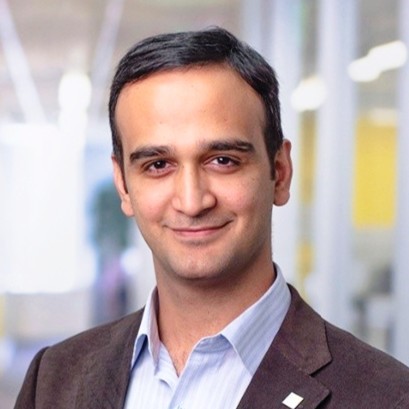
Hasan is a distinguished workplace strategist and a dedicated practitioner in the realms of Diversity, Equity, Inclusion, and Belonging (DEIB). With an impressive background encompassing over 15 years of executive coaching, organizational development, HR transformation, and leadership development, Hasan’s expertise is renowned in driving positive change within organizations through coaching senior executives on DEIB. His unwavering commitment to innovation has led him to create transformative systems and tools that foster greater equity within workplaces.
We are delighted that Hasan will be speaking in Austin, TX as part of our Wellbeing at Work Summit US this March. We caught up with him to see how he’s feeling in the runup to the event.
Hi Hasan, we are thrilled that you will be joining us at the Wellbeing at Work Summit US in March. Our first and most important question is, how are you doing today?
I’m doing well, thank you. Grounded in purpose and energized by the work ahead. Leading with wellbeing as a core value means I practice what I advocate for—staying connected to what matters, protecting time for reflection, and surrounding myself with people who challenge and inspire me. For me it’s a daily practice, not a destination.
As a leader based in the region, what are the main challenges you are facing when it comes to employee wellbeing and mental health?
The relentless pace combined with growing uncertainty. Leaders are navigating constant change—organizational restructuring, economic pressures, evolving work models—while trying to maintain team morale and performance. We’re also seeing a crisis of belonging: people feeling disconnected despite being “more connected” than ever. The challenge isn’t just addressing burnout symptoms; it’s fundamentally rethinking how we work in ways that honor human sustainability alongside business outcomes.
What strategies have you seen developing over the past 6 months, both internally and externally, that are moving the dial on wellbeing in the workplace?
The most effective approaches I’ve seen integrate wellbeing into how work gets done, not as an add-on program. This includes: managers trained in coaching conversations that prioritize human connection over task management; embedding belonging practices into everyday team rituals; and leaders modeling boundary-setting and vulnerability. Externally, there’s growing recognition that psychological safety and inclusive leadership aren’t soft skills—they’re performance multipliers. The organizations making real progress have moved from “wellbeing benefits” to “wellbeing culture.”
Why is employee wellbeing so important to you personally?
Because I’ve witnessed the cost of neglecting it—talented people burning out, leaders achieving success while losing themselves, and organizations wondering why engagement plummets despite investing in perks. Wellbeing isn’t separate from performance; it’s the foundation of sustainable excellence. Personally, my work in coaching and belonging has shown me that when people feel seen, supported, and valued, they don’t just perform better—they create ripple effects that transform entire cultures. That possibility fuels everything I do.
What impact is AI having in your organization and how are you managing that?
AI is both amplifier and disruptor. I’ve built AI-powered tools like the Belonging Coach to democratize access to evidence-based guidance for inclusion challenges. The opportunity is making expert frameworks available at scale and in real-time. The challenge is ensuring AI enhances human connection rather than replaces it. We’re managing this by being clear about what AI does well—providing information, frameworks, pattern recognition—and what only humans can do: hold space for nuance, build trust, navigate complexity with empathy. The question isn’t “AI or human,” it’s “how does AI enable more meaningful human work?”
Other than AI, are there any challenges that you are seeing for the first time and how are you addressing them?
The collision between expertise and authority. Organizations are hiring senior leaders from established companies for their change-management experience, then placing them in structures without clear decision rights or cultural permission to lead differently. I’m seeing talented leaders paralyzed by organizational ambiguity—responsible for outcomes without the structural support to achieve them. We’re addressing this through clearer role definition, explicit conversations about decision-making authority, and coaching leaders to navigate influence in horizontal, consensus-driven environments while maintaining their effectiveness.
What areas do you think employers should be focused on over the next 12 months?
Three priorities: First, sustainable performance models—moving beyond “do more with less” to “do what matters most, sustainably.” Second, manager capability—equipping frontline leaders with coaching skills, not just management tactics. Research shows managers are vital for employee wellbeing, yet they’re the most under-resourced. Third, belonging infrastructure—not programs, but practices embedded in how meetings run, decisions get made, and people experience everyday inclusion. The organizations that thrive won’t just survive the next disruption; they’ll have built cultures resilient enough to navigate anything.
Do you feel that investment in employee wellbeing in the region is increasing or decreasing and is that a direct reflection on HR leaders’ increasing ability to demonstrate effective returns of their strategies to leadership?
It’s diverging. Progressive organizations are doubling down because they see the data: wellbeing drives retention, innovation, and performance. Others are pulling back, viewing it as discretionary spend. The difference isn’t economic conditions—it’s leadership conviction and HR’s ability to connect wellbeing to business outcomes in language executives understand. The most effective HR leaders aren’t just reporting engagement scores; they’re showing how psychological safety reduces project failure rates, how belonging impacts customer satisfaction, how sustainable performance protects institutional knowledge. When wellbeing is framed as strategic advantage, not compliance or kindness, investment follows.
Hasan is speaking in Austin, TX as part of our Wellbeing at Work Summit US 2026 which takes place in New York and Austin this March, followed by Chicago and Los Angeles in May. Click the links below to find out more and book your tickets:
March 3 – New York – Click here to find out more and book
March 5 – Austin, TX – Click here to find out more and book
May 5 – Chicago – Click here to find out more and book
May 7 – Los Angeles – Click here to find out more and book