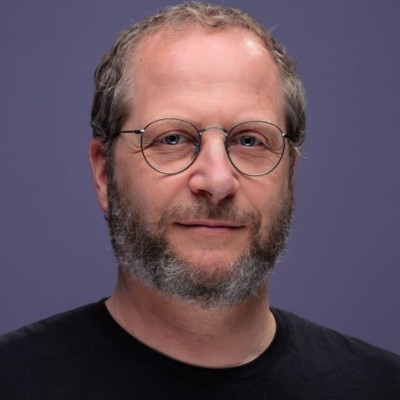
We are delighted to be partnering with Leqture for our Amsterdam Summit this week. Their Founder, Micha, will be taking to the stage to present “The Wellbeing Paradox: Why Work Feels Harder Than Ever – And What We Can Do About It”. We’ve never had more tools, more flexibility, or more focus on employee wellbeing. So why do so many people feel less connected to their work than ever before? Drawing on tens of thousands of workplace survey responses from hundreds of global companies, this keynote traces a surprising 300-year story -from Adam Smith’s pin factory to the post-COVID workplace- to explain how three waves of progress have gradually disconnected people from the things that make work genuinely fulfilling: a sense of craft, connection with colleagues, and seeing the real impact of what they do. The good news? Once you understand what’s missing, it doesn’t take much to bring it back. This session offers HR and wellbeing leaders a fresh lens on why their people are struggling and some practical, human ideas for restoring a little more pride and joy to everyday working life.
We caught up with Micha to see how he’s feeling in the run up to the summit:
Hi Micha we are thrilled that you are joining us at the Wellbeing at Work Summit in Amsterdam this week. Our first and most important question is, how are you doing today?
I am doing well, and feeling quite good about how things are going in both my personal and professional life
As a leader based in the region, what are the main challenges you are facing when it comes to employee wellbeing and mental health?
The main challenge for professionals in the workplace is keeping pace with the speed at which everything changes. The pace is so relentless that there is simply no time to adapt, and that takes its toll. Sometimes people feel it in the moment; sometimes they only realise it when it is already too late. That has a very real impact on people’s mental health.
My personal challenge is to be present and to pay genuine attention to the individuals in my team. I work with a wonderful group of people and we operate very autonomously, which is great for each individual. But it can make it difficult for me to get a real sense of how people are doing. I work from home a great deal, whilst most of my team prefer to be in the office, and when I am in the office I do not always make enough time to sit with people and understand what they might be struggling with.
What strategies have you seen developing over the past 6 months, both internally and externally, that are moving the dial on wellbeing in the workplace?
I believe the only thing that will truly move the dial on wellbeing in the workplace is hiring leaders who see wellbeing as something genuinely important from a human perspective, rather than merely as an economic or legal risk to be managed. The former brings fresh ideas and a real shift in culture; the latter tends to produce solutions that are little more than a façade over the underlying problems.
Why is employee wellbeing so important to you personally?
I have a deep personal interest in psychology and mental health. I spent ten years on the couch in psychoanalysis, working to better understand emotions and how relationships between people function, and it changed my life. I firmly believe that education is everything when it comes to mental health. And even though our reach is still modest compared to where I want it to be, I am proud to see that we are making a genuine difference for a great many people.
What impact is AI having in your organization and how are you managing that?
It is changing the game entirely. We feel genuinely empowered by it. But the danger is that rather than working less as a result of AI, we are actually working more.
Other than AI, are there any challenges that you are seeing for the first time and how are you addressing them?
I am seeing the effects of rapid technological and cultural change, widespread uncertainty, and a new generation of professionals who are struggling to cope with all of it at once.
What areas do you think employers should be focused on over the next 12 months?
Caring more for people, and less for products.
Do you feel that investment in employee wellbeing in the region is increasing or decreasing and is that a direct reflection on HR leaders’ increasing ability to demonstrate effective returns of their strategies to leadership?
Investment is increasing, but for the wrong reasons. We are addressing symptoms rather than causes, which means the underlying problems are only growing larger over time.
How has your organisation been leading the way?
We are a small company and we do not have large benefit programmes, but we do our very best. What I believe people need most is a place where they feel safe: safe to say no, to feel that they matter, to feel seen, and to feel human.
Micha is speaking in Amsterdam as part of our Wellbeing at Work Summit Europe 2026 which takes place in Zurich, Amsterdam and Madrid this month. Click the links below to find out more and book your tickets: