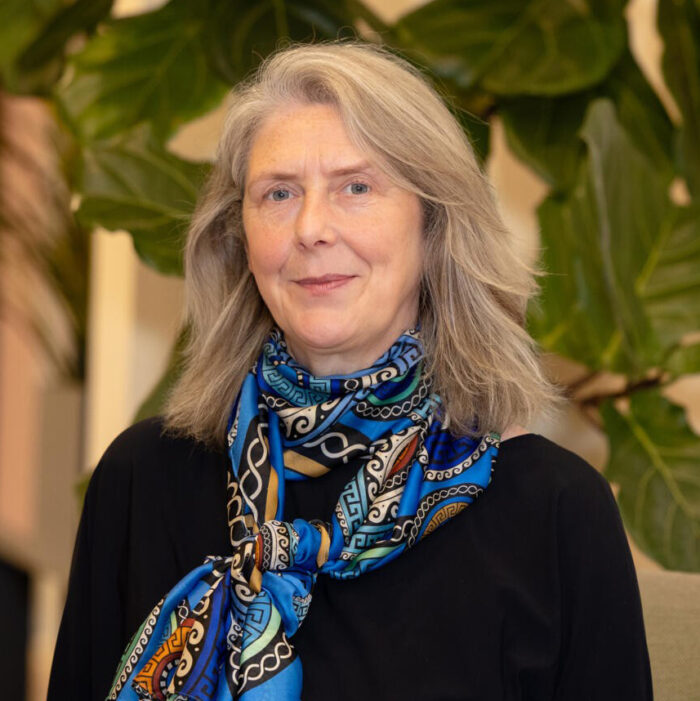
We are delighted that Helen will be part of our Amsterdam Leadership Panel this week discussing Wellbeing Culture as a Performance Engine. The leaders will explore the measurable behaviours that prevent culture atrophy and drive meaningful organizational performance, enhancing engagement, wellbeing and long-term strategic outcomes, and discussing how can employers implement programs that help support people thrive and grow.
We caught up with Helen to see how she’s feeling in the run up to the summit:
Hi Helen we are thrilled that you are joining us at the Wellbeing at Work Summit in Amsterdam this week. Our first and most important question is, how are you doing today?
I’m doing great, thank you. The sunshine and blue skies are definitely helping – always a welcome boost at this time of year!
As a leader based in the region, what are the main challenges you are facing when it comes to employee wellbeing and mental health?
A key challenge is access to mental health support through the healthcare system, where long waiting times can delay people getting the help they need. In our international workforce, language can also be a barrier, particularly for employees who are not fluent in Dutch.
To support our people, we offer a multilingual Employee Assistance Programme for both employees and their immediate families, including access to psychological support. We’ve seen this become a really valued resource and an important way of making support more accessible and inclusive.
What strategies have you seen developing over the past 6 months, both internally and externally, that are moving the dial on wellbeing in the workplace?
Financial pressures and market shifts have meant that many organisations, including ours, are facing restructures and workforce reductions, which naturally affect morale and wellbeing.
One of the most important strategies for us has been transparent and empathetic communication. We’re working hard to provide staff with honest and timely updates, while also creating as much clarity and certainty as possible during this period of change.
We also recognise that wellbeing does not end with the restructuring process itself. Supporting our remaining employees is equally important in building and maintaining trust, engagement, and retention.
Why is employee wellbeing so important to you personally?
I genuinely care about people on a personal level. Employee wellbeing is far more than a statutory duty of care, it’s a moral obligation.
You can’t separate staff wellbeing from our students success. When our staff feel valued and supported, this enables them to create positive, high-quality learning environments for our young learners.
What impact is AI having in your organization and how are you managing that?
AI is rapidly transforming how we work, teach, and how students learn. Across the organisation, we are already seeing opportunities to improve efficiency, reduce administrative burden, and enhance creativity through AI tools.
Staff are increasingly embracing AI as a support to their work rather than viewing it as a threat to their profession or roles. Our guiding principle is that AI should support decision-making, but never replace professional judgement or human accountability.
To support this, we have dedicated AI and EdTech specialists who provide training and guidance for both staff and students. They also help implement our AI policy, which sets out clear expectations around the safe, ethical, legal, and effective use of AI.
We recognise that AI can have both positive and negative impacts on wellbeing. As a result, we are working to build a healthy digital culture – one that encourages balance, reflection, and critical awareness.
Other than AI, are there any challenges that you are seeing for the first time and how are you addressing them?
Conflict in the workplace isn’t new, but I think organisations are becoming much more aware of the impact it can have on staff wellbeing and productivity.
We’re focused on building a culture of psychological safety by providing tailored training and information sessions for leaders, managers, and staff on how to recognise and address unwanted behaviours early and appropriately.
We already offer access to confidential counselling and mediation services, both for employees and for managers seeking advice, but our wider approach is really centred on prevention and early intervention wherever possible.
What areas do you think employers should be focused on over the next 12 months?
Employee experience remains a top priority for us. We are currently reviewing the role and capability of our people managers to ensure they have the skills, autonomy, and confidence needed to lead effectively through a period of significant organisational change. Our middle leaders play a key role in maintaining staff engagement, supporting wellbeing, and sustaining high standards.
Do you feel that investment in employee wellbeing in the region is increasing or decreasing and is that a direct reflection on HR leaders’ increasing ability to demonstrate effective returns of their strategies to leadership?
Dutch labour law places a strong emphasis on employee wellbeing, which creates a solid framework for shared accountability between HR, leadership, and employees.
From my perspective, investment in wellbeing continues to grow as organisations increasingly recognise the link between employee wellbeing, engagement, retention, and performance. At the same time, HR leaders are becoming more effective at demonstrating impact through measurable outcomes, which is helping to embed wellbeing firmly on the leadership agenda.
How has your organisation been leading the way?
We’ve developed a strong network of wellbeing providers and experts who really place employee and organisational wellbeing at the centre of what they do. This includes occupational health services, our company doctor, external confidential advisors (Vertrouwenspersoon), and an Employee Assistance Programme that provides a broad range of support services and a wellbeing platform.
These services are integrated into a wider wellbeing strategy, ensuring employees have easy access to support when they need it, and that wellbeing is embedded across the organisation rather than treated as a standalone initiative.
Helen is speaking in Amsterdam as part of our Wellbeing at Work Summit Europe 2026 which takes place in Zurich, Amsterdam and Madrid this month. Click the links below to find out more and book your tickets: