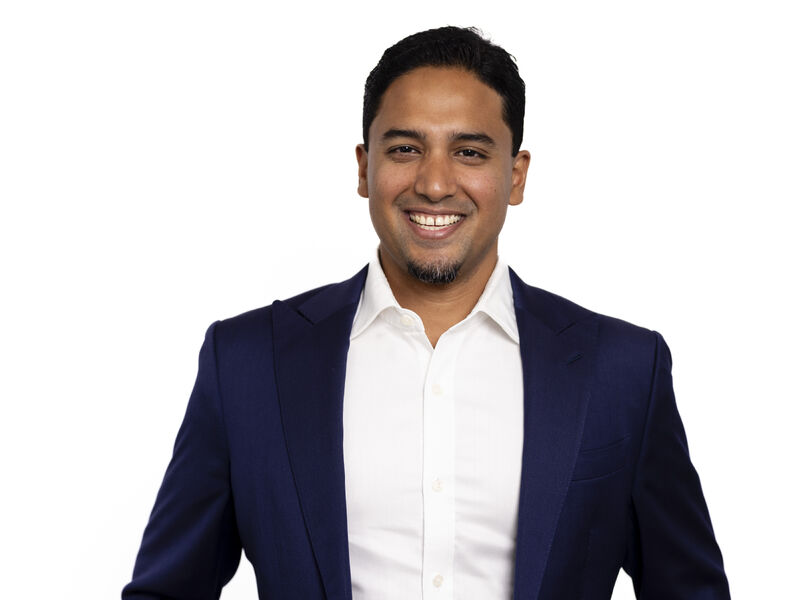
We are delighted that Shabab will be joining our Sydney Leadership Panel – “Technology and Wellbeing in Today’s Workplace”. They will be exploring where HR fits in a digital workplace strategy, How AI may enhance wellbeing and productivity without causing anxiety, as asking What is the role of leadership in shaping a technology enable, people-first workplace?
We caught up with Shabab to find out how he’s feeling in the runup to the summit:
Hi Shabab, we are thrilled that you are joining us at the Wellbeing at Work Summit Australia in Sydney next week. Our first and most important question is, how are you doing today?
Thank you — I’m doing well. I think it’s important for those of us in this space to actually practise what we preach, and right now I feel energised by the momentum building around workplace wellbeing across the Asia-Pacific region. There is a tangible shift in how organisations are approaching this topic — from treating it as a compliance checkbox to genuinely embedding it into their culture — and that progress is motivating. I’m very much looking forward to the conversations that November will bring.
As a leader based in the region, what are the main challenges you are facing when it comes to employee wellbeing and mental health?
The most persistent challenge I observe is the gap between awareness and meaningful action. Most organisations across Australia and the broader region now openly acknowledge that mental health matters, but translating that acknowledgement into consistent, well-resourced support structures — particularly across diverse, multi-generational and hybrid teams — remains genuinely difficult. Cultural nuance adds another layer of complexity; what resonates as a wellbeing initiative in Sydney may land very differently in Singapore or Hong Kong. We’re also seeing a significant rise in financial stress among employees at all levels, which is an often-overlooked but powerful driver of poor mental health and reduced engagement at work. The organisations navigating this most successfully are the ones taking a holistic view rather than treating each challenge in isolation.
What strategies have you seen developing over the past 6 months, both internally and externally, that are moving the dial on wellbeing in the workplace?
The most meaningful shift I’ve observed externally is organisations moving away from one-size-fits-all wellbeing programs toward approaches that are more personalised, data-informed and genuinely responsive to employee feedback. There is growing recognition that a yoga class and a meditation app are not substitutes for structural support. Internally, we’ve placed a strong emphasis on designing holistic health and wellbeing programs that are specific to each of our office locations — recognising that what resonates with our teams in Australia may look quite different from what is meaningful for colleagues in Southeast Asia or the Middle East. Cultural context shapes everything, from how people talk about mental health, to the types of physical wellness support they value, to the community and social dimensions of wellbeing. By anchoring our programs in local norms and listening closely to what our people in each market actually need, we’ve been able to build something that feels genuine rather than imported.
Why is employee wellbeing so important to you personally?
For me, it comes down to a deeply held belief: people simply cannot do their best work — or live their best lives — if they are not well. That sounds straightforward, but the implications for how we design organisations and lead teams are profound. I’ve seen firsthand the ripple effect that poor wellbeing has, not just on individual productivity, but on relationships, families and broader communities. I’ve also seen the transformative impact of workplaces that genuinely prioritise their people’s health and happiness — the creativity, loyalty and resilience that follows is remarkable. That makes this more than a professional priority for me; it’s something I care about deeply on a human level, and it’s one of the reasons I find this industry so meaningful.
What impact is AI having in your organization and how are you managing that?
AI has had a genuinely positive and tangible impact on how we operate, particularly in streamlining the back-end processes that underpin our business. From automating time-intensive administrative tasks, to improving the accuracy and speed of data analysis, to enhancing how we manage and process information across our operations — AI has freed our people to spend more of their time on the work that truly requires human expertise, judgement and relationship. We’ve seen meaningful efficiency gains in areas like reporting, document handling and administrative workflows, which ultimately allows us to deliver a better experience for the organisations and individuals we work with. The way we see it, AI is a powerful enabler — one that, when implemented thoughtfully, elevates the quality of our work rather than replacing the people behind it.
Other than AI, are there any challenges that you are seeing for the first time and how are you addressing them?
One emerging challenge that I’m paying close attention to is what I’d describe as wellbeing fatigue — a growing scepticism among employees toward wellbeing programs that feel performative or disconnected from their actual day-to-day experience. When initiatives are introduced without follow-through, or when the culture doesn’t match the messaging, employees notice, and trust erodes quickly. We’re addressing this by ensuring our wellbeing commitments are woven into how we operate every day, not packaged as a separate program or campaign. Organisations are also increasingly focused on the wellbeing of caregivers within the workforce — a demographic that has grown significantly in the years since the pandemic — who carry invisible loads that rarely show up in traditional wellbeing data but have a profound effect on their engagement and performance.
What areas do you think employers should be focused on over the next 12 months?
Financial wellbeing deserves significantly more attention than it currently receives in most organisations. The cost-of-living pressures across Australia and the broader Asia-Pacific region are real and acute, and they are affecting employees at every income level — not just those on lower wages. Employers who provide genuine support in this area, whether through financial education, flexible compensation structures or access to independent advice, will see meaningful returns in trust and engagement. Alongside that, I’d strongly encourage employers to invest in building psychological safety — creating environments where people feel they can speak honestly about challenges, make mistakes, and ask for help without fear of judgment or consequence. And finally, I would urge leaders not to neglect their own wellbeing. You cannot sustain a healthy, resilient culture from an exhausted or disconnected senior team.
Do you feel that investment in employee wellbeing in the region is increasing or decreasing and is that a direct reflection on HR leaders’ increasing ability to demonstrate effective returns of their strategies to leadership?
Investment is unquestionably increasing across the region, and I do believe a significant part of that story is the growing sophistication of HR leaders in connecting wellbeing outcomes to the metrics that matter to boards and executive teams — things like absenteeism rates, voluntary turnover, productivity measures and employer brand strength. That language shift has been important. However, the investment landscape remains uneven; larger multinationals and progressive mid-sized organisations are genuinely leading, while many smaller businesses are still at the early stages of the journey. The most enduring challenge for HR professionals continues to be constructing a compelling, evidence-based narrative that resonates with a CFO as powerfully as it does with a CHRO — and those who are doing it well are the ones who are having the greatest impact on their organisations.
How has your organisation been leading the way?
At Pacific Prime, our position at the intersection of insurance, employee benefits design and wellbeing consulting gives us a genuinely unique vantage point across the region. We work with organisations of all sizes and across diverse industries, which means we see a wide spectrum of approaches to employee wellbeing — what works, what doesn’t, and where the real opportunities lie. That insight informs how we advise our clients, helping them build benefits programs that reflect the holistic needs of their people across the physical, mental and financial dimensions. But we also hold ourselves to the same standard internally. We continue to evolve our own people practices — from how we support our employees, to how we talk about mental health, to how we structure benefits for our own teams — because we believe that leading by example is not optional in this space.
Shabab will be speaking in Sydney as part of our Wellbeing at Work Summit Australia which take place this November in Sydney, Melbourne and Brisbane. Click the links below to find out more and book your tickets:
To find out more about our Sydney summit and book your tickets click here.
To find out more about our Melbourne summit and book your tickets click here.
To find out more about our Brisbane summit and book your tickets click here.