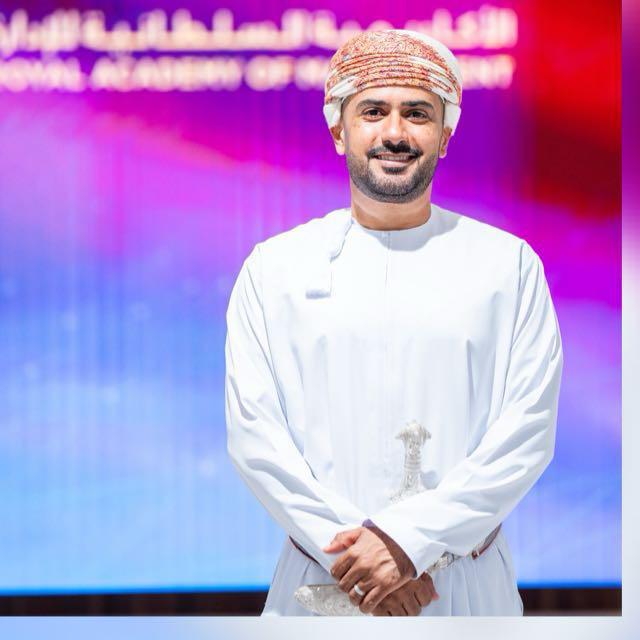
Dr. Salim A. Al Flaiti is the Chairman of the Board of Batinah Hotels, Vice Chairperson of the Board of Trustees of Oman Tourism College, and Chairman of the Board of ASAAS. He is also the Group Head of Human Capital Business Partners at Oman Tourism Development Company (OMRAN Group), where he leads human capital strategy across more than 20 hotels and subsidiaries. With 23 years of leadership experience across healthcare, education, oil & gas, and hospitality, Dr. Al Flaiti has been central to shaping Oman’s talent agenda. He spearheaded OMRAN’s #IAmTourism campaign, aligning tourism workforce development with Oman Vision 2040. A recent graduate of the National CEO Program with the Royal Academy of Management, Dr. Al Flaiti brings a strategic lens to governance, human capital, and organizational transformation. As an educator and researcher, he lectures on Human Resources and Real Estate Management and has presented at international forums, including the World Leisure Congress. He holds a Doctorate in Leadership and Health Administration from the University of Phoenix, and Master’s and Bachelor’s degrees in Management and Human Resource Management from Duquesne University, USA.
We are delighted that Dr. Salim will be speaking in Muscat as part of our Wellbeing at Work Summit Middle East in January. We caught up with him to see how he’s feeling in the runup to the event.
Hi Dr. Salim, we are thrilled that you will be joining us at the Wellbeing at Work Summit Middle East in January. Our first and most important question is, how are you doing today?
I’m doing, thank you. Grateful and centred as we just had a national holiday and took the opportunity to recharge.
As a leader based in the region, what are the main challenges you are facing when it comes to employee wellbeing and mental health?
I think some of the main challenges are stigma, workload pressure, and the capability of some managers. People often hesitate to speak up until issues have escalated. With many companies restructuring and operating with leaner teams, expectations keep rising and the pace is relentless. And while management teams in large organisations tend to be technically strong, emotional and psychological conversations are still considered taboo in many places.
What strategies have you seen developing over the past 6 months, both internally and externally, that are moving the dial on wellbeing in the workplace?
Over the past six months, I’ve noticed a real shift in how organisations are approaching wellbeing. We’re seeing leaders begin to normalise conversations by opening meetings with simple check-ins or gentle wellbeing prompts, which creates space for people to speak more openly. There’s also a move toward more structured flexibility as in hybrid options, adjusted hours during peak seasons, and more realistic workload planning, all of which help people manage their energy better. And importantly, decisions are becoming more data-led, with pulse surveys, burnout indicators, and leave-pattern tracking giving us early signals so we can step in before issues grow. All of this tells me that the region is taking wellbeing more seriously, and the momentum is finally building in the right direction.
Why is employee wellbeing so important to you personally?
Employee wellbeing matters to me because sustainable performance only comes from people who feel safe, valued, and supported. Over the years, I’ve seen talented, high-potential individuals – including myself – burn out simply because they stayed silent, felt the pressure, or carried the weight of stigma. It’s difficult to watch good people lose their spark for reasons that are completely avoidable. I don’t want to see talent slip away when a healthier environment could have helped them thrive.
What impact is AI having in your organization and how are you managing that?
AI is reshaping a lot of what we do as it’s streamlining workflows, freeing people’s capacity, and improving accuracy across different functions. At the same time, it naturally brings some anxiety about job security and relevance. We’ve been managing this by training our staff early, being clear that AI is there to support and augment their work rather than replace it, and setting firm ethics and boundaries so people know how it should be used. The more transparent we are, the more confident and comfortable the teams become.
Other than AI, are there any challenges that you are seeing for the first time and how are you addressing them?
One of the new challenges we’re seeing is the “always-on” culture driven by digital communication, people feel reachable all the time, and that slowly erodes their balance. We’re also noticing wider generational gaps in expectations around flexibility, authority, and pace, which can create friction if not handled well. We’re addressing these by calibrating workloads more carefully, setting clearer communication norms so people know when they are truly expected to respond, and coaching managers to lead mixed-age teams with more awareness and patience.
What areas do you think employers should be focused on over the next 12 months?
Over the next year, I think employers need to focus heavily on burnout prevention and more thoughtful workload design. We also need to invest in upskilling managers so they’re confident handling people issues, not just operational tasks. I know this may sound cliché, but wellbeing must move from being a “nice to have” to something built into policy and daily practice. And as AI continues to evolve, adopting it responsibly, with proper training and full transparency, will be essential for both trust and performance.
Do you feel that investment in employee wellbeing in the region is increasing or decreasing and is that a direct reflection on HR leaders’ increasing ability to demonstrate effective returns of their strategies to leadership?
It’s definitely increasing, slowly but in the right direction. Leaders are beginning to see how wellbeing directly influences retention, customer experience, and overall productivity. And HR teams in the region are getting much better at showing evidence, not just passion, linking wellbeing initiatives to real operational outcomes. That shift is helping leadership view wellbeing more as an investment and less as a cost.
How has your organization been leading the way?
We’ve been leading the way by embedding wellbeing into our training, policies, and leadership development rather than treating it as a standalone campaign. A big part of our approach has also been our focus on youth employment, inclusion programs, experiential learning, and building development pipelines that lift both morale and capability across the organisation. We’re realistic and we’re not trying to solve everything or save everyone, yet we are committed to addressing the issues that matter most and have the biggest impact. We’re normalising open dialogue around stress, balance, and personal growth at different leadership layers, and we rely on data instead of assumptions to guide our decisions.
Dr. Salim will be speaking in Muscat during our Wellbeing at Work Summit Middle East 2026 which takes place in Cairo, Riyad, Muscat and Dubai in January. Click the links below to find out more and book your tickets:
20 January 2026 – Cairo – Click here to find out more and book
22 January 2026 – Riyadh – Click here to find out more and book
27 January 2026 – Muscat – Click here to find out more and book
29 January 2026 – Dubai – Click here to find out more and book