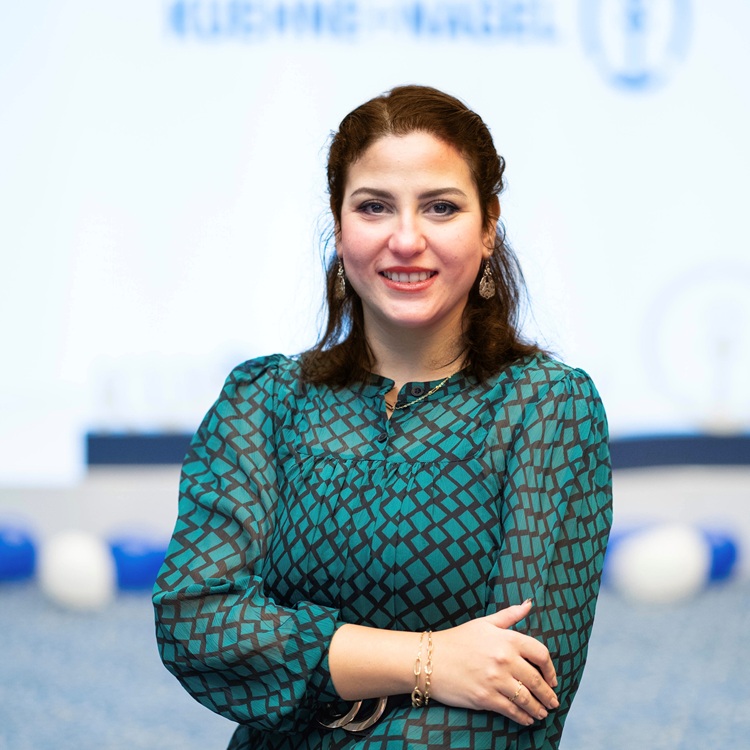
Nada is a passionate Human Resources leader with over a decade of experience across multinational organizations. Currently, she serves as Head of HR at Kuehne+Nagel, where she drives people strategies that support business growth, talent development, and organizational excellence. Her career journey has taken her through impactful roles at Tetra Pak, Maersk, DB Schenker, and Qatar Airways, where she gained extensive experience in HR strategy, talent management, employee engagement, and organizational transformation. Along the way, she has led initiatives such as revamping rewards systems, implementing HRIS platforms, and championing diversity and inclusion programs that delivered measurable impact. She holds an MBA in Human Capital Management from Rome Business School, along with certifications from SHRM and in KPI Management. She believes in creating inclusive workplaces where people can thrive, leaders can grow, and businesses can achieve sustainable success.
We are delighted that Nada will be speaking in Cairo as part of our Wellbeing at Work Summit Middle East in January. We caught up with her to see how she’s feeling in the runup to the event.
Hi Nada, we are thrilled that you will be joining us at the Wellbeing at Work Summit Middle East in January. Our first and most important question is, how are you doing today?
I’m doing very well, thank you. It’s an incredibly busy period, but also an exciting one. We’re at a transformative moment for HR in the region, and that energy keeps me motivated and inspired.
As a leader based in the region, what are the main challenges you are facing when it comes to employee wellbeing and mental health?
One of the biggest challenges is bridging the gap between awareness and action. Many organizations in the region now acknowledge the importance of wellbeing, but translating this into structured frameworks, dedicated budgets, and long-term commitment is still evolving.
Another challenge is the stigma that still exists around mental health. Employees are more open than before, but many still hesitate to speak up. HR leaders are working hard to create cultures where vulnerability is not seen as weakness but as a step toward growth.
What strategies have you seen developing over the past 6 months, both internally and externally, that are moving the dial on wellbeing in the workplace?
Over the past six months, I’ve seen a clear shift toward data-driven wellbeing strategies, rather than one-off initiatives. Organizations are beginning to track burnout indicators, workload patterns, and engagement metrics more proactively.
I’ve also noticed a strong emphasis on manager enablement—training leaders to identify early signs of stress and have meaningful wellbeing conversations.
Additionally, there’s growing adoption of more flexible work models, mental health days, and access to digital wellbeing platforms that provide confidential, on-demand support.
Why is employee wellbeing so important to you personally?
Wellbeing is personal for me because I’ve seen firsthand how burnout can impact performance, relationships, and even identity. I genuinely believe people do their best work when they feel safe, supported, and valued.
As HR leaders, we influence the quality of people’s lives far beyond the workplace. That responsibility is something I take seriously—I want people to leave work with energy for their families, passions, and personal ambitions.
What impact is AI having in your organization and how are you managing that?
AI is reshaping how we work, particularly in efficiency, decision-making, and talent development. It has allowed us to automate repetitive tasks, improve workforce planning, and provide employees with more personalized growth opportunities, But with the benefits come concerns—job security, skills relevance, and ethical use. We’re managing this by communicating transparently, upskilling our teams, and ensuring AI augments human capability rather than replaces it.
Other than AI, are there any challenges that you are seeing for the first time and how are you addressing them?
Yes, one new challenge is the increasing complexity of employee expectations. People want growth, flexibility, purpose, recognition, and wellbeing—all at once. Meeting these expectations requires agility and a mindset shift from traditional HR, We’re addressing this by being more intentional about listening—through pulse surveys, focus groups, and open dialogues—and then acting quickly on the insights.
What areas do you think employers should be focused on over the next 12 months?
I believe employers should focus on three key areas:
- Mental health infrastructure, not just awareness sessions
- Leadership capability, especially emotional intelligence
- Future-skills development, ensuring employees stay relevant as technology evolves
These three pillars will directly influence engagement, retention, and long-term organizational resilience.
Do you feel that investment in employee wellbeing in the region is increasing or decreasing and is that a direct reflection on HR leaders’ increasing ability to demonstrate effective returns of their strategies to leadership?
Investment is definitely increasing, but in a more strategic way. Leaders are no longer approving budgets based on trends—they want measurable impact.
This shift has pushed HR to become more analytics-driven, and I see that as a positive. When we can demonstrate reduced turnover, improved performance, or lower absenteeism tied to wellbeing programs, the conversation becomes much easier at the leadership table.
How has your organization been leading the way?
We’ve been leading by building a wellbeing strategy that is woven into our culture, not treated as a side program. This includes:
- Training managers to have psychologically safe conversations
- Introducing flexible work options
- Enhancing our recognition programs
- Providing structured wellbeing support, not ad-hoc initiatives
Most importantly, we continuously listen to our people. Their feedback shapes everything we do—and that has been our biggest strength.
Nada will be speaking in Cairo during our Wellbeing at Work Summit Middle East 2026 which takes place in Cairo, Riyad, Muscat and Dubai in January. Click the links below to find out more and book your tickets:
20 January 2026 – Cairo – Click here to find out more and book
22 January 2026 – Riyadh – Click here to find out more and book
27 January 2026 – Muscat – Click here to find out more and book
29 January 2026 – Dubai – Click here to find out more and book