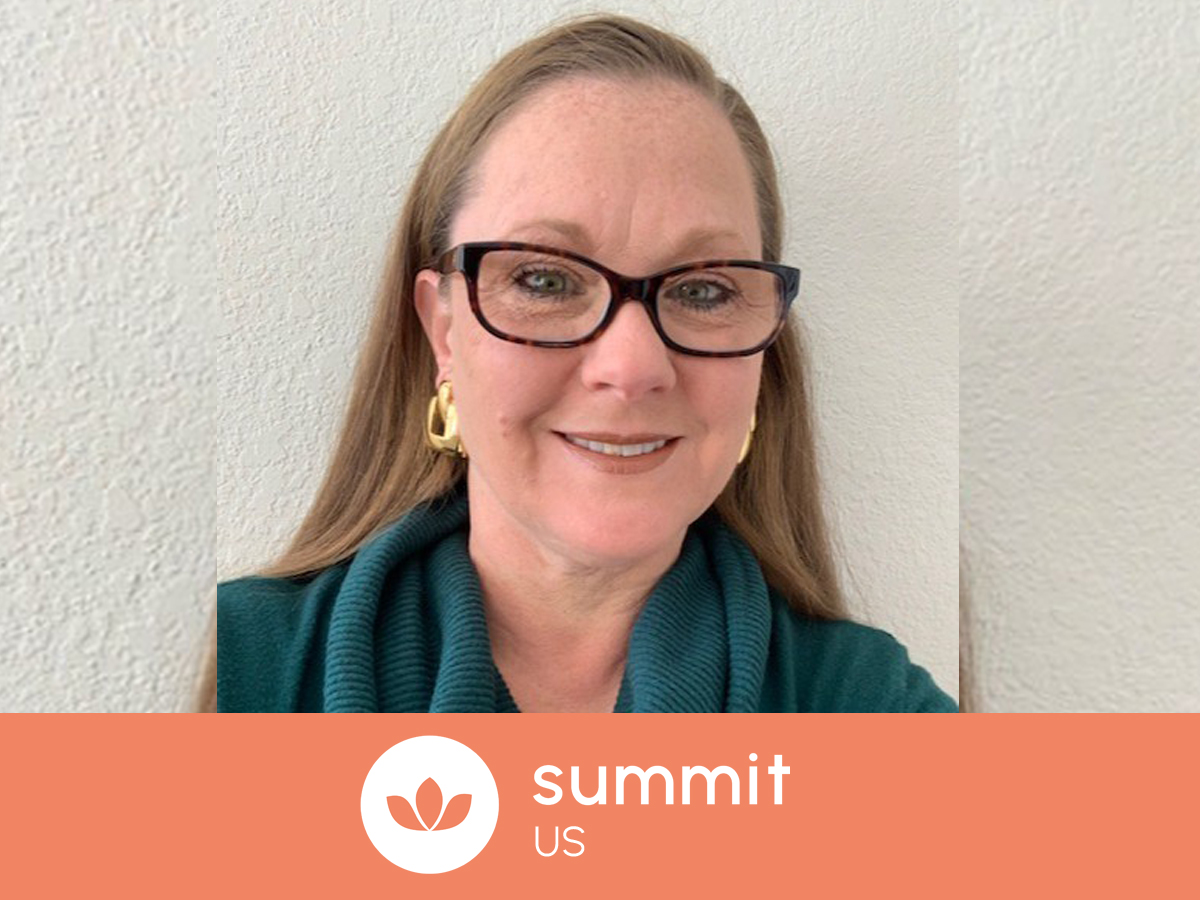
Kristin is the EVP of People & Culture at Macmillan Learning, where she leads the strategy and execution for talent, learning & development, and organizational culture and effectiveness. With a strong focus on innovation and agility, she champions upskilling, leadership development, and technical fluency to future-proof the workforce. Kristin is known for driving cultural evolution that enables rapid change while fostering deep employee engagement. She embeds equity and learning into core workflows, scaling culture through transformation while supporting Macmillan Learning’s mission to inspire what’s possible for every learner. Prior to joining Macmillan Learning, Kristin held leadership roles at Hill+Knowlton Strategies and BreakingPoint Systems/Ixia, where she established scalable HR infrastructure, improved engagement and retention, and led post-acquisition integration efforts.
We are delighted that Kristin will be speaking in Austin, TX as part of our Wellbeing at Work Summit US this March. We caught up with her to see how she’s feeling in the runup to the event.
Hi Kristin, we are thrilled that you will be joining us at the Wellbeing at Work Summit US in March. Our first and most important question is, how are you doing today?
I’m doing well, thanks for asking! If I’m honest, like most leaders right now, I’m energized and stretched at the same time. We’re moving quickly to meet AI advancements, evolving skills needs, and cultural transformation; that pace is both exciting and demanding.
What I’ve learned is that wellbeing isn’t about eliminating pressure. It’s about building the capacity to handle it. For me, that means being clear about priorities, surrounding myself with strong leaders, and protecting time for strategic thinking instead of reacting all day. The understanding that sustainable performance requires intentional recovery is what I’m trying to build into our organization as well.
As a leader based in the region, what are the main challenges you are facing when it comes to employee wellbeing and mental health?
The biggest challenge is helping employees navigate sustained uncertainty and change fatigue while maintaining the necessary pace to meet business urgency. We’re asking people to adapt constantly to new technologies, while developing new skills and delivering against new role expectations. Even when the changes are positive, the cognitive load is real.
While we cannot slow the pace of business transformation, and can’t control all the external factors that weigh on our teams, we have been focusing on better capability building and equipping people with tools, including AI, that reduce friction in their day. Our hope is that these efforts will enable employees to combat burnout and focus on the most impactful and rewarding parts of their work.
What strategies have you seen developing over the past 6 months, both internally and externally, that are moving the dial on wellbeing in the workplace?
First, wellbeing is being reframed as a performance strategy. Leaders are recognizing their own limits when it comes to continuously delivering at a high level while protecting their wellbeing.This recognition has opened the door for them to see how engagement, productivity, retention, and mental health connect in measurable ways for their teams.
Second, manager capability is getting real investment. We know the manager relationship is the strongest predictor of engagement. We’re investing heavily in leadership development – specifically feedback and coaching skills to make wellbeing an expected part of our daily workflows and practices, not just a symbolic nice to have.
Why is employee wellbeing so important to you personally?
Quite frankly, I don’t believe in winning at work and losing at life. I’ve seen plenty of high-performing cultures that quietly burn people out. That’s not sustainable, and it’s not aligned with who we say we are. At Macmillan Learning, our mission is to inspire what’s possible for every learner. I believe that has to include our employees. If our people are depleted, we cannot innovate. If they are anxious and unsupported, we cannot serve educators and students well.
Wellbeing, to me, is about creating an environment where people can grow, contribute meaningfully, and still have energy for their lives outside of work. That’s not a nice tag line, but part of our business strategy for success.
What impact is AI having in your organization and how are you managing that?
AI has been a powerful accelerator for our work, strengthening our technology capabilities, experimentation cycles, and productivity standards. Most importantly, it’s enabling us to deliver more personalized, high-impact learning experiences for students and educators at scale.
We’re managing the workforce impact in three intentional ways: investing in upskilling aligned to a clear skills framework, establishing strong governance grounded in research and trust, and redesigning workflows so AI reduces low-value tasks and expands time spent on strategic, distinctly human work.
This isn’t about doing more with fewer people. It’s about elevating capability. We see AI as a multiplier for our people and for student success.
Other than AI, are there any challenges that you are seeing for the first time and how are you addressing them?
Yes, I’m seeing what I would call identity disruption. As industries evolve quickly, people are asking deeper questions:
- What is my value?
- Are my skills still relevant?
- Where do I belong in this next chapter?
That’s different from traditional burnout. It’s existential.
We’re trying to reduce anxiety by having more transparent conversations about the future of work, both at a company and individual level. I’ve been encouraging our people to think critically about what things they find most fulfilling in their work and in life (and what they’d rather do without), while the People & Culture Team has been working to build clearer skills mapping and visible career pathways. By offering the tools and support for them to chart their own path, and showcasing how skills are the currency for growth in the future, I think we can empower our teams with control over their career trajectories.
What areas do you think employers should be focused on over the next 12 months?
We all should be focused on these priorities:
Manager excellence – The single greatest lever for wellbeing and performance.
AI fluency at all levels – Not just access, but confidence and capability.
Clearer prioritization – Reduce overwhelming people with competing initiatives.
Skills-based talent strategies – Hire and develop for adaptability, resilience and learning agility.
Embedding inclusion into everyday operations – Psychological safety drives innovation.
Kristin is speaking in Austin, TX as part of our Wellbeing at Work Summit US 2026 which takes place in New York and Austin this March, followed by Chicago and Los Angeles in May. Click the links below to find out more and book your tickets:
March 3 – New York – Click here to find out more and book
March 5 – Austin, TX – Click here to find out more and book
May 5 – Chicago – Click here to find out more and book
May 7 – Los Angeles – Click here to find out more and book