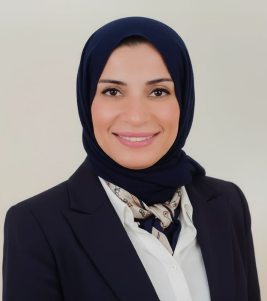
Dina is a highly accomplished Occupational Health & Medical Manager, who brings a wealth of expertise in safeguarding and enhancing well-being within complex industrial environments.
As the Occupational Health & Medical Manager at L’Oréal’s Cairo Plant. Dina is at the cutting edge of designing and implementing comprehensive health and wellness strategies at an industrial level. Her role is pivotal in ensuring the physical and mental well-being of the workforce, directly impacting productivity, safety, and employee satisfaction.
We are delighted that Dina will be speaking in Cairo as part of our Wellbeing at Work Summit Middle East. We caught up with her to see how she’s been feeling in the runup to the event.
Hi Dina, we are thrilled that you will be joining us at the Wellbeing at Work Summit Middle East in January. Our first and most important question is, how are you doing today?
I’m incredibly energized and honored to be a part of the Wellbeing at Work Summit. The opportunity to connect with passionate leaders and share insights on fostering environments where everyone can truly thrive — that, in itself, fills me with immense positive anticipation.
As a leader based in the region, what are the main challenges you are facing when it comes to employee wellbeing and mental health?
Navigating the Stigma and Cultural Nuances Around Mental Health: In many parts of our region, mental health is still shrouded in a degree of stigma. Conversations about stress, anxiety, or depression are often perceived as private matters, or perhaps even as weaknesses.
Balancing High-Performance Demands with Sustainable Work-Life Integration: The pace of development and ambition in the Middle East is extraordinary. This often translates into highly demanding work environments and long working hours, particularly in competitive sectors
Supporting a Diverse Global Workforce with Varying Needs: Our region proudly hosts an incredibly diverse talent pool, comprising both local and a vast expatriate workforce. Each group comes with its own set of cultural expectations, family dynamics, and support systems
What strategies have you seen developing over the past 6 months, both internally and externally, that are moving the dial on wellbeing in the workplace?
Empowering and Training Line Managers as “Well-being First Responders”
Hyper-Personalization and Data-Driven Well-being Offerings: The “one-size-fits-all” approach to well-being is rapidly becoming obsolete.Integration of Well-being into Core Business Strategy and Performance Culture: Well-being is no longer just a standalone HR initiative or a “nice-to-have perk.” It’s being woven into the fabric of organizational strategy, performance reviews, and leadership competencies
Why is employee wellbeing so important to you personally?
The Direct Observational Impact on Health
The Ripple Effect on Humanity and Productivity: Beyond the individual, I see how an unwell employee impacts their family, their team, and ultimately, the quality of their contributions
So, when I consider employee well-being, I’m not just thinking about abstract benefits; I’m thinking about the real people, the real health outcomes, and the sustainable vitality of our workforce
What impact is AI having in your organization and how are you managing that?
AI is profoundly enhancing our operational efficiency. From automating repetitive tasks in manufacturing processes and supply chain optimization to predictive analytics for market trends and consumer behaviour, AI allows us to process vast amounts of data at unparalleled speeds.
Other than AI, are there any challenges that you are seeing for the first time and how are you addressing them?
The Fundamental Re-calibration of the Employee Value Proposition and the “New Equation” of Work.
it’s a “Great Re-evaluation.” Employees, particularly in the post-pandemic era and across generations, are no longer just seeking competitive salaries and benefits. They are prioritizing purpose, genuine flexibility, a strong sense of belonging, transparent leadership, and authentic well-being support.
How We’re Addressing It:
- Co-creating Flexible and Hybrid Work Models with Intent: We’ve moved beyond simply offering hybrid work; we are actively co-designing these models with our teams, understanding that flexibility isn’t one-size-fits-all. This involves providing greater autonomy over where and when work gets done, while ensuring we maintain cohesion, collaboration, and a strong culture. It’s about empowering teams to find the optimal rhythm that supports both individual well-being and collective productivity, moving from “we allow flexibility” to “we enable effective flexible work.”
- Amplifying Purpose, Values, and ESG Integration: We are making a deliberate effort to articulate and embed our company’s purpose and values more deeply into every aspect of the employee experience.
What areas do you think employers should be focused on over the next 12 months?
- Elevating and Empowering Frontline Leadership for a Human-Centric Workplace: We’ve talked about managers being “well-being first responders,” and this needs to move from a concept to a deeply ingrained practice.
- Intelligent Integration of AI with a Focus on “Digital Well-being” and Upskilling
- Cultivating a Culture of Proactive Resilience and Financial Wellness
Do you feel that investment in employee wellbeing in the region is increasing or decreasing and is that a direct reflection on HR leaders’ increasing ability to demonstrate effective returns of their strategies to leadership?
From my vantage point, both internally within organizations and observing the broader market trends across the region, I would definitively say that investment in employee well-being is increasing, and quite significantly.
How has your organization been leading the way?
Here are a few ways we believe our organization has been leading the way:
- Embedding Well-being into Our Leadership Culture and Managerial Training: We’ve moved beyond treating well-being as a standalone HR program. It’s a core leadership competency. We invest significantly in training our managers – from middle management up – to be true “well-being champions
- A Holistic and Personalized Well-being Ecosystem (Share & Care Program): We offer a comprehensive “Share & Care” program, which is a global framework adapted locally to meet specific regional needs. This program covers: (Physical Activity – Mental and Emotional Support – Social Connection – Financial Well-being – Work-Life Integration )
- Proactive Investment in Psychological Safety and Open Dialogue
- Leveraging Data and Technology for Targeted Interventions
Dina is speaking in Cairo today as part of our Wellbeing at Work Summit Middle East 2026 which takes place in Cairo, Riyadh, Muscat and Dubai in January. Click the links below to find out more and book your tickets:
20 January 2026 – Cairo – Click here to find out more and book
22 January 2026 – Riyadh – Click here to find out more and book
27 January 2026 – Muscat – Click here to find out more and book
29 January 2026 – Dubai – Click here to find out more and book