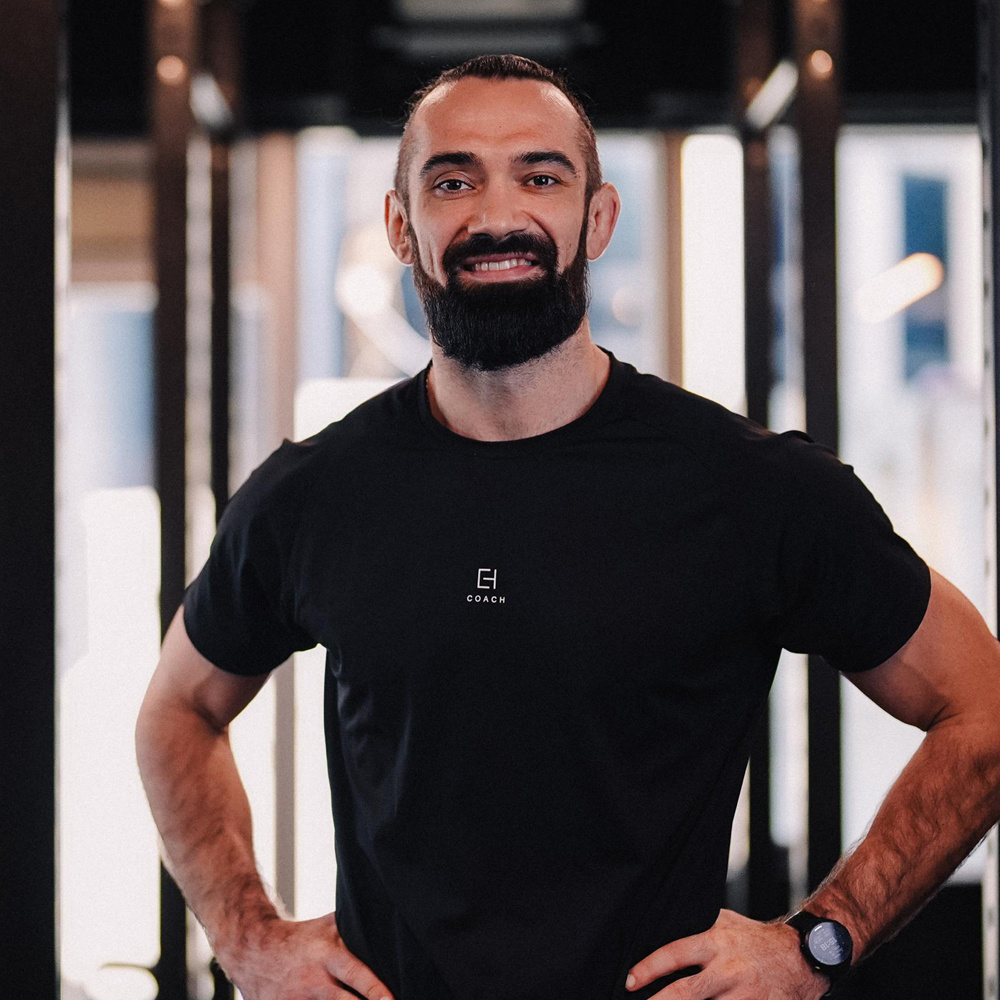
David Markham is the Co-founder of The Clubhouse Hong Kong, a longevity performance club built for busy high performers who want longevity that lasts not fitness that fades. Through world-class coaching, strength training, and a human-first community, The Clubhouse helps members get leaner, stronger, and live longer by focusing on three practical pillars: Rebuild (Physical aspects of training), Recharge (Sleep, stress management, and nutrition), and Reconnect (belonging and staying accountable). David’s work sits at the intersection of performance, well-being, and real-life sustainability in Hong Kong.
We are delighted that David will be speaking in Hong Kong as part of our Wellbeing at Work Summit Asia this April. We caught up with him to see how he’s feeling in the runup to the event.
Hi David we are thrilled that you will be joining us at the Wellbeing at Work Summit Asia in April. Our first and most important question is, how are you doing today?
I’m great, thank you for asking. I’m staying physically active and I’ve got good people around me. I still have good days and some tougher days with my mental health, but when I get those first two things right, the tougher days are few and far between.
As a leader based in the region, what are the main challenges you are facing when it comes to employee wellbeing and mental health?
A real lack of buy-in from leadership is the main one. Plenty of times I can’t even offer a free wellbeing talk to corporates. Across Hong Kong, we still don’t have a clear standard or shared metrics for what ‘wellbeing’ actually means.
What strategies have you seen developing over the past 6 months, both internally and externally, that are moving the dial on wellbeing in the workplace?
We recently completed an 8-week programme with a large insurance company in Hong Kong, who invested in 20 of their staff members through physical training, health and lifestyle tracking, and coaching. In just 8 weeks we saw a 28% improvement in wellbeing, a 32% increase in energy, and a 7% reduction in stress — all through accountability, tracking simple data, and training twice a week as a collective. They have close to 900 staff, and we just wish we could do more with them.
Why is employee wellbeing so important to you personally?
Fortunately we’ve created an environment at The Clubhouse where work doesn’t feel like work. Unfortunately, that’s not the case for a lot of corporate life in Hong Kong. So we’ve made it our mission to help employees who struggle with their health and wellbeing step into a space that supports their physical, mental, and social health.
What impact is AI having in your organisation and how are you managing that?
As the world turns more artificial, we refuse to lose the human connection. AI is helping us access information faster so our team can be more efficient and spend more time on the human touch.
Other than AI, are there any challenges that you are seeing for the first time and how are you addressing them?
As medical advancements start to shift, things like Ozempic and peptides are becoming more readily available. Two huge red flags I see are the lack of long-term studies and people’s willingness to take a pill or injection instead of getting to the root cause of their health issues.
What areas do you think employers should be focused on over the next 12 months?
Establishing clear baselines for what employee wellbeing looks like. That means standards across physical, mental, social, and financial health.
Do you feel that investment in employee wellbeing in the region is increasing or decreasing and is that a direct reflection on HR leaders’ increasing ability to demonstrate effective returns of their strategies to leadership?
It varies massively from industry to industry and company to company. We work with some law firms who are actively investing in wellness, but we also speak to firms who are reluctant to let us speak with their employees because they’re worried it could lead to having to pay for benefits.
How has your organisation been leading the way?
We take a holistic approach. Our main focus is sleep, energy, and stress management, alongside the physical side of health. We’ve worked hard to create an environment where people leave feeling better than when they walked in.
David is speaking in Hong Kong as part of our Wellbeing at Work Summit Asia 2026 which takes place in Hong Kong, Singapore and Bengaluru this April. Click the links below to find out more and book your tickets:
April 23 2026 – Hong Kong. Click here to find out more and book your tickets
April 28 & 29 2026 – Singapore. Click here to find out more and book your tickets
April 20 2026 – Bengaluru. Click here to find out more and book your tickets