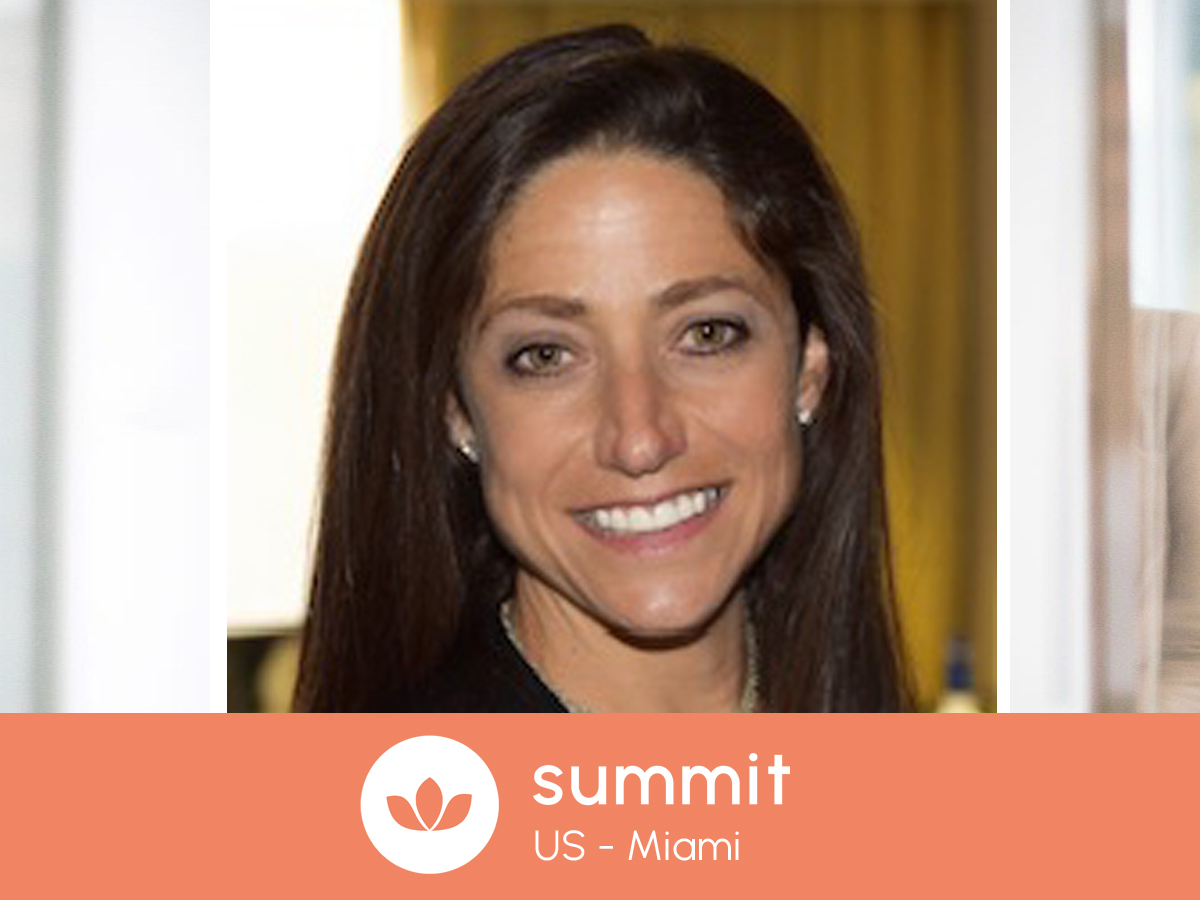
We are delighted to share that Steve will be speaking in Singapore as part of our Wellbeing at Work Summit Asia this April, where Lyra Health are also one of our proud Diamond Partners. We caught up with him to see how he’s feeling in the runup to the event.
Hi Steve we are thrilled that you will be joining us at the Wellbeing at Work Summit Asia in April. Our first and most important question is, how are you doing today?
I’m very well – thank you for asking. I hope you and the readers are, too. Given everything going on in the world right now, it’s important we all find time to take care of ourselves and each other – take the opportunity to clear the corners of our minds.
As a leader based in the region, what are the main challenges you are facing when it comes to employee wellbeing and mental health?
The mental health crisis is the defining challenge of our lifetime. According to the World Health Organization, more than one billion people live with a mental health condition. Stigma and access to qualified, experienced clinicians are top of mind in the region right now.
What strategies have you seen developing over the past 6 months, both internally and externally, that are moving the dial on wellbeing in the workplace?
One size does not fit all. Creating awareness and engagement strategies, both by customer and country, is key. Removing barriers to access, making outreach easy via app and telephone, and online scheduling are just some of the ways we are helping our customers to drive real change in their workplaces. This in turn, improves recruitment and retention and ultimately provides a return on investment.
Why is employee wellbeing so important to you personally?
As I mentioned earlier, the global mental health crisis is the defining challenge of our lifetime. I am driven by Lyra’s mission to bring life-changing care to everyone, everywhere. From children as young as 6 (even younger in some countries), teens, neurodiverse adults in the workplace and beyond, we have the opportunity to make a real, meaningful difference in people’s lives.
What impact is AI having in your organisation and how are you managing that?
We all need to embrace AI. In our space, people are using AI for companionship and mental health support. For Lyra, it’s about getting the person to the right clinician quickly, and AI plays a real role here. We are using it with our clinicians to help with note-taking during sessions – freeing up time for them to be doing what they do best – providing life-changing care every day.
Other than AI, are there any challenges that you are seeing for the first time and how are you addressing them?
There are two key areas for me right now:
1. The workplace is diverse, and we are finding ways to engage individuals of all ages. My generation is less open to talking about their mental health, whereas those coming into the workforce right now are much more open. Providing support for children and teens, as well as for those with neurodiversity needs in the workplace, are just some of the topics that need to be addressed. I’m very proud of the work that Lyra is doing in this region and around the world.
2. Rising benefit costs. We know this is an area of concern for all employers, and we have solutions that can improve the “bang for your bucks” and support cost containment.
What areas do you think employers should be focused on over the next 12 months?
Over the next 12 months, employers need to recognise that employees have reached the limit of what the ‘resilience’ sticking-plaster can achieve. We are operating in a climate of profound global uncertainty, rapid AI adoption, and ongoing friction about how, where, and when work gets done. Much of that pressure is falling directly on middle managers, who are caught in an increasingly difficult position between executive mandates and frontline burnout.
Against this backdrop, the top priority for employers should be shifting away from treating workplace distress as an individual issue and towards recognising it as a problem of work design. A mental health benefits provider therefore needs to act as a true partner to employers: helping raise the capability of organisational leaders, managers, and individual contributors, while advising senior leaders on the structural supports required to address the workplace factors that shape mental health.
For managers in particular, we need to move beyond handing out generic wellbeing toolkits and hoping they make a difference. Instead, managers should be equipped with an ongoing diagnostic mindset. That means helping them learn how to calibrate workloads properly, create genuine role clarity, and advocate for systemic changes when a role or process is fundamentally broken.
Ultimately, employers must recognise that employee wellbeing and business performance are not competing priorities. They are powered by the same underlying engine — and the manager is the most important lever for influencing both.
Do you feel that investment in employee wellbeing in the region is increasing or decreasing and is that a direct reflection on HR leaders’ increasing ability to demonstrate effective returns of their strategies to leadership?
Increasing for sure. As we continue to remove the stigma associated with mental health in the region, and the call for support grows, HR leaders are aware of the risks of doing nothing. Being able to show internally the return on investment and the direct improvements in productivity, recruitment, retention, and ultimately profitability will be key to our continuing to see that trend.
How has your organisation been leading the way?
Lyra has been leading the way globally for over a decade, bringing access to life-changing mental health care to the world. With dozens of peer-reviewed case studies, a robust ROI of 3:1, and a clinical improvement rate of 9 out of 10 individuals who engage in our programs, we demonstrate that investing in your employees’ mental health is a vital business imperative in the region.
Steve is speaking in Singapore as part of our Wellbeing at Work Summit Asia 2026 which takes place in Hong Kong, Singapore and Bengaluru this April. Click the links below to find out more and book your tickets:
April 23 2026 – Hong Kong. Click here to find out more and book your tickets
April 28 & 29 2026 – Singapore. Click here to find out more and book your tickets
April 20 2026 – Bengaluru. Click here to find out more and book your tickets