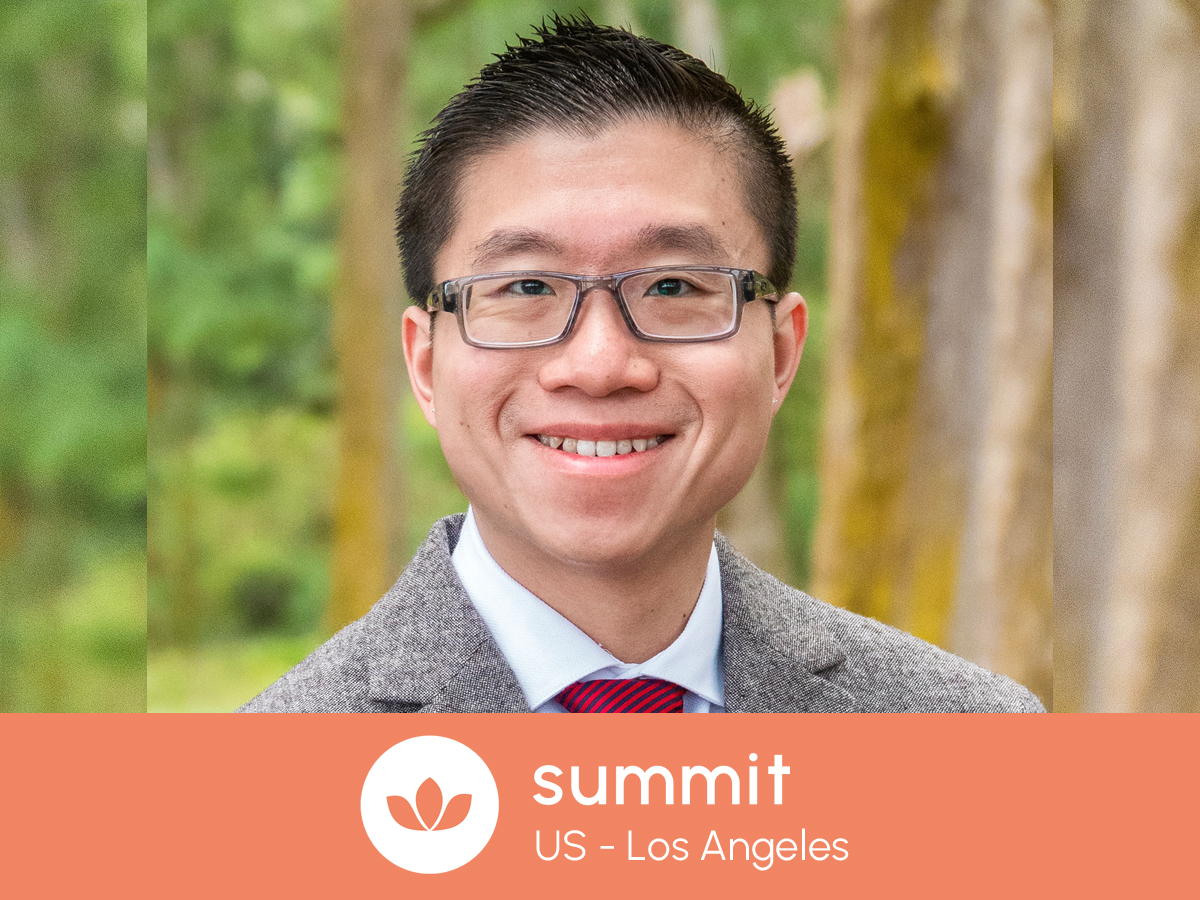
Craig studied at Griffith University, Brisbane, Australia and graduated with a Bachelor of Nursing in 1995. He then completed further studies at the Queensland University of Technology in Brisbane and graduated in 1999 with a Master of Health Science, cross specialising in Health Information Technology and Health Management. Much of Craig’s healthcare career has been as a senior nurse in Queensland Health however, he has also been involved in developing and implementing clinical information systems across individual services, and throughout the state of Queensland.
We are delighted that Craig will be speaking in Singapore as part of our Wellbeing at Work Summit Asia this April. We caught up with him to see how he’s feeling in the runup to the event.
Hi Craig we are thrilled that you will be joining us at the Wellbeing at Work Summit Asia in April. Our first and most important question is, how are you doing today?
Busy but otherwise well. Like most people I have lots of things on my plate, but I try to make time for myself when I can.
As a leader based in the region, what are the main challenges you are facing when it comes to employee wellbeing and mental health?
Consistency in management engagement with workers is a major issue. Emails are sent out informing workers that they have a right to be safe at work, and that their wellbeing is a focus of the organisation, however this is not always how employees feel in their everyday interaction with the organisation.
What strategies have you seen developing over the past 6 months, both internally and externally, that are moving the dial on wellbeing in the workplace?
This is not so much of a strategy as it has been a surprising and perhaps unintended consequence. Due to a recent service restructure, new managers were employed, and many have proven so far to be exceptional leaders. There have been some major turnarounds in previously unsound and disruptive work practices, and this has had a profoundly positive effect on staff.
Why is employee wellbeing so important to you personally?
Safety is the main reason for staff wellbeing, in my opinion. That not only applies to employees, but their families and others around them. Staff who feel secure and supported are more able to provide safe care to patients, interact better with others in the workplace, and be more productive overall. Safety applies to all aspects of their being, such as physical, psychological, emotional, etc.
What impact is AI having in your organisation and how are you managing that?
It’s a double-edge sword. There are no doubt improvements and efficiency-gains on one hand but on the other there is a concern and risk that people are being “dumb-downed” or are delegating too much to machines and code that may or may not produce a sound output. I worry that the next big scandal will be an adverse patient event caused by an unchecked reliance on a less-than-optimal AI output.
Other than AI, are there any challenges that you are seeing for the first time and how are you addressing them?
Socially isolated staff, such as those who are single either by choice, difficulty finding a partner or who have separated or divorced. There have been increasing incidences of “lonely” staff developing close friendships at work and then socialising outside of the workplace as well. This has resulted in the formation of “cliques” and the subsequent crossing of professional boundaries. These have at times compromised team cohesiveness and professional conduct. When managers are also involved, this has resulted in inadvertent or deliberate distortions in management decisions between staff around such things as workplace conditions (ie. leave, overtime, opportunities for professional development, etc.). This would otherwise be referred to as favouritism, but the problems are not limited to this.
What areas do you think employers should be focused on over the next 12 months?
I adopt the position that if you can’t get the simple things right, then there’s no point trying to do anything else until this can be rectified. “Keep it simple, stupid” is a good place to start. That would mean making sure workplace policies and conditions are consistently applied. It would include making sure, for example, that enough staff with the right skill-mix are working each shift. It would mean paying overtime and not expecting staff to work for nothing. It would mean the workplace giving a bit back in return and not just taking. Staff would need to see this in motion and it would need to be enduring.
Do you feel that investment in employee wellbeing in the region is increasing or decreasing and is that a direct reflection on HR leaders’ increasing ability to demonstrate effective returns of their strategies to leadership?
It’s talked about a lot more but when this happens in other areas it usually means it’s done less. For example, patient-centred care is talked about ad nauseum, and yet most long-term clinicians would suggest that standards have dropped markedly over time. HR generally is poorly regarded by both management and workers in the organisation I work for. Because of adject failures in other areas, HR lacks the respect it would otherwise have.
How has your organisation been leading the way?
It doesn’t. There may be at some level an aspiration to do better but the execution is lacking. To be fair, there are a lot of difficult challenges and the demands on service always outweigh the capacity to deliver. Having said that, the organisation does score a lot of own-goals and if it could stop doing that, it would help a lot. I think most employees would like to see tangible action over lofty statements of intentions. A focus on getting the simple things right would be a good start.
Craig is speaking in Singapore as part of our Wellbeing at Work Summit Asia 2026 which takes place in Hong Kong, Singapore and Bengaluru this April. Click the links below to find out more and book your tickets:
April 23 2026 – Hong Kong. Click here to find out more and book your tickets
April 28 & 29 2026 – Singapore. Click here to find out more and book your tickets
April 20 2026 – Bengaluru. Click here to find out more and book your tickets