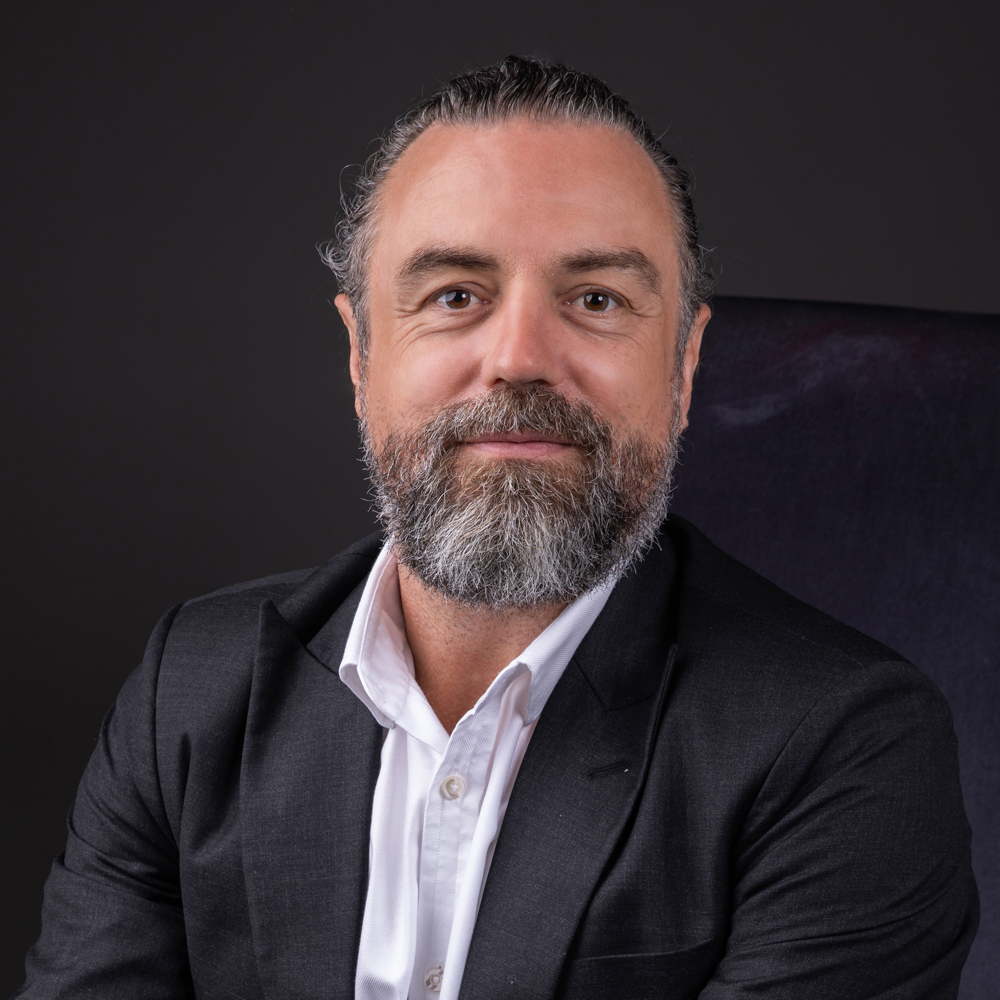
A respected leader in organisational wellbeing and human performance, Ian has spent over two decades working with businesses across corporate, maritime, and industrial sectors to help people and organisations thrive.
Through his work, Ian bridges the gap between human science and business strategy, helping organisations move beyond wellness initiatives to embed wellbeing as a measurable driver of performance, safety, and engagement.
He is the creator of the BALANCED Program, a science-based framework that helps employees and leaders build sustainable wellbeing habits.
We are delighted that Ian will be speaking in Singapore as part of our Wellbeing at Work Summit Asia this April. We caught up with him to see how he’s feeling in the runup to the event.
Hi Ian we are thrilled that you will be joining us at the Wellbeing at Work Summit Asia in April. Our first and most important question is, how are you doing today?
I’m doing well, thanks. Just back from the gym this morning — trying to manage my energy, not just my time. Though I’ll be honest: I’ve been traveling extensively the last few months, so sleep hasn’t been as optimised as I’d like. I’m doing everything I can to prioritise it, but sometimes the reality of building a global business means adapting rather than perfecting.
That’s the irony, isn’t it? I’m building a wellbeing intelligence company while navigating the same performance pressures our clients face – the constant travel, the cognitive load, the need to perform consistently despite disrupted routines. That real-world experience keeps me grounded. You can’t sell operational performance solutions if you’ve never experienced operational performance challenges.
As a leader based in the region, what are the main challenges you are facing when it comes to employee wellbeing and mental health?
The biggest challenge isn’t getting organisations to care about wellbeing – it’s getting them to stop treating it like a lifestyle program.
In APAC and other regions, we’re seeing a dangerous pattern: companies invest in meditation apps, yoga classes, and fruit bowls, then wonder why fatigue-related incidents haven’t decreased and turnover remains high. The real issue? They’re treating symptoms, not causes.
In maritime, oil & gas, mining and other high-risk industries, where 80% of incidents trace back to human performance, you can’t yoga your way out of operational risk. We need to stop asking “Are employees happy?” and start asking “Can they perform safely and sustainably?” That’s a fundamentally different question requiring different solutions.
What strategies have you seen developing over the past 6 months, both internally and externally, that are moving the dial on wellbeing in the workplace?
The shift I’m most encouraged by is the move from wellness programs to wellbeing intelligence.
Leading organisations are finally treating human factors like any other operational variable – something you measure, monitor, and manage in real-time.
I’m seeing:
- Predictive analytics replacing annual surveys: organisations using real-time data to spot performance degradation before it becomes an incident or a resignation
- ISO 45003 driving accountability: psychosocial risk is no longer “nice to have,” it’s a compliance requirement with teeth
- CFOs asking “show me the ROI”: and HR leaders finally being able to answer with data linking wellbeing to safety outcomes, quality metrics, and retention rates
The organisations winning are those treating wellbeing as operational intelligence, not employee engagement.
Why is employee wellbeing so important to you personally?
Because I’ve lived both sides of this equation. I’ve experienced what happens when organisational demands consistently exceed human capacity, and I’ve seen the toll it takes, personally and professionally.
Here’s what that taught me: burnout isn’t an individual failing. It’s a predictable outcome of unsustainable system design.
I spent years watching talented people burn out in high-pressure environments. When a seafarer works 12-hour shifts for months without adequate rest, when a mine worker operates heavy machinery while cognitively fatigued, when a corporate team hits sprint after sprint with no recovery – that’s not a resilience problem. That’s an engineering problem.
I’m in this space because I believe wellbeing shouldn’t be about self-care seminars. It should be about creating conditions where human performance is sustainable by design. You can’t self-care your way out of a system that’s fundamentally broken.
What impact is AI having in your organisation and how are you managing that?
Ironically, AI is both the solution and the problem.
The problem: AI is accelerating work intensity without a corresponding increase in human capacity. People aren’t replacing jobs – they’re absorbing AI’s productivity gains on top of existing workloads. That’s creating a new form of cognitive overload.
The solution: We’re using AI to turn wellbeing data into actionable intelligence. Instead of annual surveys that nobody acts on, we’re building dashboards that predict performance degradation 30 days out, giving managers time to intervene before someone burns out or makes a critical error.
The key is using AI to reduce cognitive load, not add to it. If your AI strategy is “do more faster,” you’re creating tomorrow’s performance crisis.
Other than AI, are there any challenges that you are seeing for the first time and how are you addressing them?
The globalisation of burnout.
We used to think burnout was a Western corporate phenomenon. Now I’m seeing identical patterns in Singapore banking, manufacturing plants in Europe, and FIFO mining operations in Australia. The “always-on” culture has gone global, and traditional geographic boundaries don’t protect anyone anymore.
What’s new is the speed at which organisations are hitting crisis point. Pre-pandemic, burnout built over years. Post-pandemic, I’m seeing teams hit exhaustion in 6-12 months. The recovery time required is lengthening while the pressure to perform is intensifying.
We’re addressing this by helping organisations build performance sustainability into operational design – not through wellness programs, but through work redesign, shift optimisation, and predictive fatigue management.
What areas do you think employers should be focused on over the next 12 months?
Stop measuring wellbeing. Start measuring human performance sustainability.
Three specific areas:
First, shift from engagement surveys to performance intelligence. If you can’t tell me whether your team’s cognitive capacity is trending up or down week-over-week, you’re flying blind. Get real-time data.
Second, treat psychosocial risk like any other operational risk. You wouldn’t ignore a pressure gauge showing red on an oil platform. Why ignore the human equivalent? ISO 45003 gives you the framework – use it.
Third, make wellbeing a line management responsibility, not an HR initiative. COOs and Operations Directors need to own this. When safety or quality drops, we don’t blame HR – we look at operations. Same should apply to human performance.
Do you feel that investment in employee wellbeing in the region is increasing or decreasing and is that a direct reflection on HR leaders’ increasing ability to demonstrate effective returns of their strategies to leadership?
Investment is increasing, but it’s becoming far more scrutinised, and outcome focused.
The days of “we offer a mindfulness app” are over. CFOs are asking “What’s the ROI?” and HR leaders who can’t answer with data are losing budget.
Here’s what’s changing: Organisations that can show a causal link between wellbeing interventions and operational outcome (reduced incidents, improved retention, lower absenteeism, quality improvements) are getting increased investment. Those still talking about “employee satisfaction” are getting budget cuts.
The winners are those treating wellbeing as a performance enabler and risk mitigation strategy, not a perk. That’s a business case CFOs understand.
The broader trend: wellbeing is moving from HR’s domain to Operations’ domain. That’s a good thing.
How has your organisation been leading the way?
We’ve fundamentally challenged the premise that wellbeing is about making people “feel good.”
Our approach: We don’t sell wellness programs. We sell operational intelligence.
Here’s how we’re different:
First, we measure what matters. Not “how satisfied are you?” but “Can you sustain this performance load?” Our Wellbeing Daily Intelligence platform gives organisations the same real-time visibility into human performance that they have for equipment performance. You wouldn’t run a refinery without monitoring pressure and temperature – why run an organisation without monitoring cognitive load and fatigue?
Second, we speak the language of operations. We work with COOs, Safety Directors, and Operations Managers, not just HR. Our programs are designed for shift workers, seafarers, FIFO operations, and high-pressure corporate environments where traditional wellness advice typically struggles to translate.
Third, we focus on system design, not individual resilience. Yes, we teach teams evidence-based coping strategies through our signature programs. But we also help organisations redesign work patterns, optimise shift schedules, and build recovery into operations, because sustainable performance requires both individual capability and sustainable systems.
The result? Our clients don’t just “feel better” – they perform better. Reduced incidents. Improved retention. Measurable ROI. Because when you treat wellbeing as operational intelligence, everyone wins.
Ian is speaking in Singapore as part of our Wellbeing at Work Summit Asia 2026 which takes place in Hong Kong, Singapore and Bengaluru this April. Click the links below to find out more and book your tickets:
April 23 2026 – Hong Kong. Click here to find out more and book your tickets
April 28 & 29 2026 – Singapore. Click here to find out more and book your tickets
April 20 2026 – Bengaluru. Click here to find out more and book your tickets